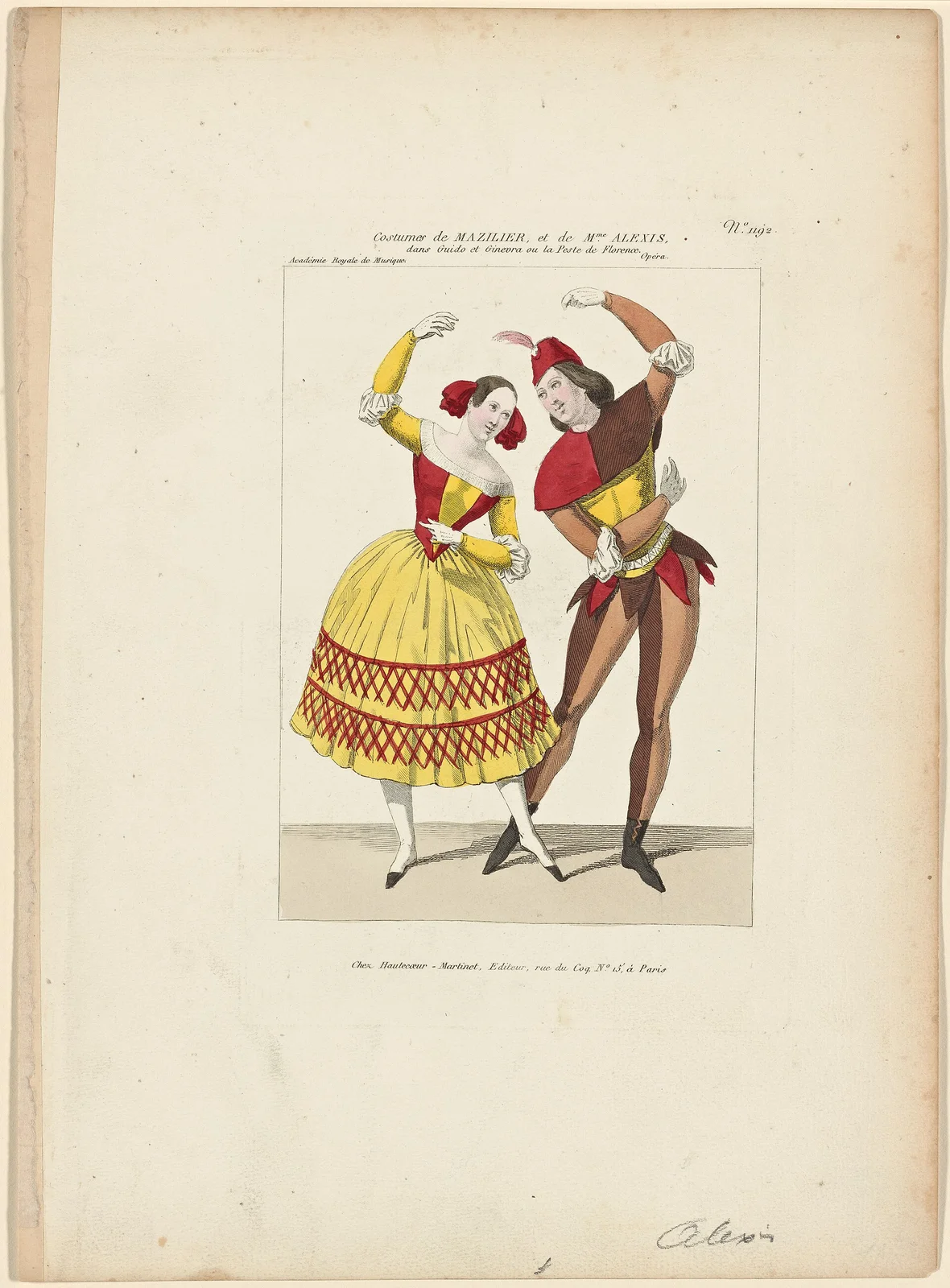
About the work
Guido et Ginevra, ou la peste de Florence is a five-act grand opera by Fromental Halévy to a libretto by Eugène Scribe. It premiered on 5 March 1838 at the Paris Opéra (Salle Le Peletier), with Gilbert Duprez as Guido; a four-act version followed in 1840.
Plot
Ginevra, daughter of Cosimo de' Medici, is to marry the Duke of Ferrara. During the wedding ceremony, a poisoned veil makes her collapse as if dead; taken for a plague victim, she is buried in the family vault. There she awakens and is found and sheltered by the young sculptor Guido. When her father learns she is alive, he finally consents to her marriage to Guido.
Cultural significance
For the tomb scene, Halévy used unusually dark-timbred woodwind and brass with diminished-seventh harmonies, and even called for a mélophone in the second act. The opera fell short of the success of La Juive and La reine de Chypre, but was soon staged in several European cities and adapted into Italian (1870) and German (1879–1882).