About the work
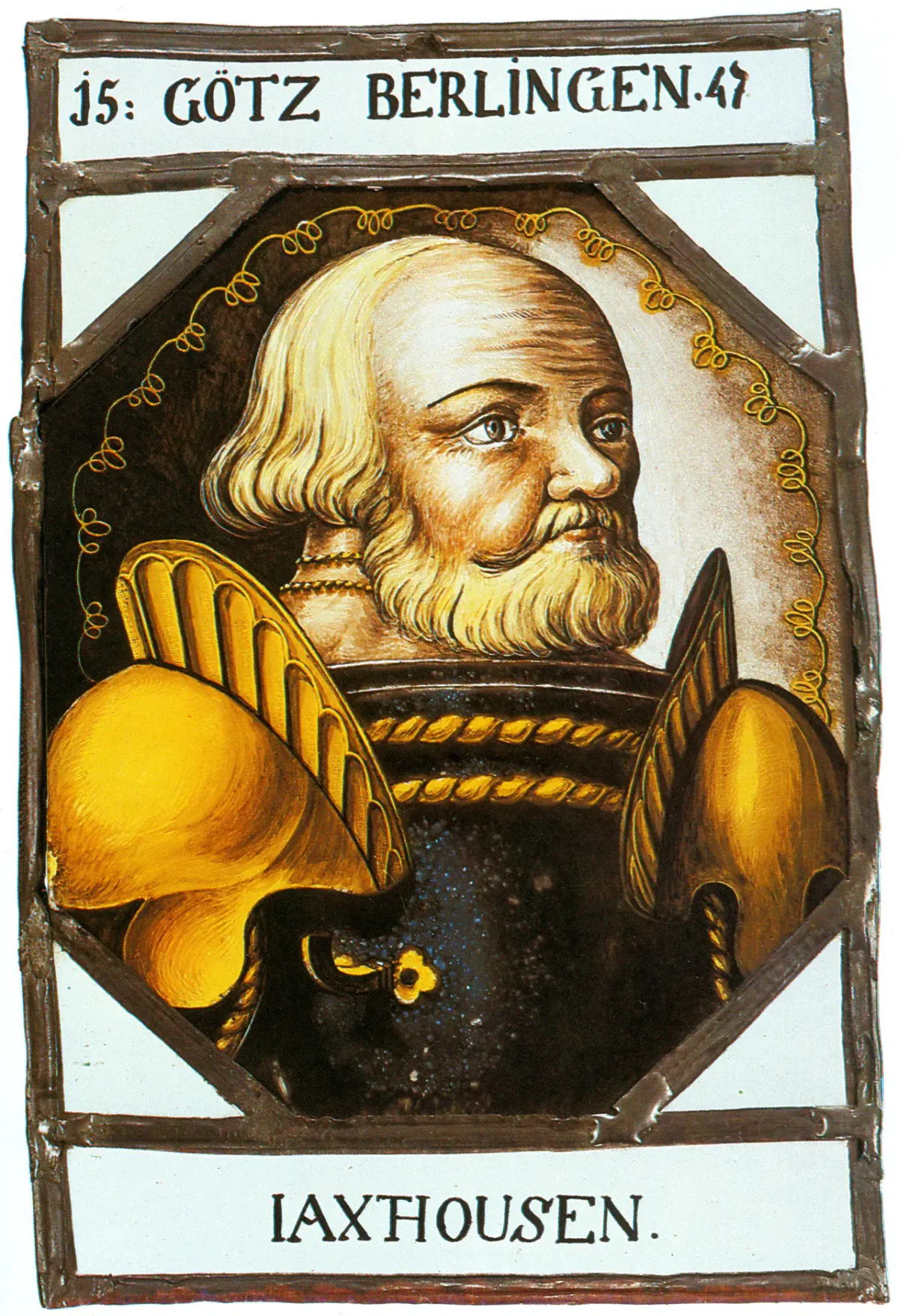
Götz von Berlichingen mit der eisernen Hand (Götz of Berlichingen with the Iron Hand) is a historical and character drama in five acts by Johann Wolfgang von Goethe, printed anonymously in 1773 and first performed in 1774. The title figure is the Franconian-Swabian imperial knight Gottfried "Götz" von Berlichingen zu Hornberg (surnamed "with the Iron Hand"). The play is regarded as a principal work of the Sturm und Drang. Like his Götz, Goethe too sought to break through boundaries with this play. He set himself against Aristotelian theatrical conventions and aligned himself with the theatre of Shakespeare. The unities of place, time and action are dissolved: there are more than fifty settings in all, and the depicted time is not confined to a single day but extends over several partly parallel strands of action (the trial before the court, the Peasants' War, several feuds and raids), subplots and ultimately half of Götz's life. For this reason Dieter Borchmeyer called the play a "scenic epic". The bracket holding together the scenes — which often consist only of snatches of conversation — is the consistently displayed character of the hero, who creates the unity of the play entirely in the Shakespearean sense.
Plot
Götz von Berlichingen is locked in a feud with the Bishop of Bamberg, who is holding one of his servants captive. He manages to capture Adelbert von Weislingen — a friend of his youth now in the Bishop's service — and bring him to his castle Jagsthausen, where he persuades him to change sides. To seal the alliance, Weislingen becomes betrothed to Götz's sister Maria. Back at the Bamberg court, however, Weislingen succumbs to the charms of the beautiful, scheming Adelheid von Walldorf, breaks his word, returns to the Bishop's side and abandons Maria. Götz sends his squire Georg in disguise to Bamberg and obtains certainty of the betrayal. Out of a guilty conscience, Weislingen becomes Götz's deadly enemy: he induces the Emperor to impose the imperial ban (Reichsacht) on Götz and his comrades — among them Franz von Sickingen, who has meanwhile sought Maria's hand. An execution army besieges Götz's castle; through treachery he falls into the hands of the imperial troops and is to swear the oath of truce (Urfehde) at Heilbronn, but is freed by Sickingen. Götz withdraws into knightly confinement at his castle. When the Peasants' War breaks out, the rebels press Götz to take their command; he consents on the condition that they renounce violence. But the radical peasants break the promise and burn down Miltenberg. In flight, Götz is severely wounded and captured by Weislingen's riders; his faithful Georg falls. Meanwhile Adelheid, weary of her husband and striving for the favour of the future emperor, has Weislingen poisoned by his besotted squire Franz; the dying Weislingen, at Maria's plea, revokes the death sentence against Götz. Franz throws himself to his death in despair, and Adelheid is condemned to death by a Vehmic court for adultery and murder. Götz succumbs to his wounds in the Heilbronn dungeon — with the word "Freedom!" on his lips.
Cultural significance
The drama's immediate impact was sensational; it made the young author famous at a stroke. Since the play's success rested not least on its inversion of traditional notions of rank and standing, members of other noble families wrote to the suddenly popular author asking whether he might not immortalise their lineage in literature too. King Frederick II criticised the great public success of Goethe's work, above all because of its resemblance to the then increasingly popular, detested works of Shakespeare: "But now a Götz von Berlichingen appears on the stage, a loathsome imitation of those bad English plays, and the spectators in the stalls applaud and enthusiastically demand the repetition of these disgusting trivialities."