About the work
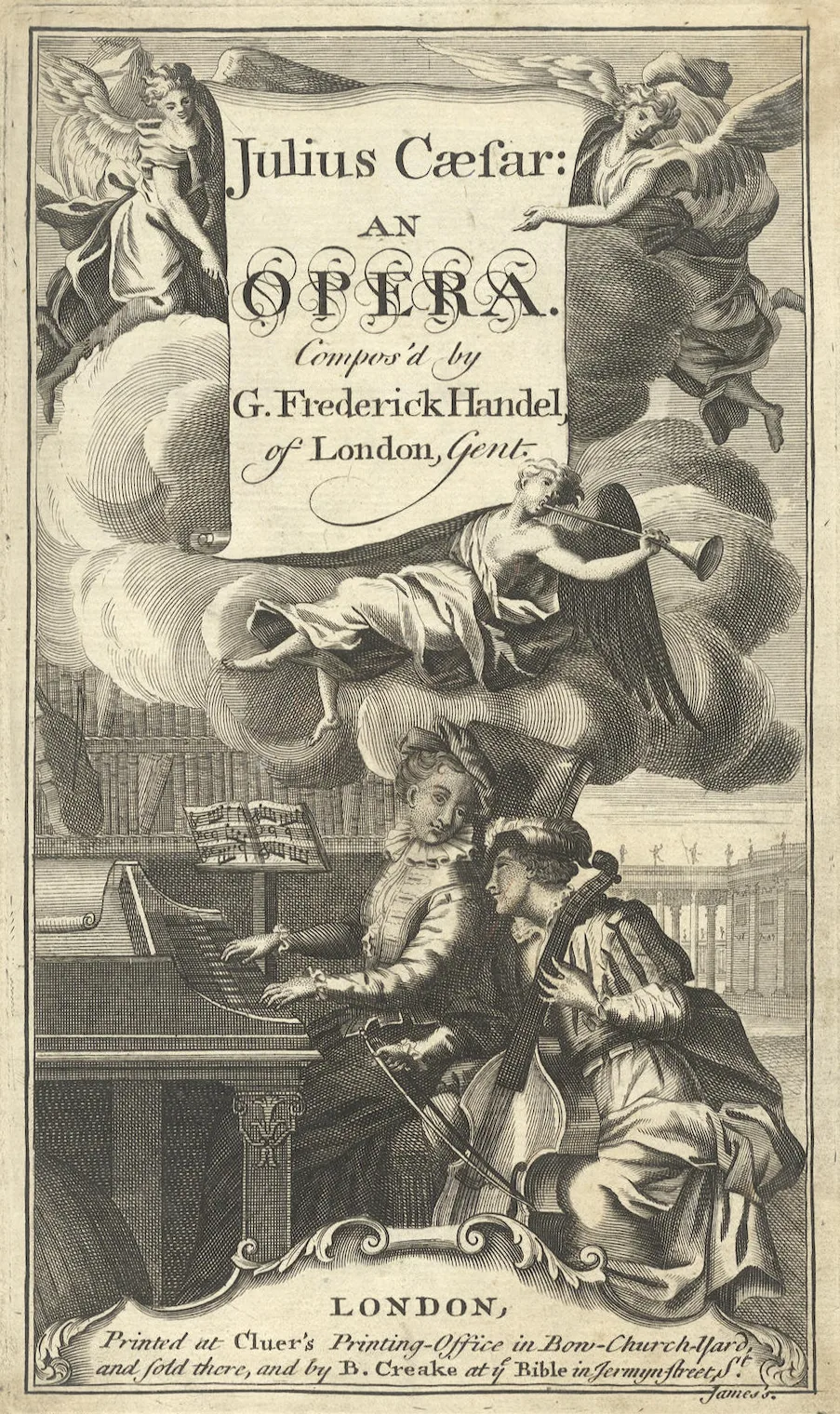
Handel's Giulio Cesare in Egitto (HWV 17) was premiered on 20 February 1724 at the King's Theatre in London and is widely regarded as the dramaturgically most accomplished of his more than forty opere serie. Nicola Francesco Haym's libretto interweaves Caesar's Egyptian campaign with a dense web of intrigue around power, revenge and love — carried by some of the most virtuosic arias of the entire Baroque repertoire.
Plot
Fresh from his victory over Pompey, Julius Caesar lands with his legions at Alexandria. Pompey's widow Cornelia and their son Sesto come to plead for peace, but the young pharaoh Tolomeo has Pompey beheaded and presents Caesar with the severed head as a trophy. Caesar is appalled and swears retribution; Cornelia and Sesto vow revenge against Tolomeo. Tolomeo's sister Cleopatra, herself reaching for sole rule, resolves to seduce Caesar in order to bring down her brother. Disguised as her own handmaid "Lidia" she enchants him — and political calculation gradually turns into genuine love. Tolomeo grasps the threat, abducts Cornelia into his harem and plots Caesar's assassination. During a palace ambush Caesar leaps into the sea and is presumed drowned; Cleopatra is captured. But Caesar survives, regroups his troops and storms the palace. In the climactic battle Sesto stabs the pharaoh and frees his mother, while Caesar reaches the imprisoned Cleopatra at the last moment. In triumph he crowns her sole queen of Egypt and seals a new alliance between Rome and the kingdom of the Nile.
Cultural significance
After long neglect, Giulio Cesare returned to the stage from the 1920s onwards as part of the Handel revival and is today the composer's most-performed opera. Cleopatra's "Piangerò la sorte mia" and "Se pietà di me non senti", together with Caesar's hunting aria "Va tacito e nascosto", have become cornerstones of the Baroque repertoire. Landmark productions — from Peter Sellars' Vietnam War reading in 1985 to David McVicar's opulent Glyndebourne staging in 2005 — have shown how timelessly the score's themes of power, seduction and war still resonate today.