About the work
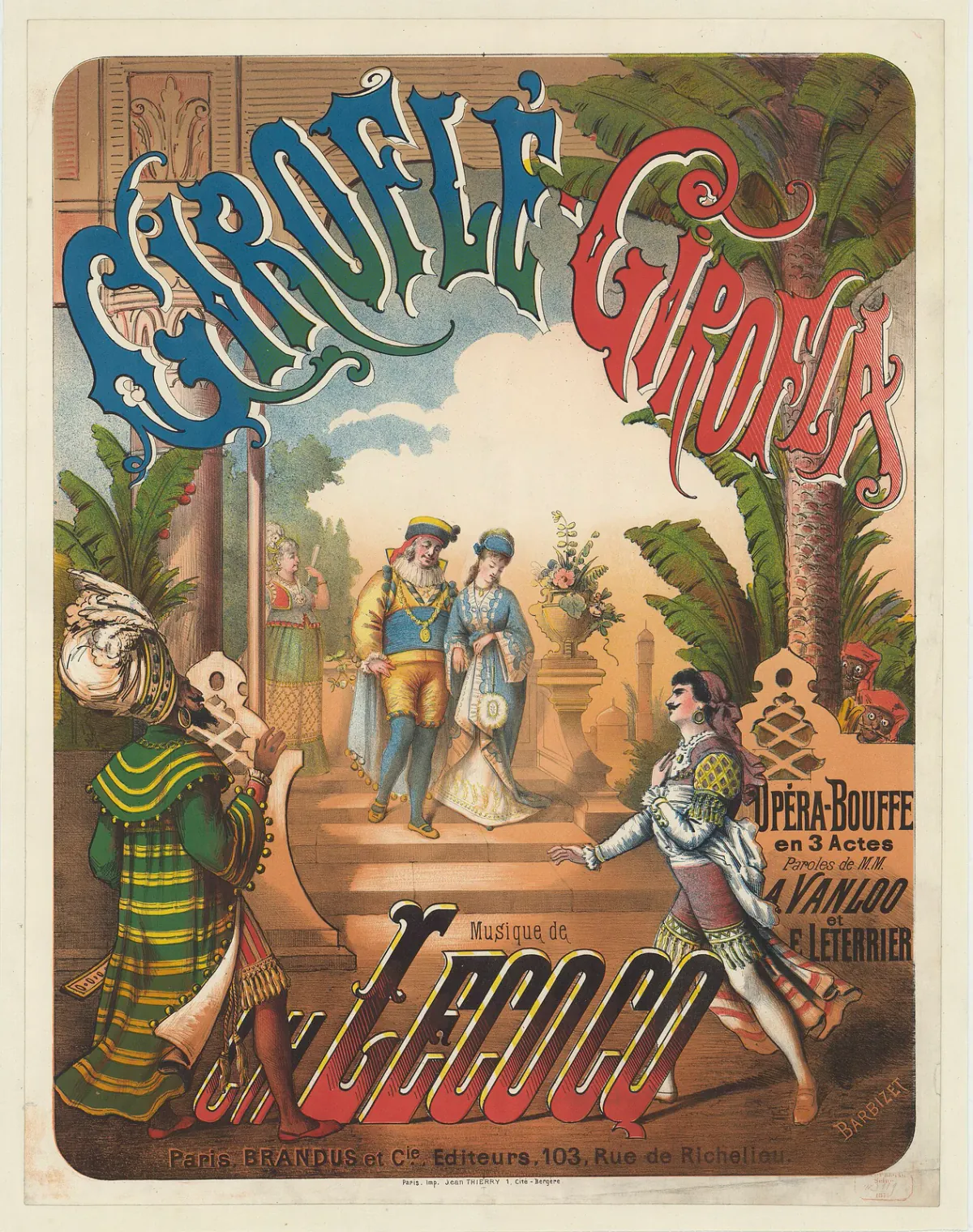
Giroflé-Girofla is an opéra bouffe in three acts by Charles Lecocq, with a libretto by Albert Vanloo and Eugène Leterrier. It premiered on 21 March 1874 at the Théâtre des Fantaisies-Parisiennes in Brussels, followed by a much-noted Paris premiere that November at the Théâtre de la Renaissance. Coming after "Les cent vierges" and "La fille de Madame Angot," it confirmed Lecocq's standing as a leading composer of French operetta.
Plot
In medieval Spain, the heavily indebted Duke Don Bolero de Malaga is caught between pirates and a rival neighbour demanding payment. To satisfy both creditors he must marry off his twin daughters Giroflé and Girofla on the same day. When Girofla is kidnapped shortly before the double wedding, Giroflé impersonates both brides in turn – a mistaken-identity comedy built around a single singer playing both twins, resolved only as the curtain falls.
Cultural significance
The piece ran for more than two hundred consecutive performances in Paris and was staged from London to Buenos Aires within a few years. The dual twin role, sung by one performer, remains a celebrated tour de force and the work's defining feature.