About the work
Bertolt Brecht's sequence of scenes was written between 1935 and 1938 in Danish exile and originally consists of 24 individual scenes about life in National Socialist Germany. A partial selection was premiered in Paris in 1938, the complete version not until 1945 in New York. The work is Brecht's most direct engagement with everyday life under the dictatorship — written as a warning and a document at once.
Plot
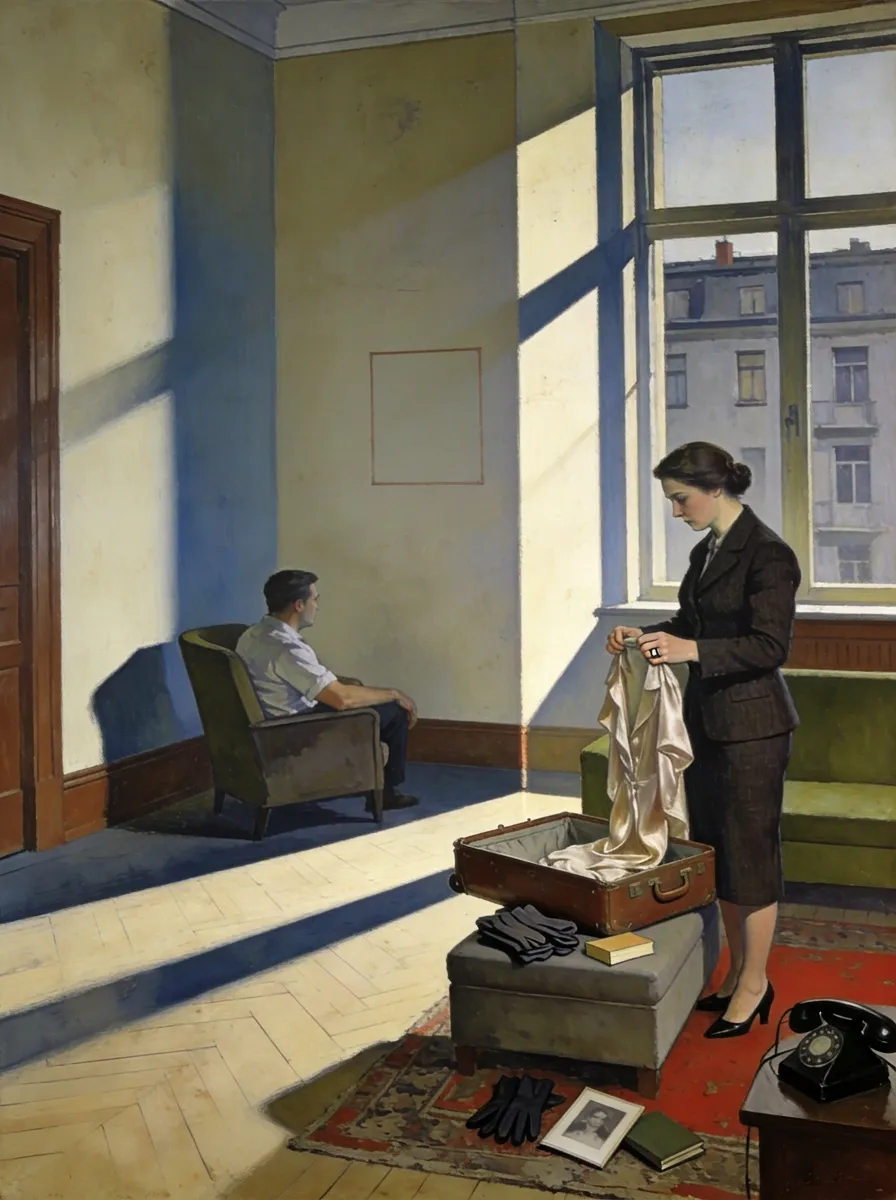
There is no continuous plot, but rather snapshots from Nazi Germany, 1933-1938. A Jewish couple who must separate. An SA man who shoots his own brother by night. A farming family at their Sunday roast, afraid of the maid. Scientists who denounce one another. Workers who secretly vote for resistance. A mother who must decide whether to send her son to the Hitler Youth. Brecht shows how the regime penetrates to the innermost core of families and friendships — and how few find the courage to say no.
Cultural significance
Furcht und Elend is one of the most important anti-fascist dramas of all and the only one to depict the corrosion of civil society under dictatorship in such everyday closeness. In the GDR it belonged to the pedagogical canon; in West Germany it long remained marginalised. Rediscoveries in the 1990s revealed its alarming topicality — especially in scenes such as "The Jewish Wife" or "The Informer", which still belong to the repertoire of German drama schools.