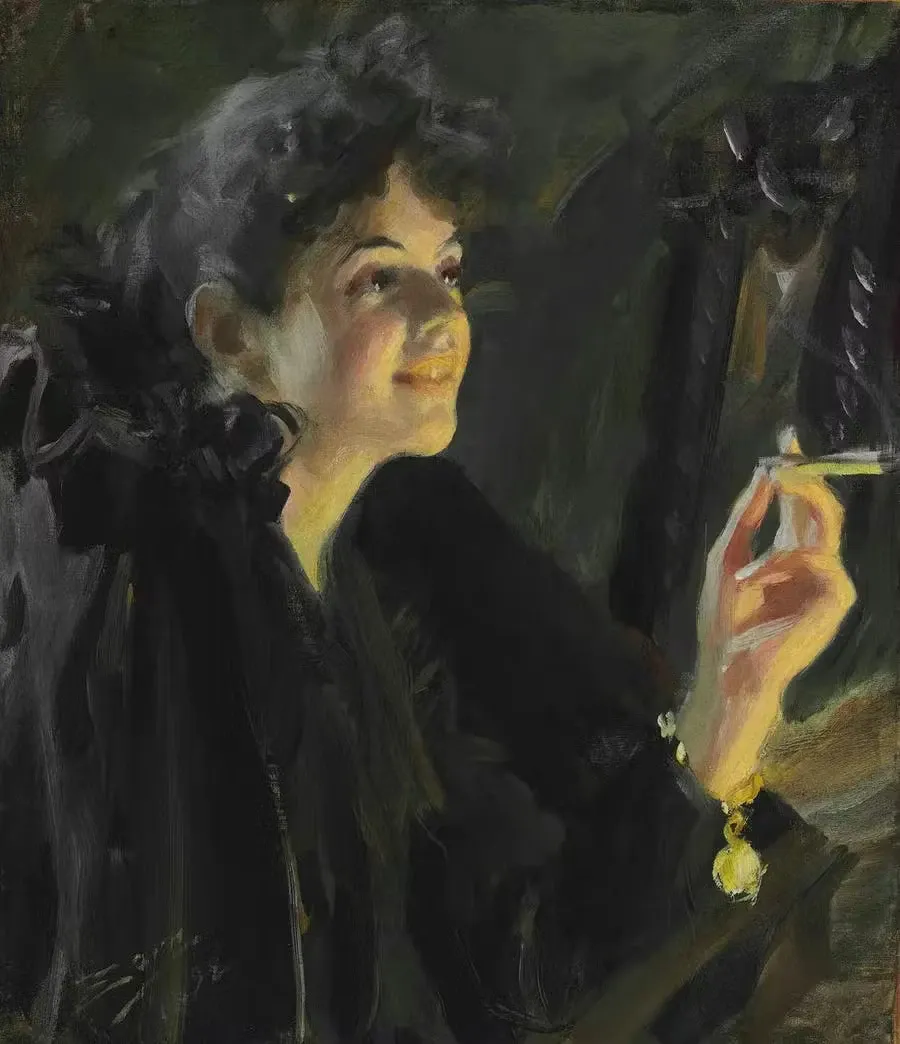
About the work
Miss Julie (Swedish "Fröken Julie") is a naturalistic tragedy by August Strindberg, premiered in 1889. It is regarded as a major work of Naturalism and one of the sharpest dramatic studies of class struggle, the war between the sexes, and the abysses of human desire.
Plot
On Midsummer's Eve at her father's estate, the aristocratic Miss Julie embarks on a dangerous game with the ambitious servant Jean. In a single night of drinking, the balance of power between the two tips repeatedly: flirtation becomes seduction, mastery becomes submission, desire becomes contempt. After they have slept together, Julie's social standing is ruined. Trapped between class pride, shame, and Jean's cold calculation, the shattered Julie sees in the end only one way out—Jean hands her the razor.
Cultural significance
Miss Julie is a milestone of modern drama, its famous preface formulating Strindberg's naturalistic programme: the characters as products of heredity, milieu, and the moment. The chamber play dissects with psychological ruthlessness the entanglement of class and gender. It is among the most frequently performed and most adapted works of world theatre and influenced all of modern drama.