About the work
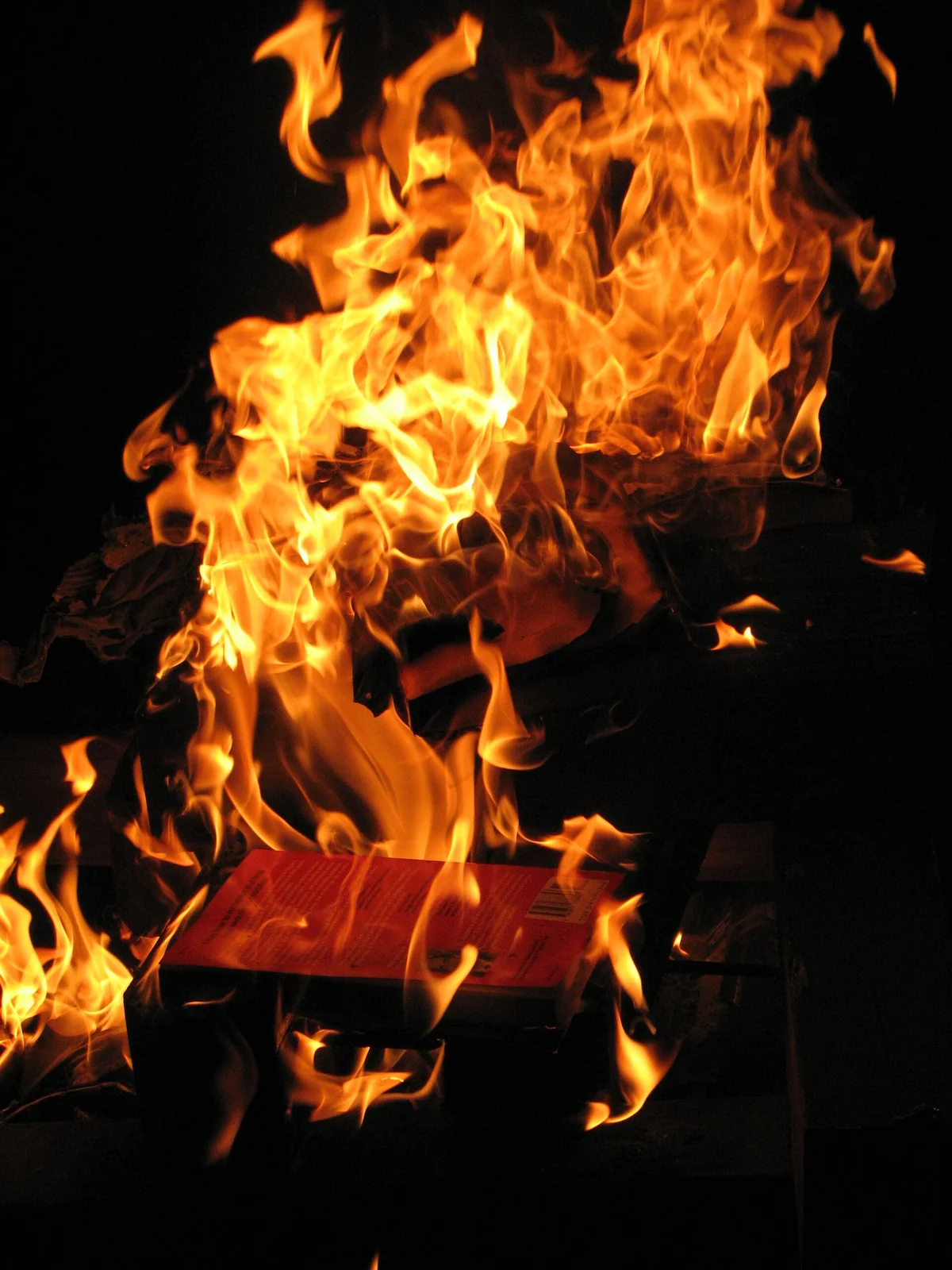
Fahrenheit 451 is the stage version of Ray Bradbury's dystopian novel of 1953, one of the most important works of modern science fiction. The title names the temperature at which paper catches fire. In Bradbury's vision of the future, the task of the "firemen" is not to put out fires but to burn books — for literature, independent thought and memory are seen as a threat to a society geared toward shallow entertainment and conformity. Bradbury wrote his novel as a burning warning against censorship, book-burning and the flattening effect of mass media. On stage the material becomes a powerful piece about freedom, memory and the value of the word.
Plot
Guy Montag is a "fireman" who dutifully sets fire to books and the houses of their owners. His world begins to totter when he meets the young, free-spirited Clarisse, who makes him ask questions, and when a woman chooses to burn with her books rather than live without them. Secretly, Montag begins to steal and read books. His superior, fire captain Beatty, sees through him. Fleeing the regime and a mechanical hound, Montag joins a group of outsiders who have memorised whole books in order to preserve them for a better future — while the city is destroyed in war.
Cultural significance
"Fahrenheit 451" became the epitome of the literary warning against censorship and intellectual conformity and stands, alongside Orwell's "1984" and Huxley's "Brave New World," in the canon of the great dystopias of the twentieth century. Bradbury's image of the book-burning fire brigade has become a cultural cipher, repeatedly cited in debates about free speech and media culture. François Truffaut filmed the novel in 1966; as a play the story gains new relevance in an age of digital overstimulation.