About the work
Johann Wolfgang von Goethe's one-act Singspiel was composed in 1775 under the impression of his passion for Lili Schönemann in Frankfurt. The simple plot is based on an episode from Oliver Goldsmith's The Vicar of Wakefield. The work was set to music multiple times — first by Johann André (1775), then fundamentally renewed by Anna Amalia, Duchess of Saxe-Weimar, in 1776, and later by Carl David Stegmann and Othmar Schoeck (1916).
Plot
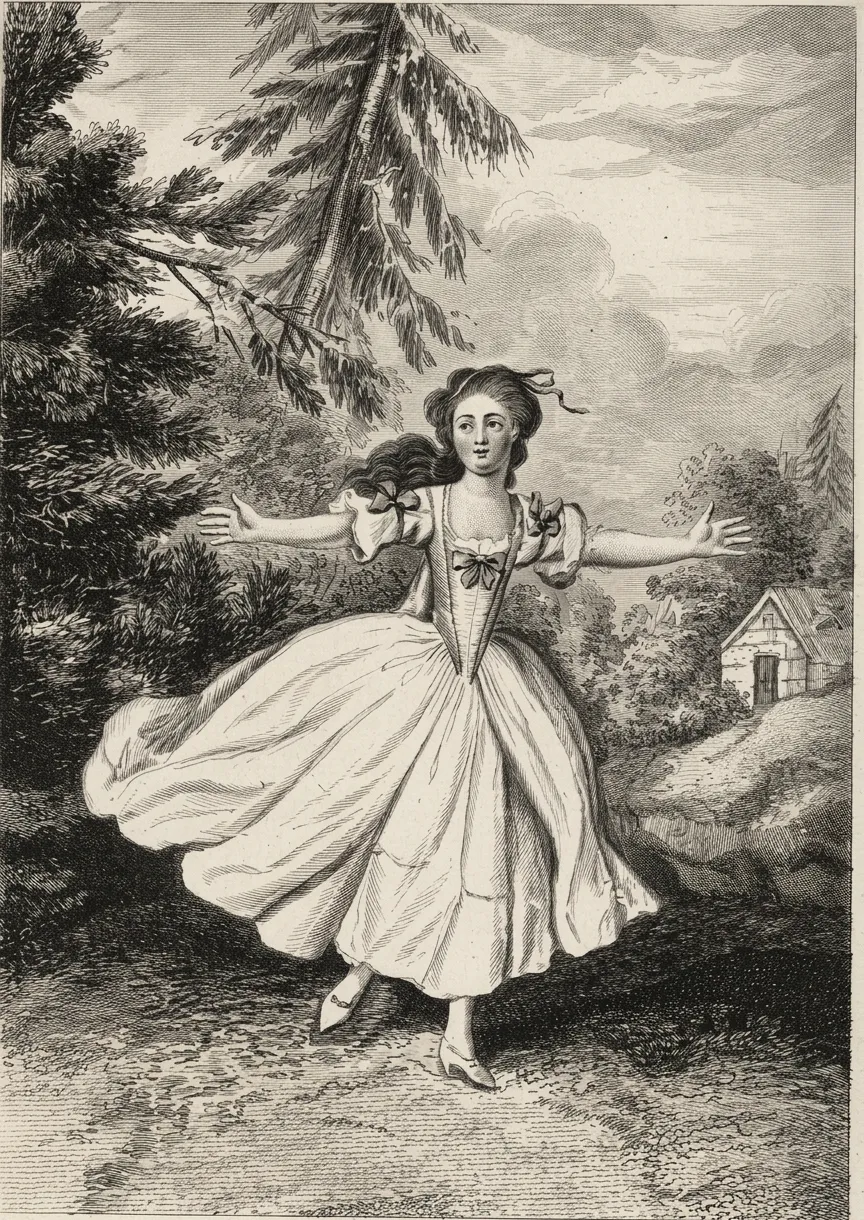
The young Elmire feels unloved and neglected by her beloved Erwin; in desperation she flees to a hermit's grove. Erwin for his part has retreated disguised as a hermit because he doubts Elmire's love. In the pastoral solitude the disguised pair meet, do not immediately recognise each other, and confess their true feelings before their identities are revealed and the couple returns reconciled to the world.
Cultural significance
Erwin und Elmire belongs to the early German Singspiel tradition and is the work with which Anna Amalia entered music history as a composer — her setting has been increasingly rediscovered and performed in recent years, including at festivals in Weimar. The included romance Das Veilchen was set as an independent song by Mozart in 1785 and is one of the most famous Mozart song compositions.