About the work
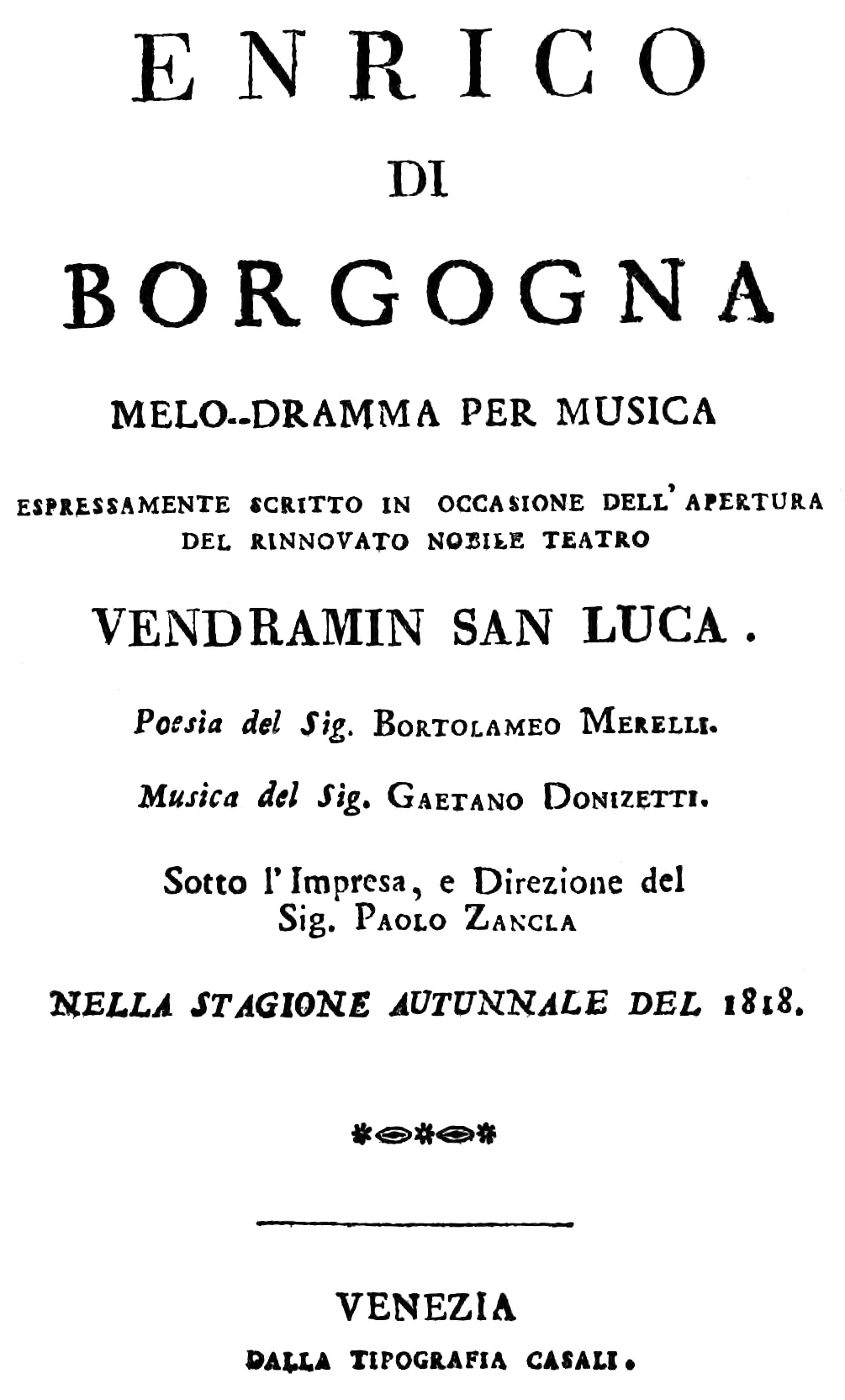
„Enrico di Borgogna" is the first opera by Gaetano Donizetti to be brought to the stage. It was premiered at the Teatro San Luca in Venice in 1818, to a libretto by Bartolomeo Merelli. The work is an „opera semiseria" and marks the beginning of the long operatic career of the composer, then only twenty years old.
Plot
At its centre stands the young Enrico, rightful heir to the duchy of Burgundy, who after the violent death of his father was, as a child, removed and deprived of his inheritance. While a usurper has seized power, Enrico grows up in concealment and humble circumstances, faithfully loved by Elisa. With the help of loyal supporters Enrico gradually learns of his true origin and gathers allies around him. In the mixture of serious and light tones typical of the genre, the path leads through intrigue, mistaken identity and danger to the fall of the usurper at last: Enrico takes the place that is his due and is united with Elisa.
Cultural significance
„Enrico di Borgogna" is, as a debut work, chiefly of interest for the history of the composer: it shows the young Donizetti still wholly in the shadow of Rossini, before works such as „L'elisir d'amore", „Lucia di Lammermoor" and „Don Pasquale" made him one of the most successful opera composers of the nineteenth century. The opera is rarely performed today, but has become accessible again through rediscoveries and festival productions.