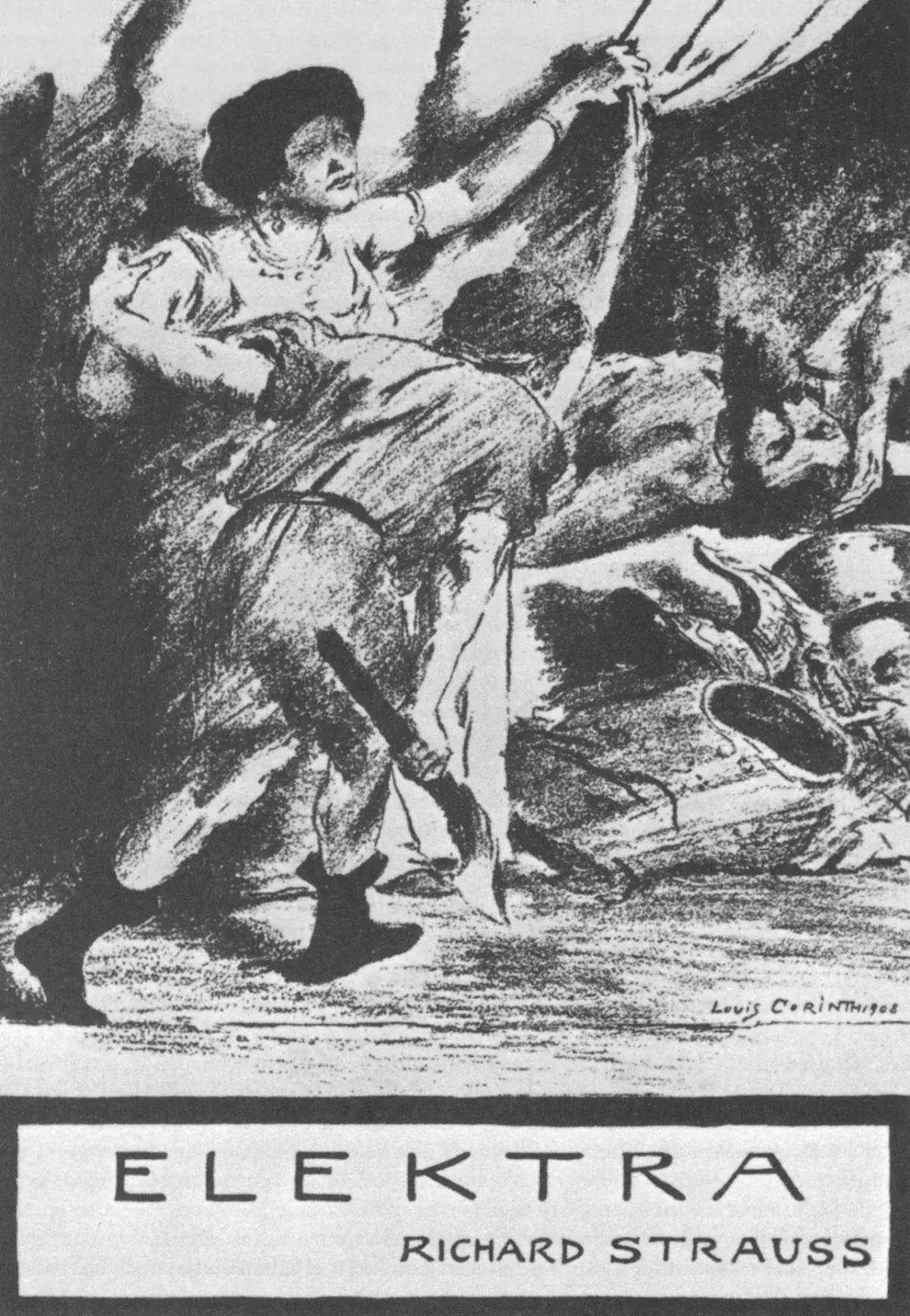
About the work
Richard Strauss's one-act opera, his first collaboration with librettist Hugo von Hofmannsthal, was premiered in 1909 at the Königliches Opernhaus Dresden. The work is based on Hofmannsthal's 1903 adaptation of Sophocles's ancient tragedy and pushes Strauss's harmonic language even further than Salome—into territory that many contemporaries regarded as the edge of coherent musical expression.
Plot
In the royal palace at Mycenae, Princess Elektra obsessively awaits the return of her brother Orestes. Their father Agamemnon was murdered by their mother Klytämnestra and her lover Aegisth; Elektra has dedicated her life to planning vengeance. Klytämnestra, haunted by nightmares, seeks Elektra's help; Elektra responds with prophecies of her mother's death. When news arrives that Orestes is dead, Elektra tries to recruit her timid sister Chrysothemis for the murders. But Orestes appears in disguise, executes Klytämnestra and Aegisth, and is pursued by the Furies. Elektra dances herself to death in ecstatic triumph.
Cultural significance
Elektra is among the most harmonically daring works Strauss ever composed and has remained a challenge for audiences and performers alike. The title role, with its sustained intensity across ninety minutes, is among the most demanding in the soprano repertoire. Conductors such as Karl Böhm, Georg Solti, and Christian Thielemann have produced definitive recordings. The work's psychological extremity anticipated the Expressionism that would dominate the decade of its composition, while its direct confrontation with classical myth exerted lasting influence on twentieth-century music theatre.