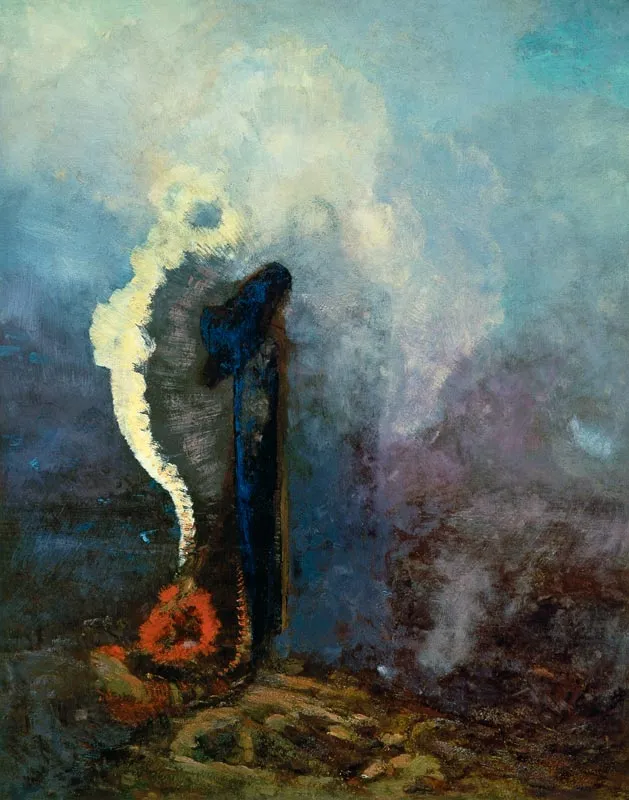
About the work
A Dream Play (Swedish "Ett drömspel") is a play by August Strindberg, written in 1901 and premiered in 1907. It is one of the most influential works of theatrical modernism and a precursor of Expressionism and Surrealism, as it consistently transfers the logic of dreams onto the stage.
Plot
The divine daughter Agnes, child of the Indian god Indra, descends to earth to fathom the suffering of humankind. In a sequence of fluidly merging, dreamlike scenes she meets various people—an officer, a lawyer, a poet—and experiences the toil, disappointment, and futility of human existence. Places transform, characters merge, time and space dissolve. Her recurring refrain: "Mankind is to be pitied." In the end Agnes returns to the gods with this insight.
Cultural significance
A Dream Play revolutionised dramatic form by replacing causal plot logic with the associative logic of dreams—Strindberg himself described this new principle in the preface. The work became a forerunner of Expressionist and absurdist theatre and influenced dramatists and directors from Artaud to Bergman. It is regarded as one of the boldest and most modern plays of its time.