About the work
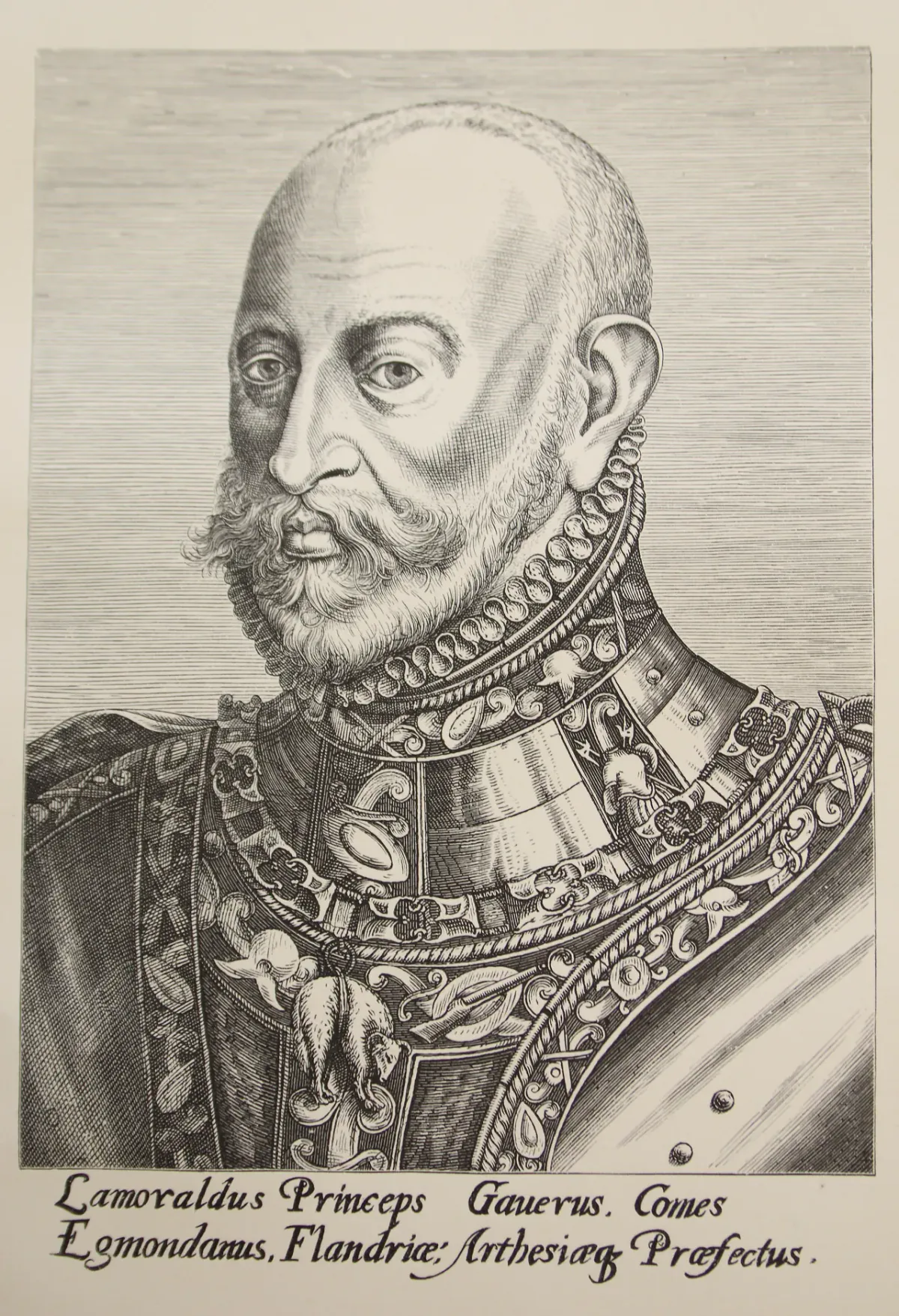
Egmont is a tragedy (Trauerspiel) by Johann Wolfgang von Goethe. The author began work on the drama in 1775 but did not complete it until 1787; it first appeared in print in 1788. The premiere took place on 9 January 1789 in Mainz. The tragedy calls for incidental stage music; particularly famous and influential is Ludwig van Beethoven's setting of 1810 (Opus 84), which, however, is performed more often in the concert hall than as stage music. The drama is set between 1566 and 1568 in Brussels, against the backdrop of the onset of the Eighty Years' War — though in Goethe's treatment the events are compressed into a shorter span. The figure of Egmont was modelled on the historical Lamoral, Count of Egmont.
Plot
Brussels, from 1566: under the Regent Margaret of Parma, heavy taxation, religious persecution and the Spanish Inquisition have left the Netherlands unstable and on the verge of revolt. The Brussels crowd scenes reveal the common people's admiration for Count Egmont, who, brave and close to the people, is seen as their hope. The Regent Margaret and her adviser Machiavell discuss the dangerous situation; she soon learns that her brother, King Philip II, is dispatching the feared Duke of Alba with an army — whereupon she chooses to abdicate voluntarily rather than be pushed aside. Egmont's beloved is the burgher girl Clara (Klärchen), who rejects her faithful but hapless suitor Brackenburg. The prudent William of Orange sees through Alba's intentions, foresees arrest and execution without trial, and takes a tearful leave of Egmont — who nonetheless trusts in his standing at court and in his own innocence. Egmont accepts Alba's invitation to a parley; in their confrontation he defends the inherited liberties and privileges of the Netherlands against Alba's demand for unconditional submission. His downfall, however, is long since decided: Alba has him arrested, charged with high treason and condemned to death. In vain Clara tries to rouse the citizens to free him; in despair she takes her own life. In prison Ferdinand, Alba's son, visits the Egmont he so admires. In sleep Egmont is visited by Clara as the embodiment of Freedom, who proclaims that his death will bring liberty to the Netherlands. Composed and resolute, Egmont goes to his death, calling on the people to fight for their freedom — accompanied by a victory symphony.
Cultural significance
After Goethe sent the finished manuscript from Rome to Weimar in the autumn of 1787, he awaited his friends' reactions with anticipation. His Italian Journey (Italienische Reise) contains a letter of 10 November in which he gives thanks: "That my Egmont meets with approval gives me heartfelt joy. No play have I completed with greater freedom of mind and greater conscientiousness than this one; yet it is hard, once one has produced other things, to satisfy the reader, who always demands something resembling what came before." With this Goethe alluded to the reaction of several German artist friends living in Rome to his recently finished Iphigenia in Tauris, which had disappointed their hope that it would be another Sturm und Drang drama in the style of Götz von Berlichingen, famous since 1774.