About the work
Don Juan, or The Stone Guest (French "Dom Juan ou le Festin de pierre") is a comedy in five acts by Molière, premiered in Paris in 1665. Molière took up the legendary material of the godless seducer and created a provocative, philosophically charged figure that, because of its religious criticism, was withdrawn after only a few performances.
Plot
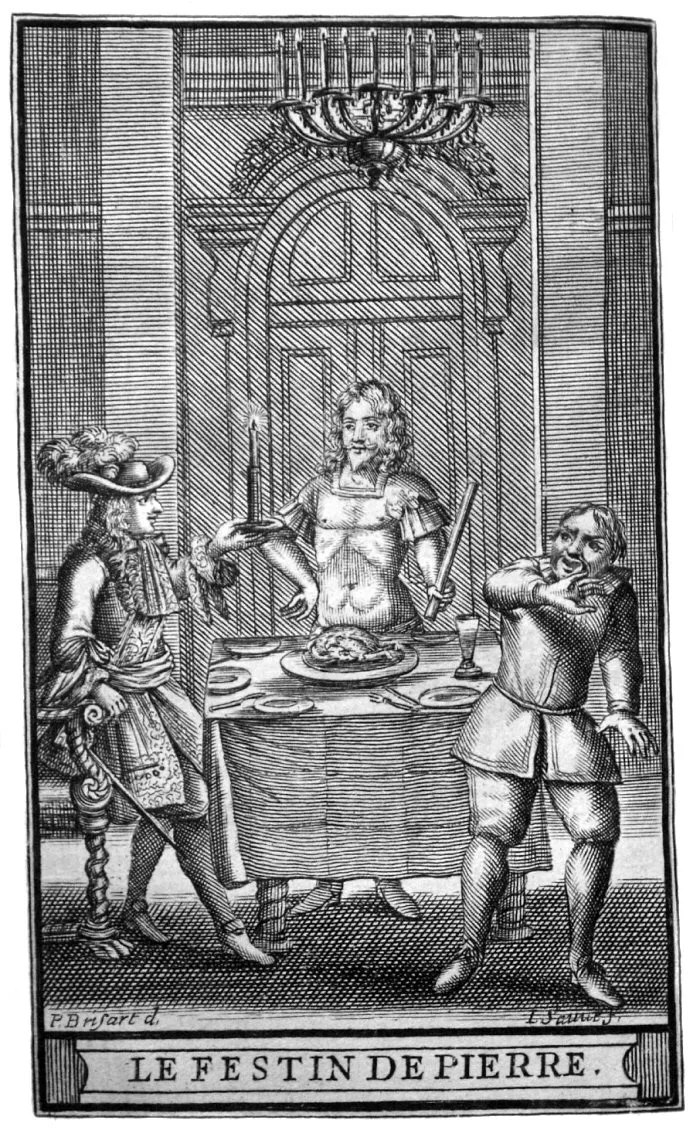
Don Juan is a cynical, freethinking nobleman who seduces and abandons women, piles up debts, and rides roughshod over all moral and religious authority. Accompanied by his cowardly but moralising servant Sganarelle, he moves from one conquest to the next, mocking his creditor, his father, and the Elvira he has jilted. When he brazenly invites the statue of a Commander he has killed to dinner, the statue accepts. At the ghostly meal, Don Juan offers the stone guest his hand—and is dragged into hell amid thunder.
Cultural significance
Molière's Don Juan is one of the most multilayered stage figures in theatrical history: at once a contemptible libertine and a fascinating freethinker whose rebellion against hypocrisy and blind faith seems strikingly modern. The censorship of the time recognised the figure's explosive force. The material inspired countless adaptations, from Mozart's Don Giovanni to modern versions, and Molière's treatment is regarded as one of the most intellectually daring.