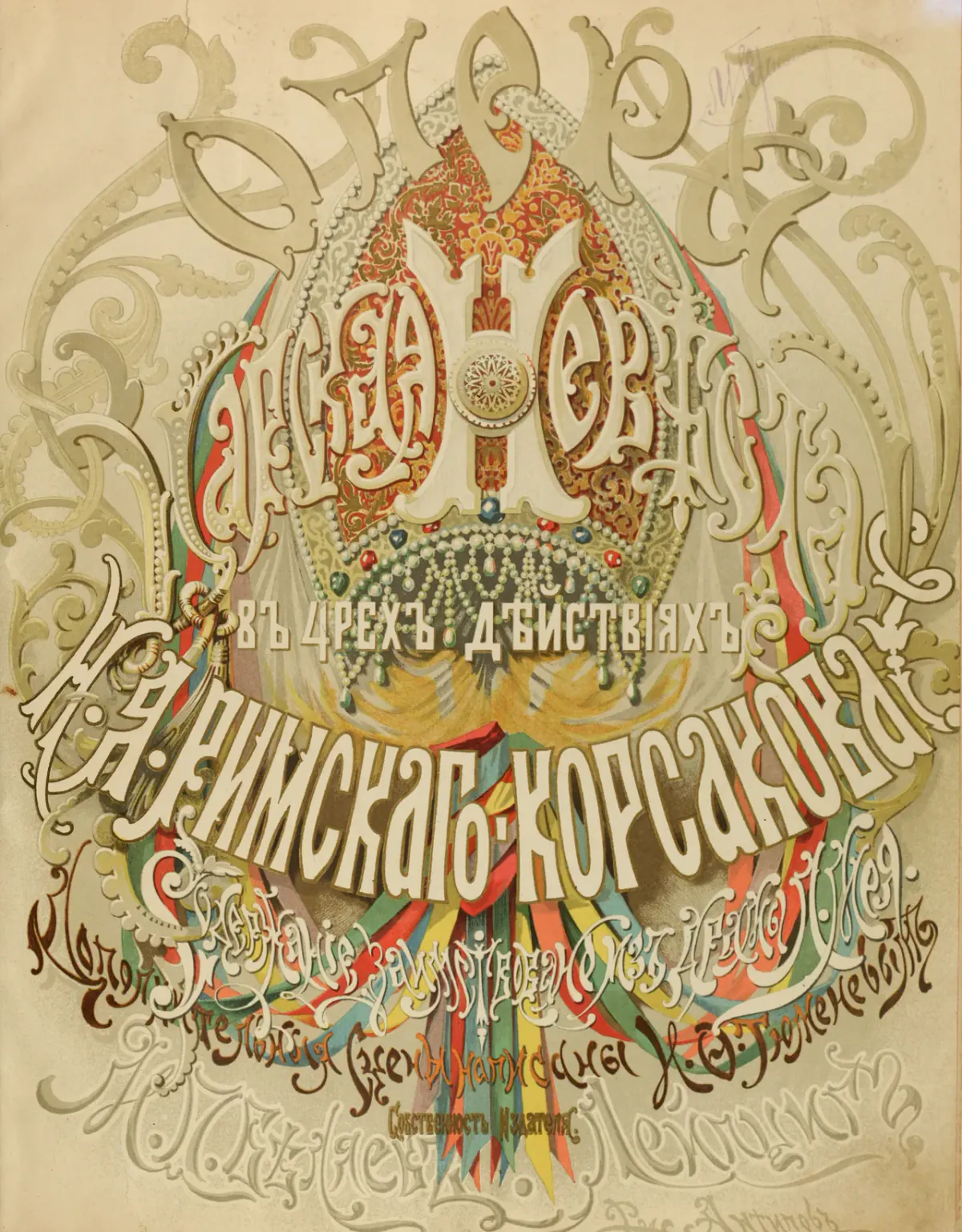
About the work
The Tsar's Bride is an opera in four acts by Nikolai Rimsky-Korsakov, premiered in Moscow in 1899. The libretto, after a drama by Lev Mei, is set at the court of Ivan the Terrible and is regarded as one of the composer's most dramatic and passionate works.
Plot
In sixteenth-century Russia, the oprichnik Gryaznoy desires the beautiful Marfa, who is, however, promised to her fiancé Lykov. To win Marfa, Gryaznoy obtains a love potion from a quack. His jealous mistress Lyubasha secretly swaps the potion for a slow-acting poison. When Marfa is unexpectedly chosen as bride by Tsar Ivan the Terrible, events spiral: Marfa falls mysteriously ill, Lykov is wrongly executed, and in the end all involved die or break down through intrigue, guilt, and madness.
Cultural significance
The Tsar's Bride shows another side of Rimsky-Korsakov: instead of fairy-tale tone-painting, intense human passions reminiscent of Tchaikovsky and a dense psychological drama dominate. The demanding soprano role of Marfa and the dramatic mezzo role of Lyubasha are regarded as showcase parts. In Russia the work belongs to the most frequently performed core repertoire and is increasingly being discovered internationally as well.