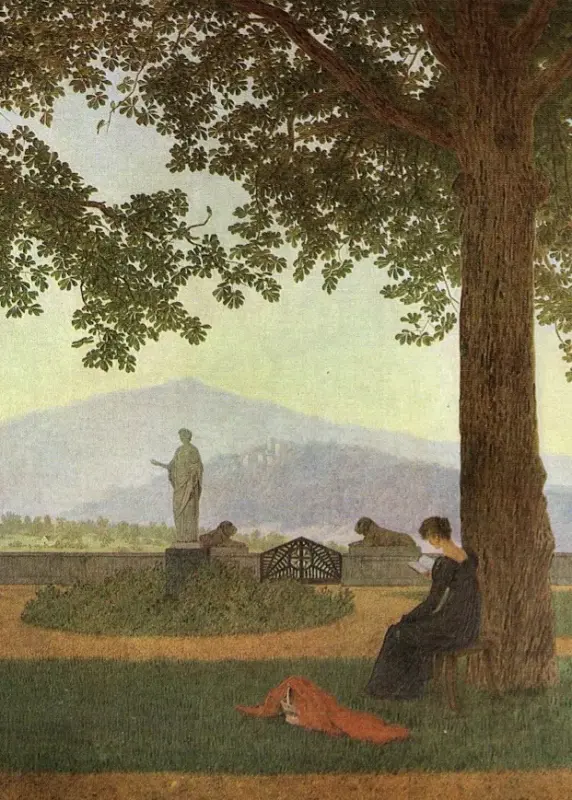
About the work
Johann Wolfgang von Goethe's novel from 1809 bears a chemical-scientific title and is among the most concentrated psychological works of world literature. As stage material the work has enjoyed great popularity since the early twentieth century; the clear four-character constellation and the inescapable pull toward catastrophe make it particularly suited to theatre.
Plot
Eduard and Charlotte, a wealthy couple on their country estate, receive two guests — Eduard's friend the Captain, and Charlotte's young niece Ottilie. The chemical metaphor of elective affinity is realised: Eduard is drawn to Ottilie, Charlotte to the Captain. In a night when Eduard sleeps with his wife but thinks of Ottilie while Charlotte thinks of the Captain, a child is conceived that bears the features of both absent loved ones. The child drowns through Ottilie's inattention. Ottilie thereafter refuses food and dies. Eduard follows her in death.
Cultural significance
Die Wahlverwandtschaften is Goethe's most discussed prose work and provoked bourgeois outrage upon publication — adultery, infant death, and refusal of reconciliation were deemed immoral. Walter Benjamin devoted one of the central essays of modern German literary criticism to the novel. Stage versions exist by Peter Stein, Luc Bondy, and most recently Andrea Breth at the Burgtheater Vienna. Volker Schlöndorff filmed the novel in 1996.