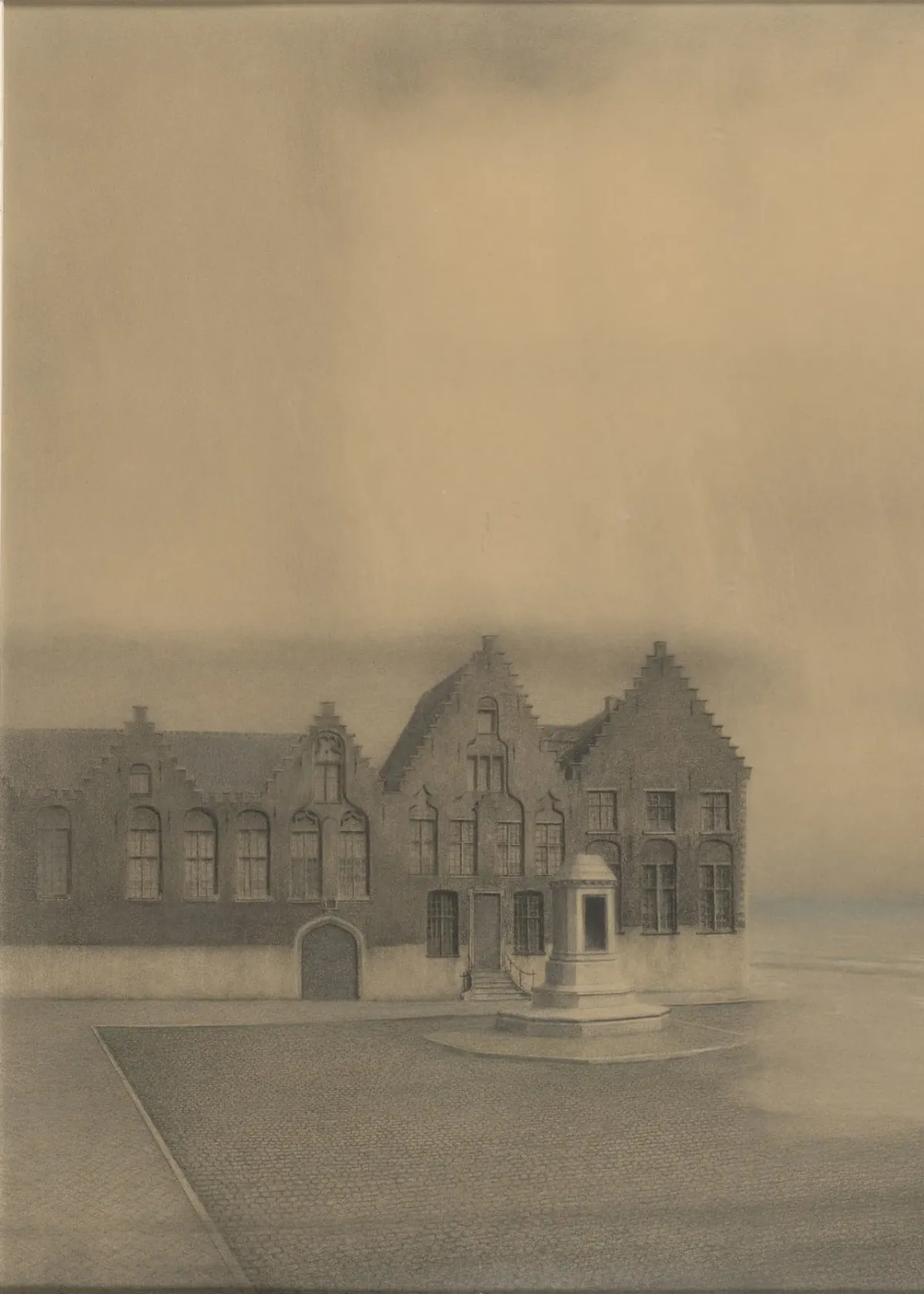
About the work
Erich Wolfgang Korngold's three-act opera was premiered simultaneously on 4 December 1920 in Hamburg and Cologne, when the composer was just twenty-three years old. The libretto, written by Korngold and his father Julius under the pseudonym Paul Schott, is based on Georges Rodenbach's symbolist novel Bruges-la-Morte. The work became one of the most successful new operas of the 1920s before falling victim to Nazi-era bans on Jewish composers.
Plot
Paul, grieving the death of his wife Marie, has turned his Bruges home into a shrine to her memory, preserving her possessions and a lock of her hair. He meets the dancer Marietta, who physically resembles Marie, and begins a passionate but tormented relationship. Unable to reconcile the living woman with his dead wife, Paul strangles Marietta with Marie's braid—only to wake and discover it was a dream. Faced with this vision of his own destructive obsession, Paul resolves to leave Bruges and the past behind.
Cultural significance
Die tote Stadt is the most significant opera of Korngold's career and a landmark of late Romanticism. The aria Glück, das mir verblieb, also known as Marietta's Lied, is one of the most beloved soprano arias of the twentieth century. After decades of neglect following Korngold's exile and subsequent Hollywood career, the work has been increasingly restored to the repertoire, with major productions at the Metropolitan Opera, Vienna State Opera, and Bayerische Staatsoper. The lush, post-Wagnerian score anticipates the film music Korngold would later compose in California.