About the work
Janáček's opera „The Makropulos Affair" was premiered in Brno in 1926 — based on Karel Čapek's play of the same name (1922). The piece interweaves an inheritance lawsuit with a woman who has been alive for 337 years — one of the most unusual operatic subjects ever.
Plot
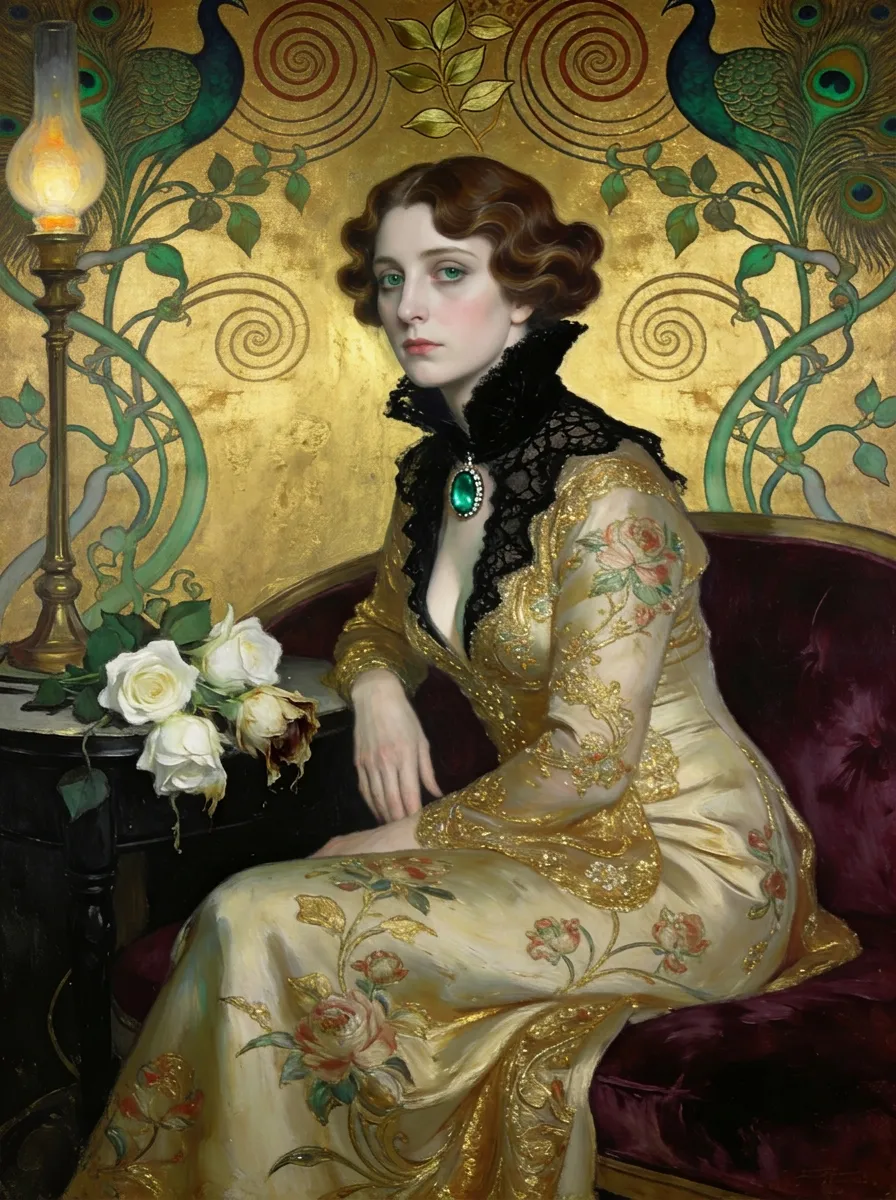
Prague, 1922. In Doctor Kolenatý's law office a hundred-year-old inheritance dispute over the Gregor estate is being heard. The beautiful, mysterious singer Emilia Marty appears and ruthlessly supplies precise details from 1827 — dates and names no one could know. It emerges that Marty is in truth Elina Makropulos, born in 1585, daughter of the alchemist at the court of Emperor Rudolf II, who forcibly administered to her an elixir of life — as a test for the emperor. She has been alive for 337 years, has lived under various names (Eugenia Montez, Ekaterina Myshkina, Elsa Müller, Emilia Marty), all with the initials E.M. She is seeking the original recipe of the elixir, buried in the inheritance file. But she is weary of the long life — everything has become indifferent, everything repeats itself, no one can truly know her. In the final act she burns the recipe; she dies — at last. A young singer, Kristina, refuses the elixir offered her.
Cultural significance
The Makropulos Affair is Janáček's penultimate completed opera and his philosophically densest work. The title figure — a 337-year-old woman who lives forever but can no longer feel anything — is one of the most memorable female roles of the twentieth century. Janáček's speech prosody requires a singer who declaims more than sings — Anja Silja, Catherine Malfitano, Karita Mattila have shaped the role. Productions by David Pountney (ENO 1981) and Patrice Chéreau (Paris 1996) are reference performances. Robert Wilson's 1995 staging brought the work to the Met.