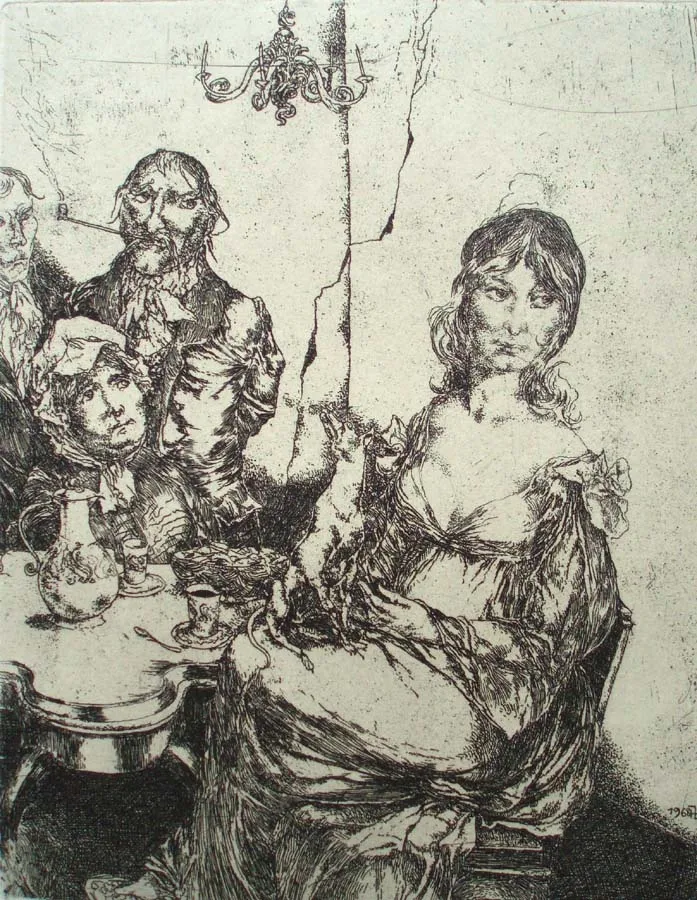
About the work
Die Marquise von O…. is a stage version of the eponymous novella (1808) by Heinrich von Kleist, one of the boldest and most formally accomplished narratives in German literature. Kleist sets the action in Italy and treats, with cool precision, a subject monstrous for its time: a pregnancy without conscious conception.
Plot
The virtuous, widowed Marquise of O…., daughter of an Italian fortress commander, is set upon by a group of soldiers during the storming of the fortress by Russian troops and rescued at the last moment by a noble Russian count. During a fainting spell, however, it is precisely this rescuer who violates her. Months later the Marquise discovers, dumbfounded, that she is pregnant without being aware of any conception. Cast out by her outraged family, she places a sensational newspaper advertisement: let the unknown father come forward, and she will marry him. When the Russian count reveals himself as the father, the Marquise is at first horrified — but in the end, after long trial, reconciliation and marriage follow.
Cultural significance
Die Marquise von O…. is one of the most famous novellas in German literature and a bold work about violence, honour, trust and female self-assertion. Kleist's sober style, marked by nested clauses and the famous dash, lends the delicate material a timeless modernity. Éric Rohmer's faithful 1976 film made the material internationally known; stage versions keep alive the engagement with guilt and self-determination.