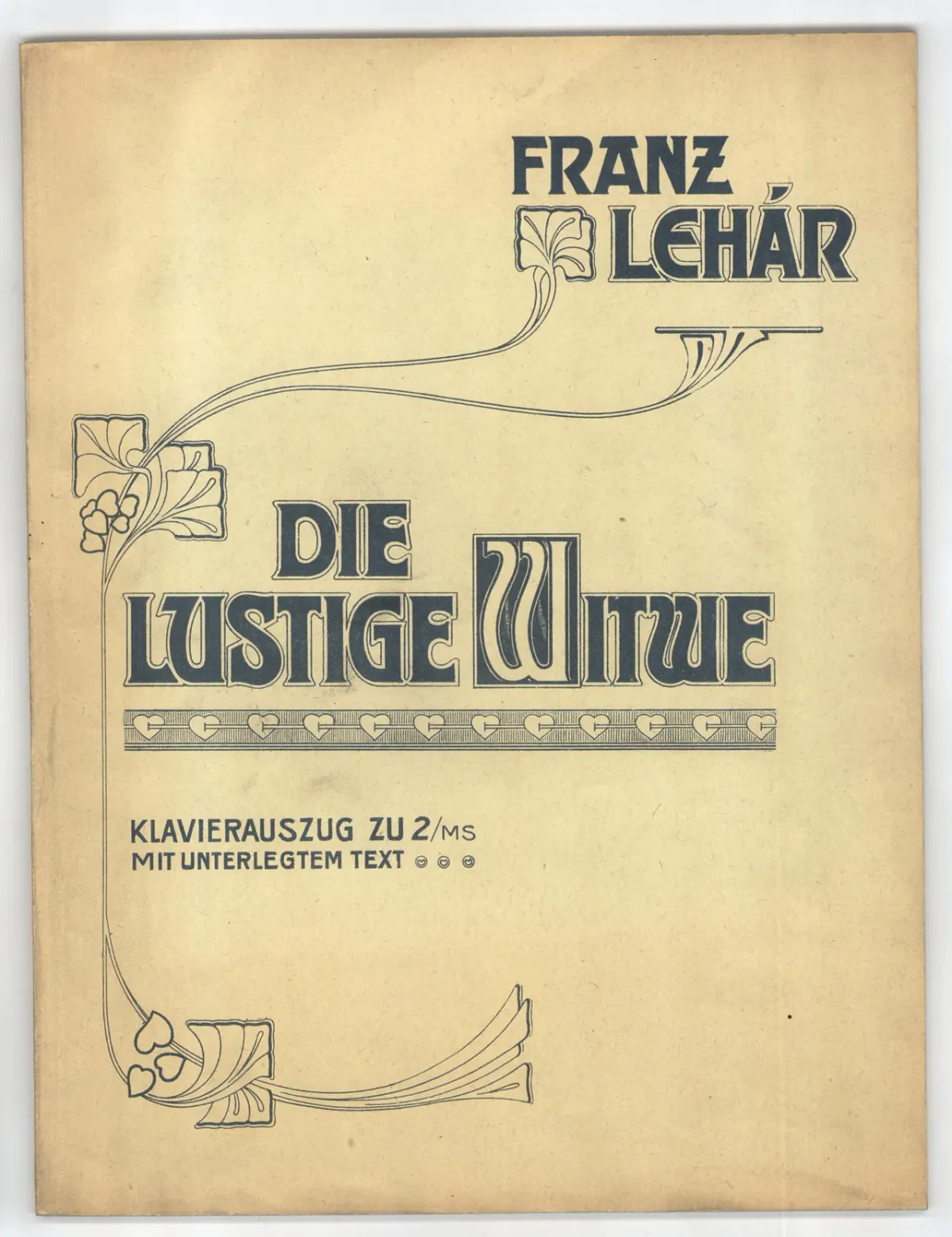
About the work
Franz Lehár's operetta „Die lustige Witwe" („The Merry Widow") was premiered in Vienna in 1905 and became one of the most successful musical works of all time — within a few years it travelled to all the world's stages. The libretto by Victor Léon and Leo Stein is based on Henri Meilhac's comedy „L'Attaché d'ambassade" (1861).
Plot
Paris, around 1900. The wealthy widow Hanna Glawari, native of the small fictional Balkan country Pontevedro, has inherited 20 million francs from her late husband. The Pontevedrin embassy in Paris faces ruin if the money should leave the country — only a marriage of Hanna with a Pontevedrin would prevent it. The ambassador Baron Zeta therefore deploys his attaché Count Danilo Danilowitsch — Hanna's youthful love, whom her family had once forced apart — to court her. Danilo, who fears being thought a fortune-hunter, refuses categorically: „I will not say I love you." A second strand: the ambassador's young wife Valencienne flirts with the French attaché Camille de Rosillon, complicated by a fan that mistakenly bears her name. Through balls, garden scenes and confusions Hanna and Danilo find each other again — Hanna lies that she will lose her fortune on a new marriage; Danilo immediately confesses his love. The ruse is exposed; both marry; Pontevedro is saved.
Cultural significance
Die lustige Witwe is the most successful operetta of all time. „Lippen schweigen, 's flüstern Geigen", „Da geh ich zu Maxim" and the women's chorus „Vilja, o Vilja" are among the most famous melodies in popular music history. Performances at the Vienna Volksoper, the Met (1934 with Maria Jeritza, 2014 with Renée Fleming) and Glyndebourne. Lehár's operetta marks the pinnacle of the Viennese „silver" era.