About the work
Johann Wolfgang von Goethe's epistolary novel from 1774, which established his Europe-wide fame overnight, has been regularly adapted for the stage since the late nineteenth century. As theatre the work functions as a monodrama or as a multi-voice adaptation with Lotte, Albert, and Werther as dramatic figures. Dramatisations range from Gerhart Hauptmann through Peter Stein to contemporary directorial work.
Plot
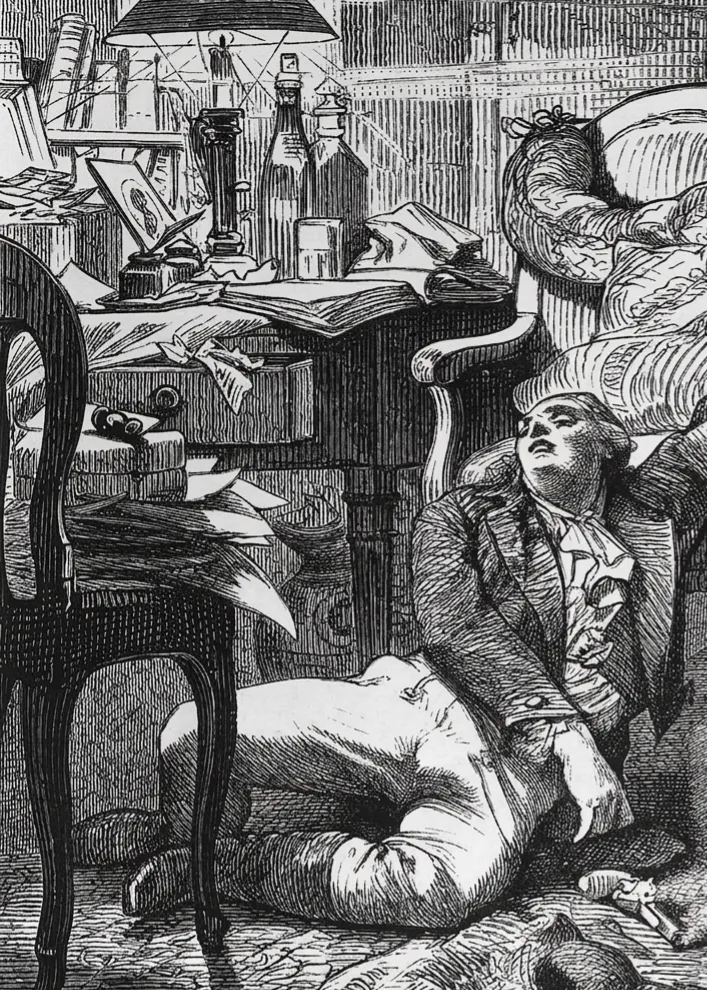
The sensitive young Werther falls in love during a country stay with Lotte, who is engaged to the pragmatic Albert. Over the summer an intense intellectual and emotional bond develops between Werther and Lotte. After her marriage Werther tries to save himself through professional distraction in the city — but fails through his unadapted nature and social humiliation. He returns, kisses Lotte once in a stormy evening, and shoots himself with Albert's borrowed pistols the next morning.
Cultural significance
Werther is among the most cited works of world literature and triggered the so-called Werther Fever upon publication — a Europe-wide fashion of blue frockcoats, yellow waistcoats, and (in isolated cases) imitation suicides. Napoleon is said to have read the novel seven times. Stage versions range from nineteenth-century Romantic adaptations to contemporary monodramas by Ulrich Plenzdorf (Die neuen Leiden des jungen W., 1972) and productions by Jean-Claude Berutti or Christian Stückl.