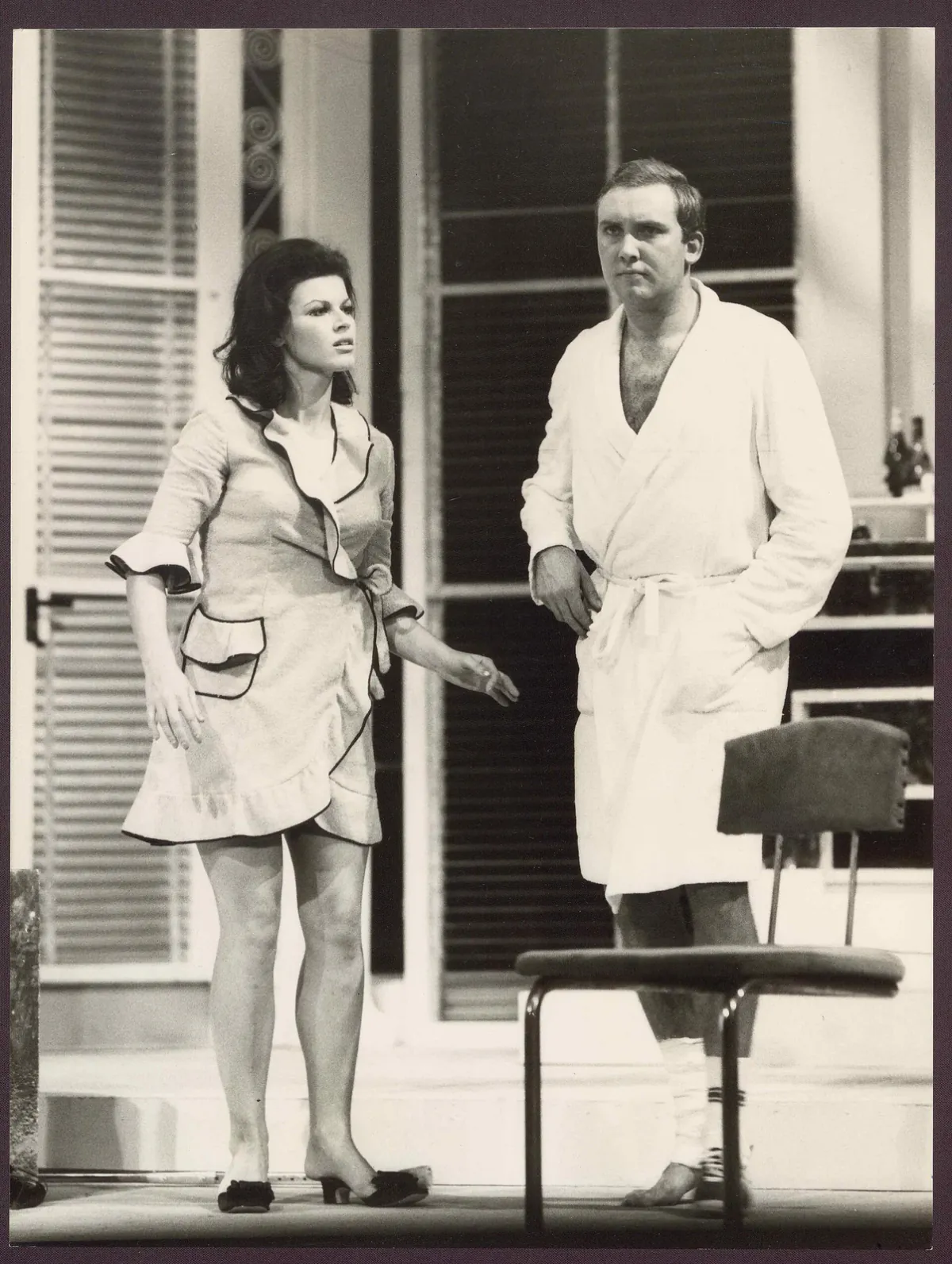
About the work
Cat on a Hot Tin Roof is a play in three acts by Tennessee Williams, premiered on Broadway in 1955. It won the Pulitzer Prize for Drama and is regarded as one of the most intense family dramas of American theatre, dealing with lies, desire, and repression.
Plot
On a cotton plantation in the American South, the family gathers for the birthday of the dying patriarch "Big Daddy." At the centre is the broken couple Brick and Maggie ("the cat"): Brick, a former sports star, numbs himself with alcohol and denies his wife intimacy, driven by unresolved guilt over the death of his friend Skipper. As the family struggles over the inheritance of the terminally ill Big Daddy, repressed truths about homosexuality, mendacity, and unfulfilled longing break open. Maggie fights desperately for her marriage and her future.
Cultural significance
Cat on a Hot Tin Roof dissects with unsparing intensity the life-lies of a Southern family, making "mendacity"—all-pervading deceit—its central theme. Williams's charged, poetic language and his bold (for the time) suggestion of homosexuality caused a sensation. Immortalised by the film with Elizabeth Taylor and Paul Newman, the play is among the cornerstones of American drama.