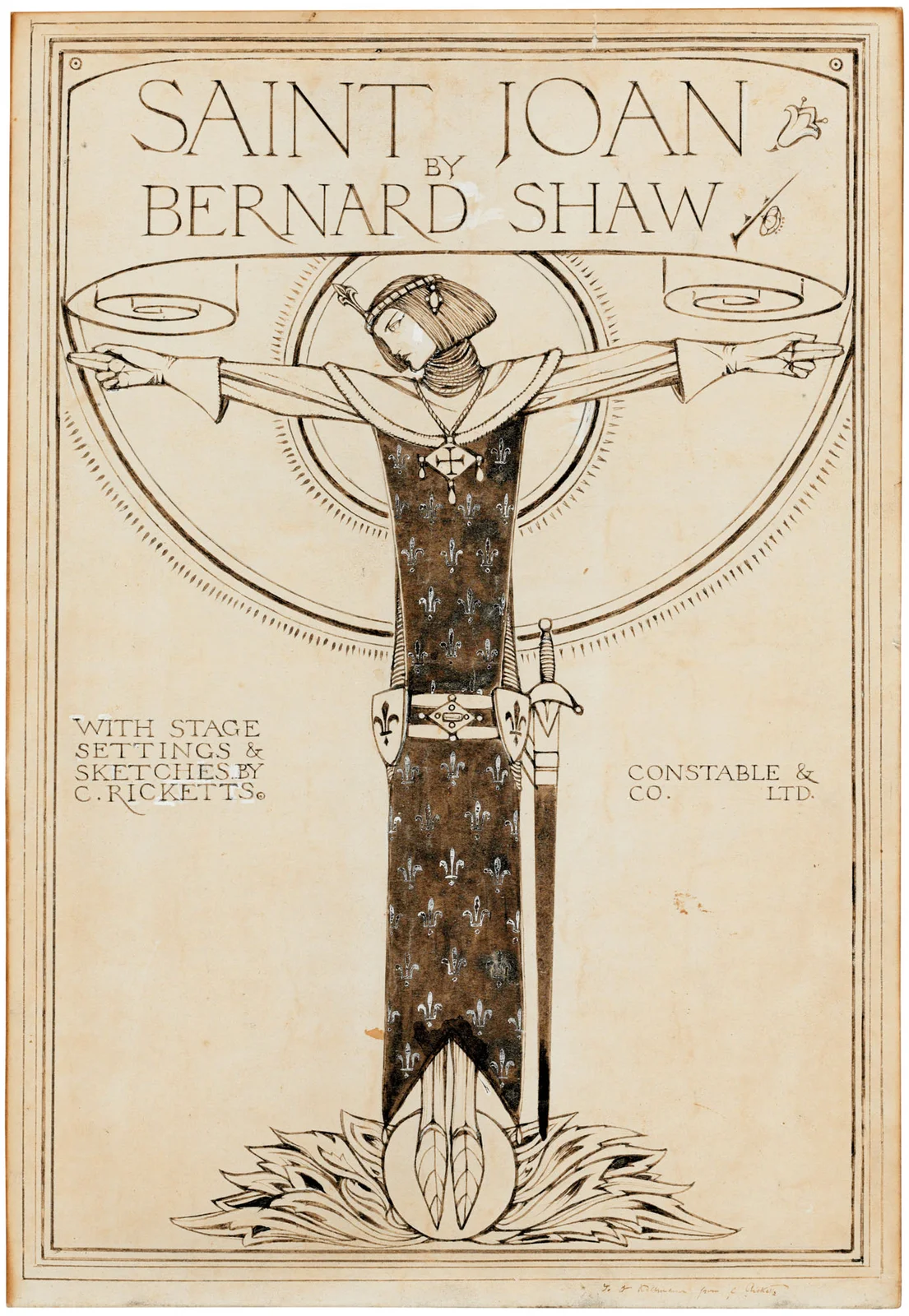
About the work
Chronicle play in six scenes and an epilogue by George Bernard Shaw, written in 1923 shortly after the Catholic Church canonised Joan of Arc in 1920. It premiered on 28 December 1923 at the Garrick Theatre in New York, staged by the Theatre Guild with Winifred Lenihan as Joan; the London premiere followed on 26 March 1924 at the New Theatre with Sybil Thorndike, for whom Shaw had written the role.
Plot
The peasant girl Joan persuades the hesitant Dauphin Charles to give her an army to relieve besieged Orléans. After a string of military successes and Charles's coronation, she is captured and tried by a church court for heresy, whose judges see her above all as a threat to the feudal and ecclesiastical order. Pressured into recanting, she withdraws the recantation and is burned at the stake; an epilogue shows Charles, years later in a dream, as Joan's former opponents posthumously honour her.
Cultural significance
The play's success contributed substantially to Shaw being awarded the 1925 Nobel Prize in Literature, whose prize money he declined. Critics have noted Shaw's deliberate anachronisms, as when medieval characters speak of "Protestantism" and "nationalism" – terms through which he links Joan's trial to modern debates about individual conscience versus institutions.