About the work
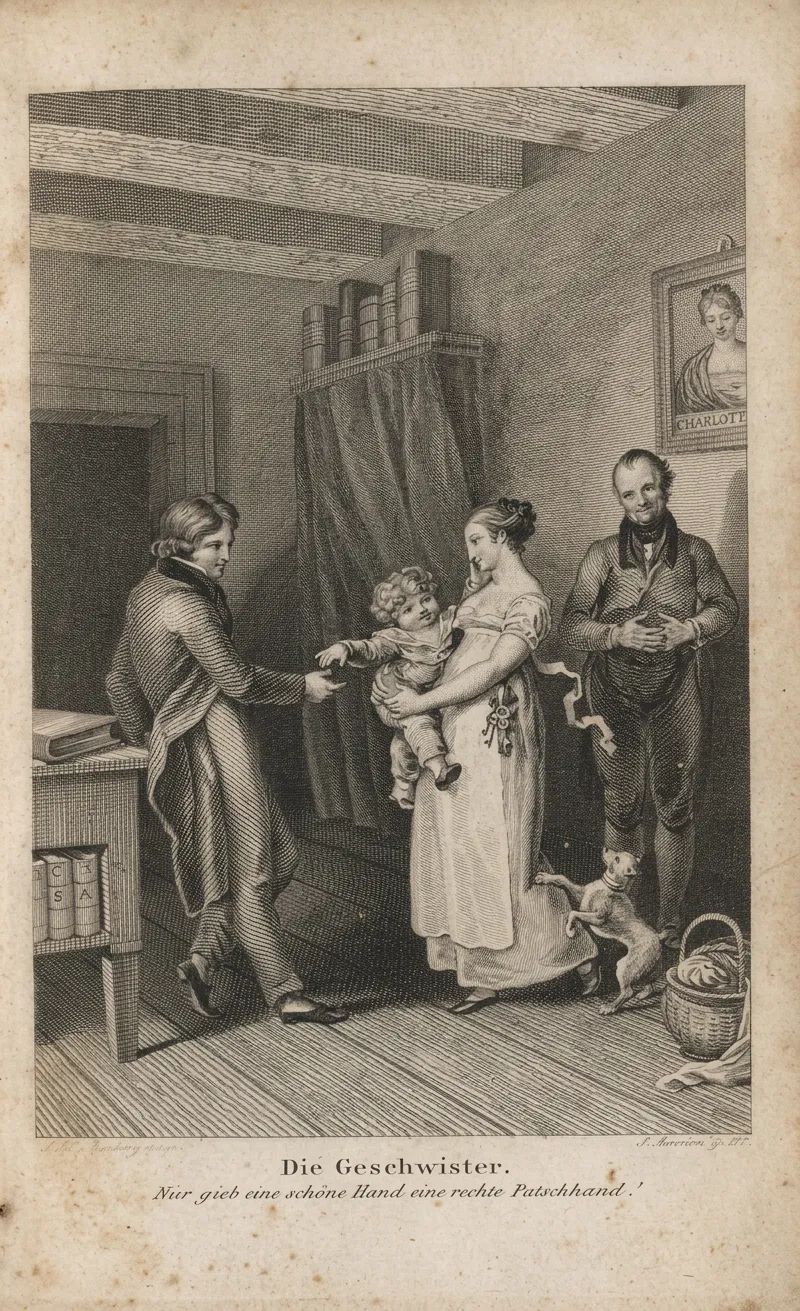
Johann Wolfgang von Goethe's one-act play from 1776 was premiered at the Ducal Theatre Weimar and was composed during a period of intense friendship with Charlotte von Stein. The short, tender play treats a triangular constellation with psychological delicacy that marks Goethe's early Weimar phase — the transition from Sturm und Drang to Classicism in miniature.
Plot
Wilhelm lives with his younger sister Marianne — lovingly cared for by him, but unmarried. His friend Fabrice asks for Marianne's hand. Wilhelm knows something no one else does: Marianne is not his biological sister but the daughter of a woman he once loved and wished to marry, who entrusted the child to him. When Marianne rejects Fabrice and confesses her love for Wilhelm, Wilhelm reveals the secret. The two marry.
Cultural significance
Die Geschwister is one of the tenderest short one-act plays in German literature and is regarded as Goethe's indirect reflection on his relationship with his sister Cornelia and with Charlotte von Stein. The play remains a touchstone for young actors because of its psychological density in compact form. Productions at German-language drama schools and studio stages keep it continuously in the repertoire.