About the work
The Flies (French "Les Mouches") is a play in three acts by Jean-Paul Sartre, premiered in occupied Paris in 1943. Sartre transformed the ancient Orestes myth into an existentialist parable about freedom and responsibility—and into a coded call to resist the German occupation.
Plot
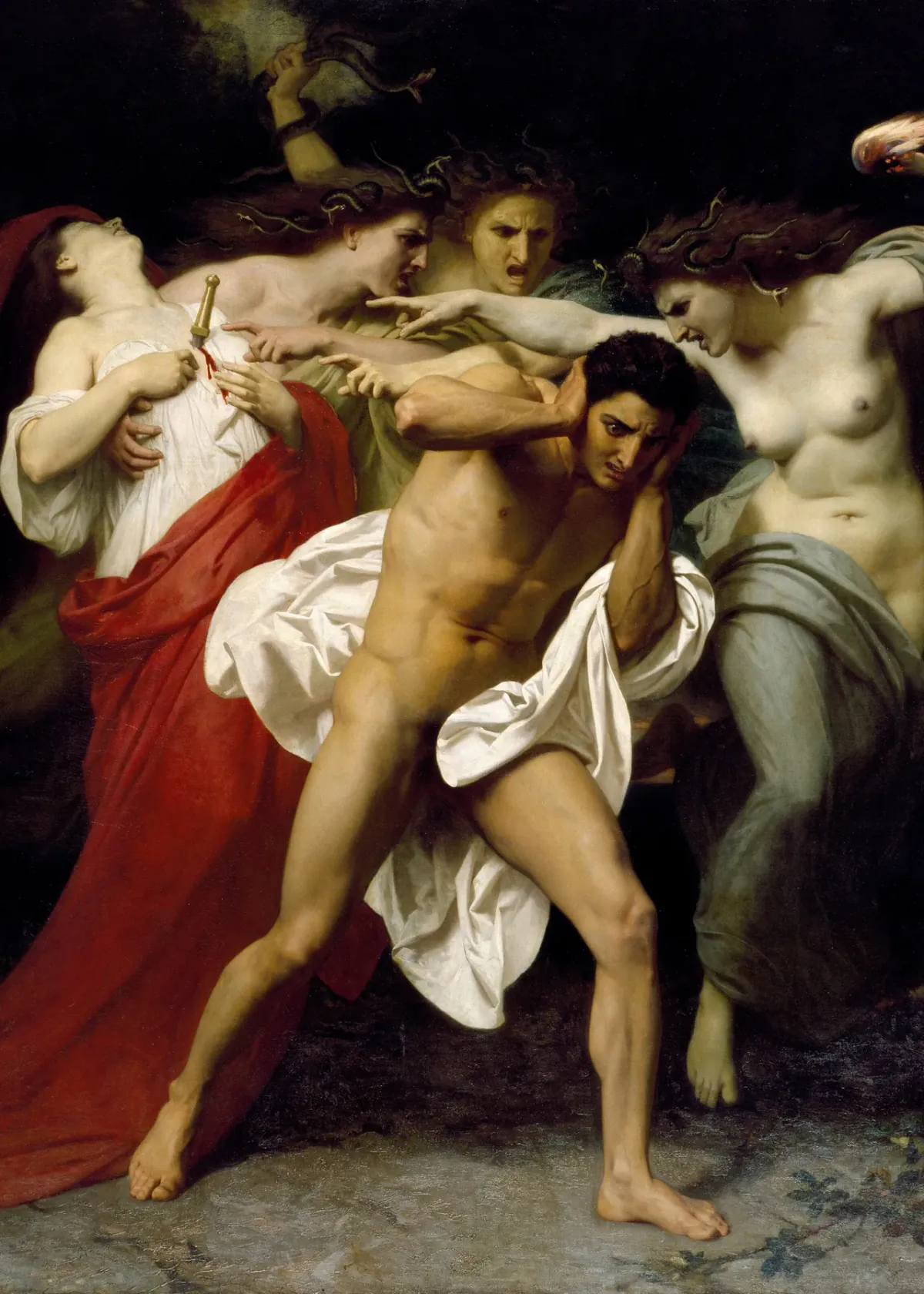
Orestes returns to his home city of Argos, which since the murder of King Agamemnon has suffered under a cloud of guilt, remorse, and swarming flies—emblems of a people paralysed by pangs of conscience. The usurper Aegisthus and Orestes's mother Clytemnestra keep the citizens cowed with the ideology of repentance, supported by the god Jupiter. Orestes kills the two but refuses—unlike in the myth—to feel remorse. He takes his deed and his absolute freedom upon himself, frees the city of the flies, and departs alone but self-determined.
Cultural significance
The Flies is the dramatic embodiment of Sartre's existentialism: man is "condemned to be free" and must bear full responsibility for his actions without hiding behind gods or remorse. In the context of the occupation, the play was a bold call to cast off guilt and act. It is among the key works of twentieth-century philosophical theatre.