About the work
Late Jacobean tragicomedy that William Shakespeare wrote together with John Fletcher around 1613–14, generally regarded today as Shakespeare's final work for the stage. It draws on Geoffrey Chaucer's verse tale "The Knight's Tale" from the Canterbury Tales. A performance at the English royal court is documented for 1619, and the play was first printed as a quarto in 1634.
Plot
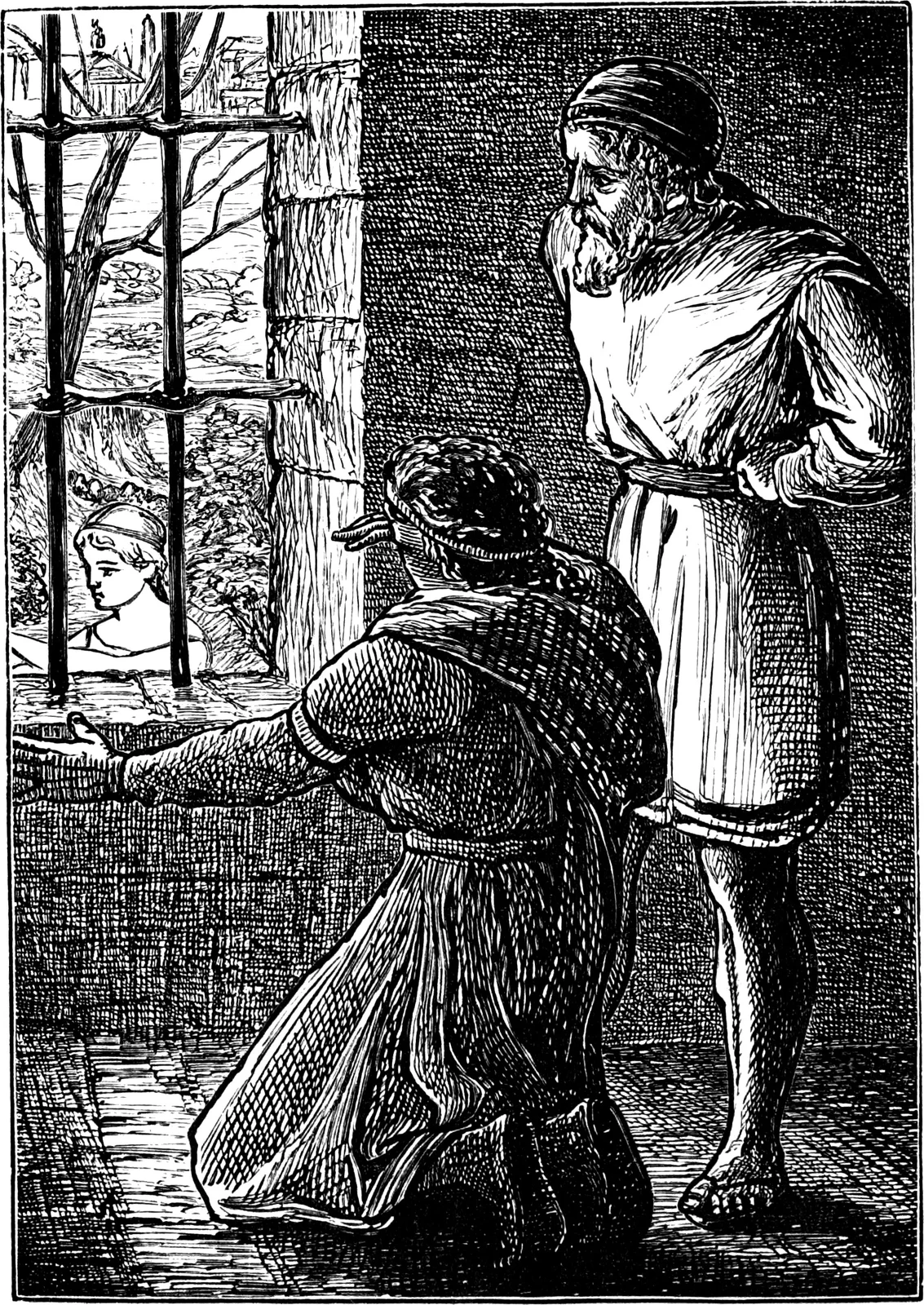
The Theban cousins and close friends Palamon and Arcite are taken prisoner by the Athenians after a lost war. Catching sight of Princess Emilia from their cell, both instantly fall in love with her, turning their friendship into bitter rivalry. Once freed, they settle their dispute for her hand in a chivalric tournament: Arcite wins the contest but is thrown from his horse and dies soon after, leaving Palamon to marry Emilia.
Cultural significance
For a long time the play's authorship remained disputed, and it was left out of the First Folio of 1623, only appearing in the 1679 Beaumont and Fletcher collection. Today scholars broadly accept Shakespeare and Fletcher as joint authors, based on stylistic analysis assigning individual acts to each writer, and the play is counted among the late examples of Jacobean tragicomedy.