About the work
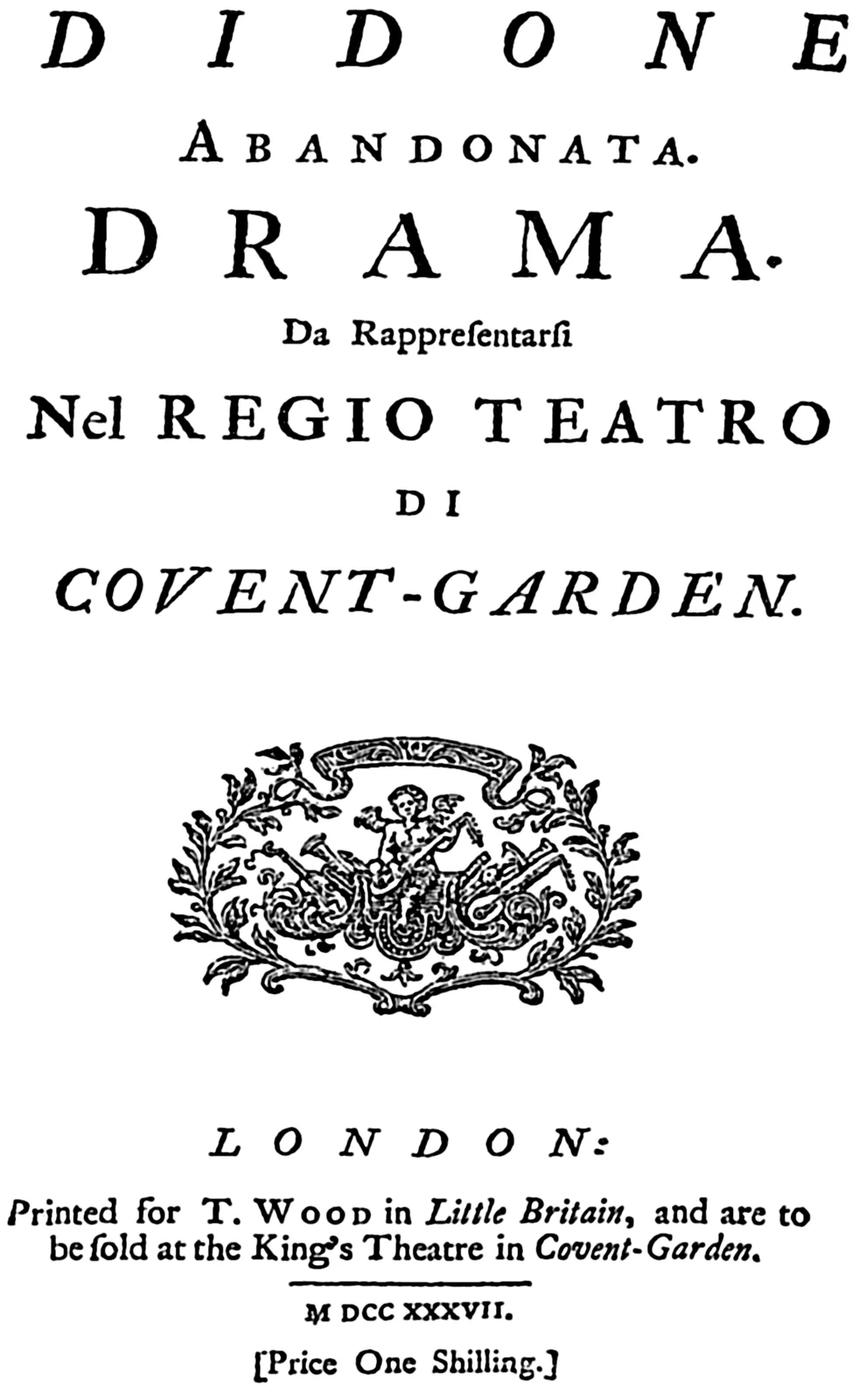
"Didone abbandonata" is a pasticcio Handel assembled in 1737 from Leonardo Vinci's Neapolitan opera of the same name (1726), itself a setting of Pietro Metastasio's 1724 libretto: he kept thirteen of its twenty-two arias unchanged, trimmed the recitatives, and inserted arias chiefly by Johann Adolph Hasse, along with Geminiano Giacomelli and Antonio Vivaldi. It premiered at the Theatre Royal, Covent Garden, on 13 April 1737.
Plot
Queen Dido of Carthage loves the Trojan prince Aeneas, who must leave her to found Rome in Italy. The Numidian king Iarba courts Dido while Princess Selene also loves Aeneas; in an ending unusually tragic for an opera seria, the abandoned Dido throws herself into her burning palace.
Cultural significance
The contemporary observer the Earl of Shaftesbury called the opera "a very heavy one" and predicted its swift demise; indeed it managed only four performances. Handel's version was also the first of eventually eight pasticcio adaptations of Metastasio's "Didone abbandonata" staged in London; the finale, built from three accompanied recitatives depicting Dido's death amid the flames, is considered one of the most striking operatic endings of its time.