About the work
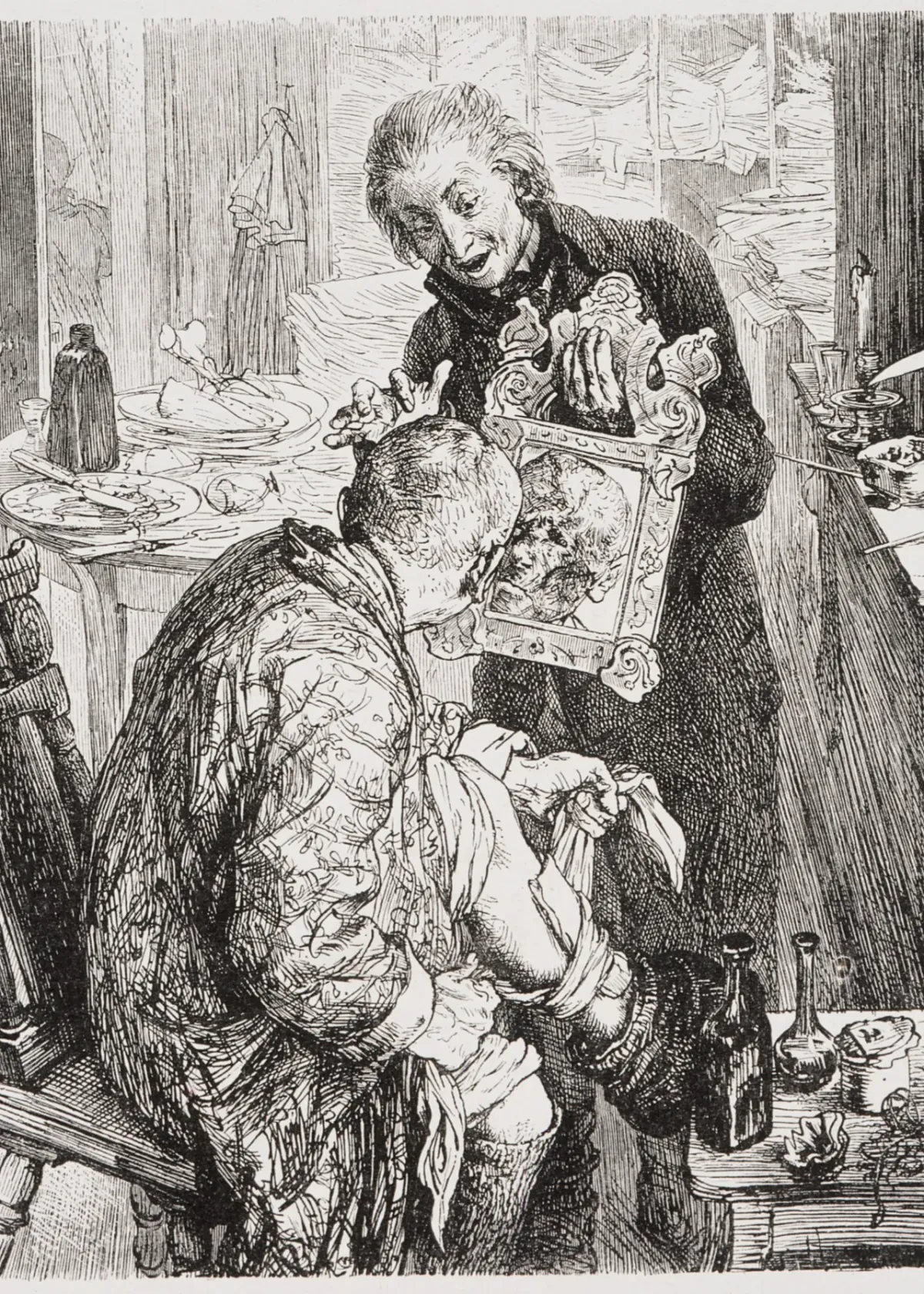
Heinrich von Kleist's comedy „Der zerbrochne Krug" was written in 1803-06 and premiered in Weimar in 1808 — directed by Goethe, who ruined the play by breaking it into multiple acts with intervals, causing a theatrical scandal. Today it is considered, after Lessing's „Minna von Barnhelm", the most important German comedy between Enlightenment and Romanticism.
Plot
In a Dutch village near Utrecht an earthenware jug has been broken. Frau Marthe Rull brings the case to court, because her daughter Eve was attacked in her chamber that night by a man. The presiding judge is the village magistrate Adam — who appears since the night before limping, with bruises on his head, and without his wig. Inspector Walter has unexpectedly arrived from Utrecht to audit Adam's conduct. In a virtuoso interrogation, Adam exposes himself — for he was the man who broke into Eve's chamber, was surprised by her fiancé Ruprecht, struck with a doorknob, and shattered the jug as he fell. Eve, who had kept silent to protect Ruprecht, finally tells the truth. Adam flees across the fields; Walter orders his suspension, and Ruprecht and Eve are reconciled.
Cultural significance
„Der zerbrochne Krug" is Kleist's only completed comedy and is considered a masterpiece of analytical dramatic technique — as in Sophocles' „Oedipus Rex", the judge uncovers his own guilt through interrogation. The play is continuously in the German repertoire; legendary stagings include those with Heinz Rühmann, Walter Felsenstein and, more recently, Andrea Breth and Karin Henkel.