About the work
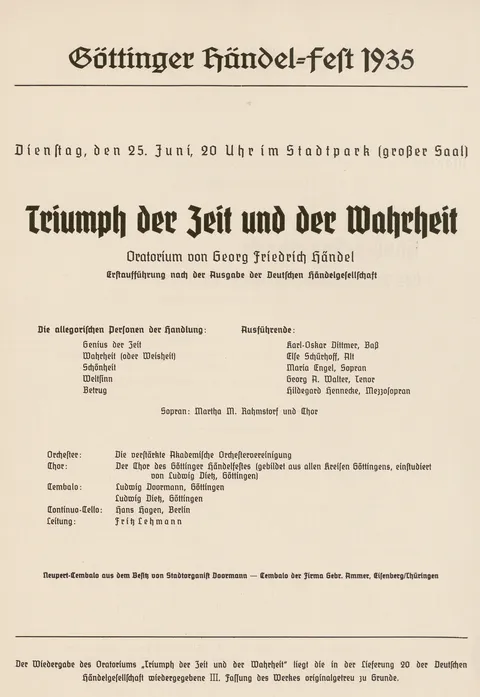
The Triumph of Time and Truth (Il trionfo del Tempo e del Disinganno) is an oratorio by George Frideric Handel, whose first version was written in Rome in 1707—Handel's very first oratorio, composed at just 22 years of age. The allegorical libretto is by Cardinal Benedetto Pamphili.
Plot
The work has no actual plot but is an allegorical dispute between four personified figures: Beauty (Bellezza) must decide whether to follow Pleasure (Piacere) or to heed Time (Tempo) and Truth, or Disillusion (Disinganno). In a struggle between the temptations of sensual pleasure and the recognition of its transience, Beauty is held up a mirror. In the end Beauty repentantly turns away from vanity and toward eternal truth.
Cultural significance
The oratorio accompanied Handel throughout his life: he revised it several times, finally in 1757 as the English version The Triumph of Time and Truth, shortly before his death—a unique arc spanning half a century of work. The famous aria Lascia la spina Handel later reused in Rinaldo as Lascia ch'io pianga. The work already shows the young Handel at the height of his melodic inventiveness and belongs to the core of his oratorio output.