About the work
Thomas Bernhard's comedy „The Showman" („Der Theatermacher") was premiered at the Salzburg Festival in 1985, directed by Claus Peymann. At its centre stands the megalomaniac state actor Bruscon, who tours the Austrian provinces with his family. The play is a typical Bernhard tirade: a furiously comic monologue about art, vanity and hatred of the provinces.
Plot
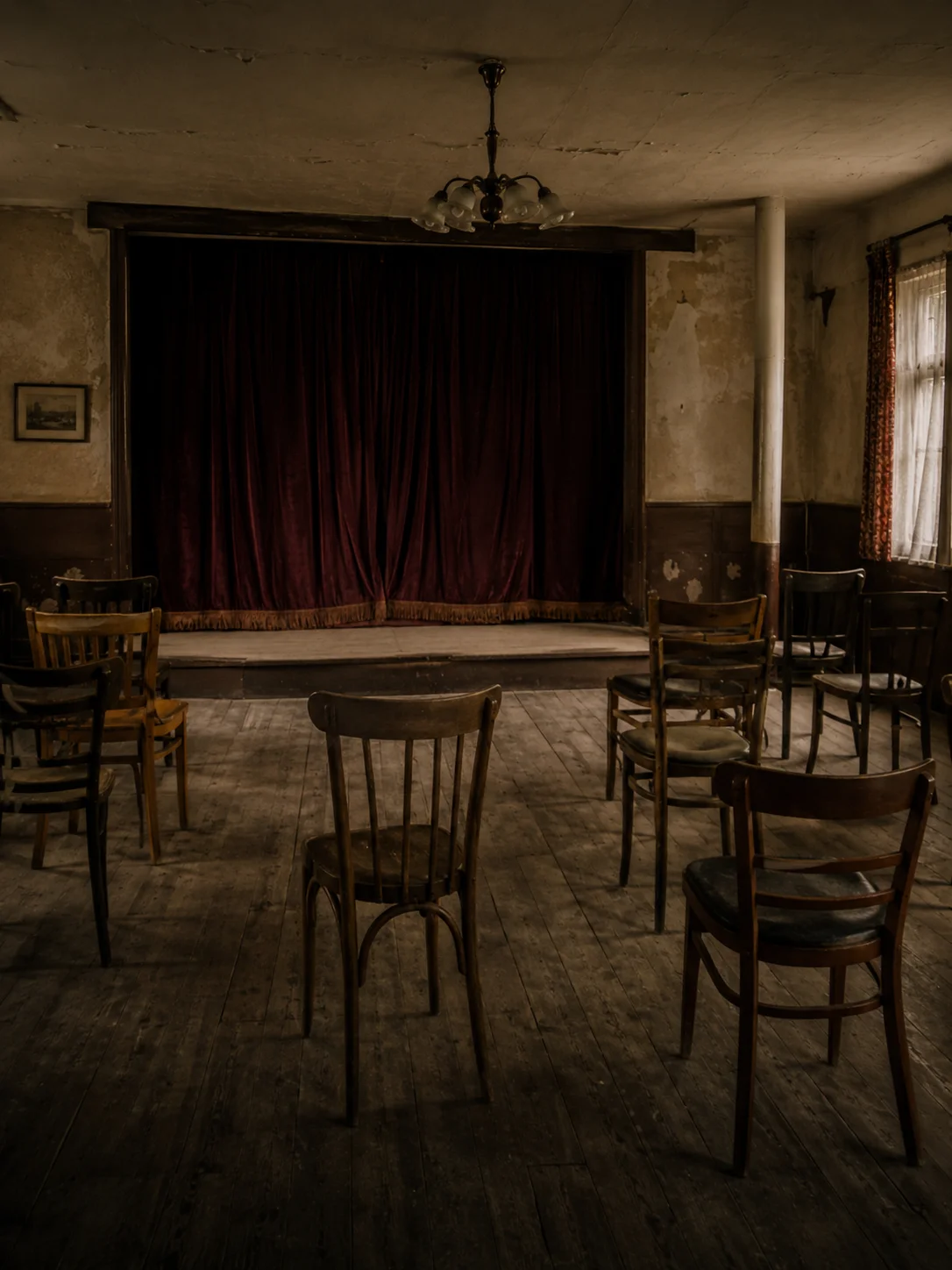
The ageing, autocratic actor Bruscon, a „state artist", is stranded with his careworn family — wife, son, daughter — in the wretched inn of the village of Utzbach, where he is to perform his self-written world-theatre opus „The Wheel of History". During the preparations Bruscon heaps endless tirades of abuse on the innkeeper, his relatives and the whole „dull" country life: on the poor lighting, the smell of pigs, the incompetence of everyone, the burden of genius. He forces his family to rehearse, humiliates them and at the same time celebrates his own greatness. But the performance never takes place: a gathering thunderstorm, a power cut and finally a fire in the parsonage destroy the great work. Bruscon's megalomania comes to nothing.
Cultural significance
„The Showman" is one of Thomas Bernhard's most-performed comedies and a prime example of his monologic, repetitive art of invective, which fuses the comic and the despairing. The collaboration between Bernhard and the director Claus Peymann left a lasting mark on German-language theatre. The play belongs to the standing repertoire and is regarded as Bernhard's bitterly comic reckoning with the artist's vocation.