About the work
Richard Wagner's three-act music drama is the Second Day of Der Ring des Nibelungen and was composed in two phases separated by twelve years—Wagner interrupted work in 1857 during Act Two to compose Tristan und Isolde and Die Meistersinger, returning to complete Siegfried only in 1871. The full opera was premiered during the first complete Ring at Bayreuth on 16 August 1876.
Plot
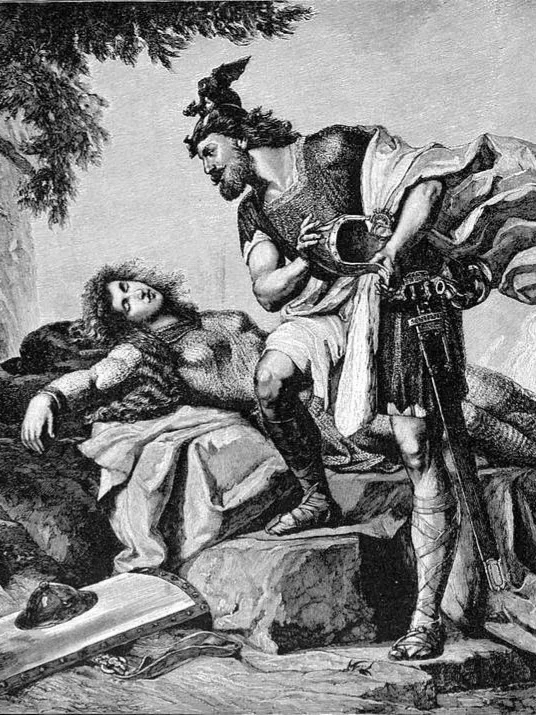
In the forest, the young Siegfried has been raised in ignorance by the dwarf Mime, Alberich's brother, who wants the hero to kill the giant Fafner (now transformed into a dragon) and retrieve the ring. Siegfried reforges his father Siegmund's broken sword Nothung, kills Fafner, and magically learns to understand birds from the dragon's blood. A forest bird directs him to Brünnhilde on her fire-ringed rock. Wotan appears disguised as the Wanderer; Siegfried breaks Wotan's spear—the gods' authority is ending. Siegfried reaches the sleeping Brünnhilde, awakens her with a kiss, and they sing a rapturous love duet.
Cultural significance
Siegfried is the Ring's great forward leap—the generation that rises beyond the gods' failing order. The Forest Murmurs interlude and the final love duet are orchestral and vocal highlights. The title role is among the most notoriously difficult in the tenor repertoire, requiring superhuman stamina across four hours with no intervening rest. The role has been taken by few tenors per generation; Lauritz Melchior, Wolfgang Windgassen, and René Kollo have defined the modern tradition.