About the work
Richard Wagner's three-act music drama is the First Day of Der Ring des Nibelungen, premiered on 26 June 1870 at the Königliches Hof- und Nationaltheater Munich—again against Wagner's wishes under King Ludwig II's patronage. The work picks up the story of Das Rheingold a generation later, focusing on Wotan's mortal children and the impossible conflicts his grand plan has created. Die Walküre is the most frequently performed Ring opera on its own.
Plot
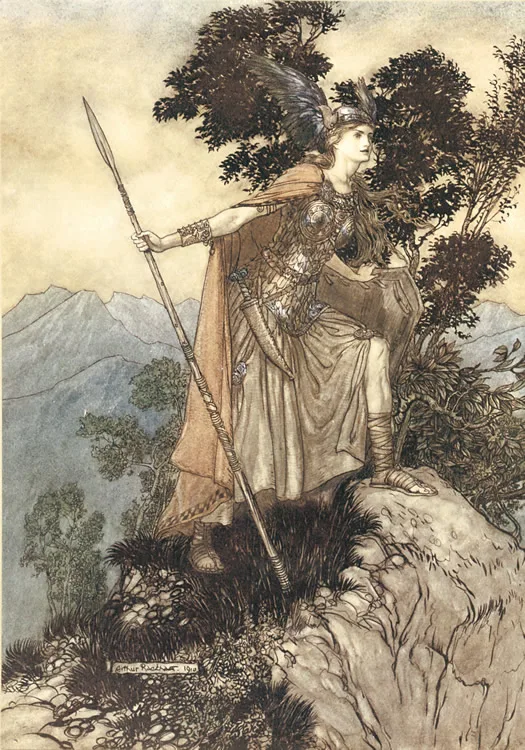
Siegmund, a wandering warrior, takes shelter from a storm in the home of Hunding, whose wife Sieglinde recognises him as her long-lost twin brother. Their love blossoms forbidden as they prepare to flee. Wotan orders his Valkyrie daughter Brünnhilde to let Hunding kill Siegmund in the ensuing combat, but Brünnhilde disobeys out of compassion. Siegmund is nonetheless killed; Sieglinde, pregnant with Siegfried, is rescued by Brünnhilde. For her disobedience, Wotan strips Brünnhilde of her immortality and places her in magical sleep surrounded by fire. Only a hero without fear can rescue her.
Cultural significance
Die Walküre contains the Ride of the Valkyries, among the most famous pieces of orchestral music in existence—made internationally notorious by its use in Apocalypse Now. Wotan's farewell to Brünnhilde, the Magic Fire Music, and the First Act duet between Siegmund and Sieglinde are among Wagner's greatest lyrical achievements. The role of Brünnhilde is one of the supreme challenges for dramatic sopranos; Kirsten Flagstad, Birgit Nilsson, and Waltraud Meier have defined its modern tradition.