About the work
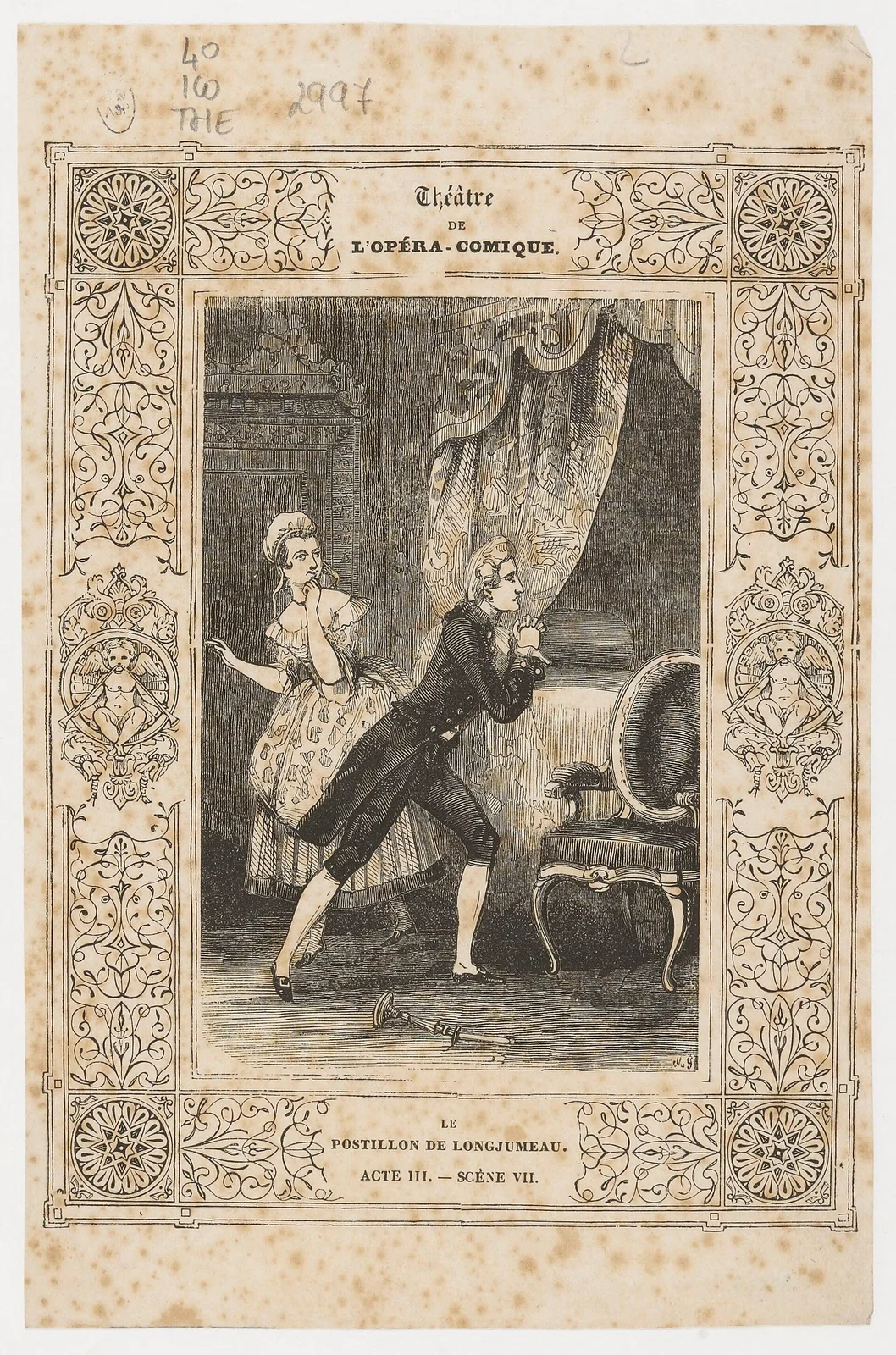
Der Postillon von Lonjumeau (Le postillon de Lonjumeau) is a comic opera in three acts by Adolphe Adam, with a libretto by Adolphe de Leuven and Léon Lévy Brunswick. It premiered on 13 October 1836 at the Opéra-Comique in Paris and, alongside the ballet Giselle and the carol Cantique de Noël, became Adam's most successful work internationally.
Plot
The postilion Chapelou marries his Madeleine on their wedding day, but that same evening is discovered by a theatrical agent and leaves her to pursue a career as an opera singer under the stage name Saint-Phar. Ten years later, the celebrated tenor Saint-Phar is engaged to sing at the remarriage of his first wife, believed dead; in the end the two recognise each other and are reunited.
Cultural significance
The role of Chapelou/Saint-Phar, with its famous high D, is considered one of the most demanding tenor parts in the French opéra-comique tradition. The opera quickly toured internationally, including London in 1837 and New Orleans in 1838, and remains occasional repertoire at small and mid-sized houses in German-speaking countries today.