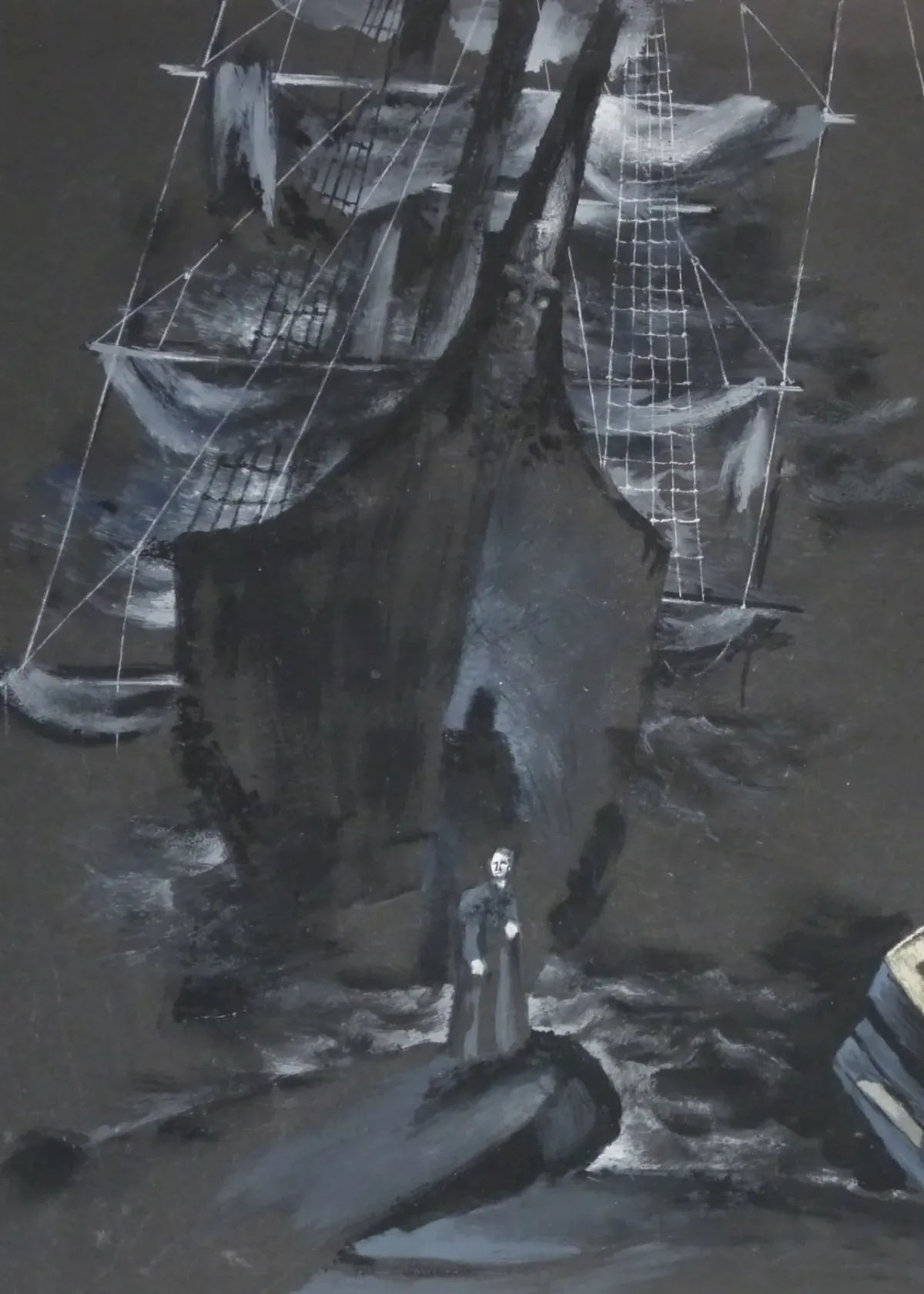
About the work
Richard Wagner's romantic opera in three acts was premiered in 1843 at the Königliches Hoftheater Dresden and is the earliest of his works to remain in the international repertoire. Originally conceived as a single act, it is often performed without intermission, in keeping with Wagner's later preference. The libretto is Wagner's own adaptation of Heinrich Heine's ironic retelling of the Dutchman legend; he drew inspiration from a storm-tossed sea voyage from Riga to London.
Plot
The Dutchman, a sea captain damned for a blasphemous oath to sail the oceans eternally, is permitted to land once every seven years to seek redemption through the faithful love of a woman. His ghost ship enters a Norwegian harbour and he befriends the captain Daland, who promises him his daughter Senta in exchange for treasures. Senta has long been fascinated by the ballad and the portrait of the Dutchman and pledges him her faithfulness. But the Dutchman misreads her hesitation as betrayal and sails away. Senta throws herself from the cliff into the sea; the ship sinks, and the two ascend together, redeemed.
Cultural significance
The Flying Dutchman is the first opera in which Wagner shapes his signature theme of redemption through female self-sacrifice—a motif that would recur in Tannhäuser, Tristan, and the Ring. Senta's Ballad in the second act distils the story into a folk-like narrative with eerie modal harmonies that prefigure Wagner's mature style. Harry Kupfer's 1978 Bayreuth production, reading the Dutchman as Senta's feverish hallucination, became a template for the modern Regietheater approach to Wagner.