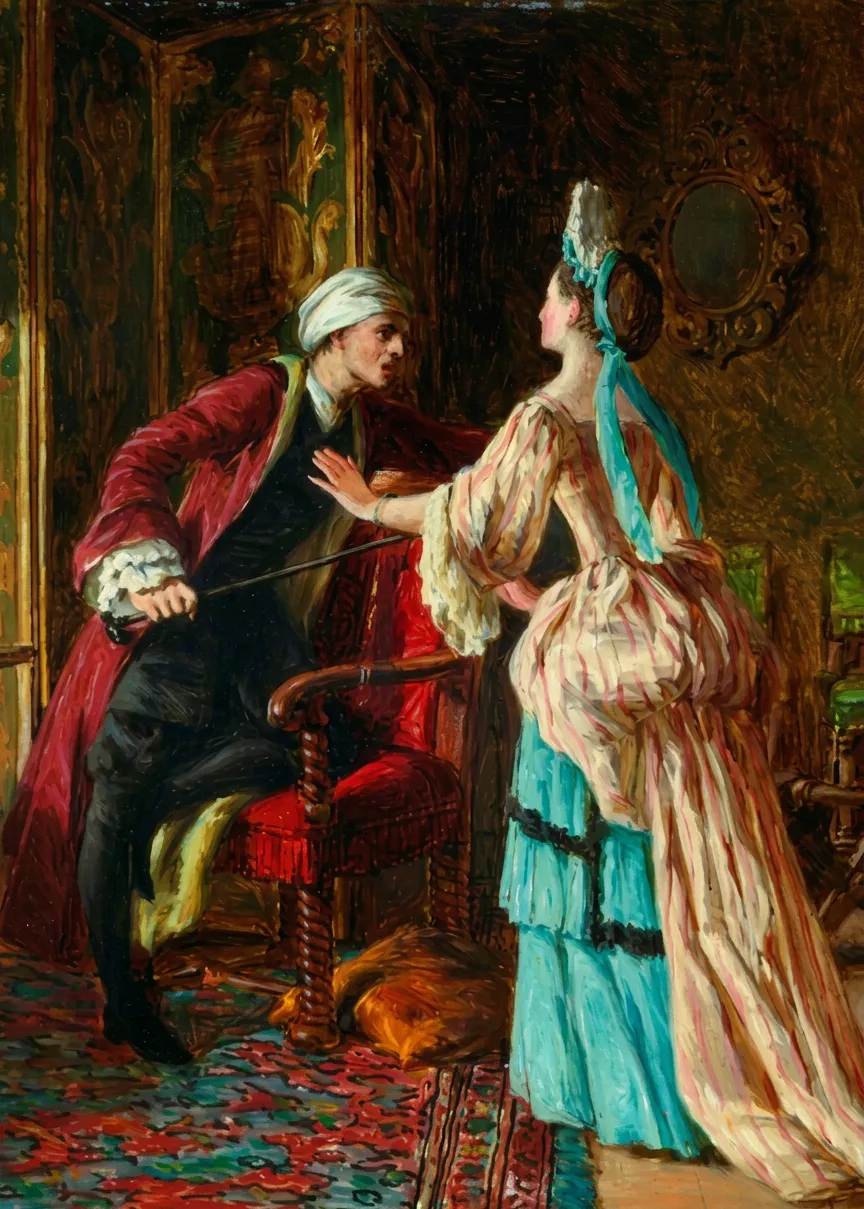
About the work
The Imaginary Invalid (French "Le Malade imaginaire") is a comédie-ballet in three acts by Molière, premiered in Paris in 1673. It was Molière's last work—he played the title role himself and collapsed during the fourth performance, dying shortly afterward. The play combines biting satire of the medical profession with music and dance.
Plot
Argan, a wealthy hypochondriac, is obsessed with imaginary illnesses and the treatments of money-grubbing doctors who shamelessly fleece him. To secure free medical care permanently, he wants to marry his daughter Angélique to a doltish young doctor—against her will, for she loves another. His clever maid Toinette and his brother Béralde see through the game and, with a ruse, expose both the greed of his second wife and the charlatanry of the physicians. In the end Argan simply has himself "appointed" a doctor.
Cultural significance
The Imaginary Invalid is one of Molière's most popular comedies and his final reckoning with the quackery of contemporary medicine. The circumstances of Molière's death on stage lent the work an almost mythical aura. The combination of social satire, farce, and musical interludes makes it a timeless theatrical experience, performed worldwide to this day, its mockery of deference to authority having lost none of its sharpness.