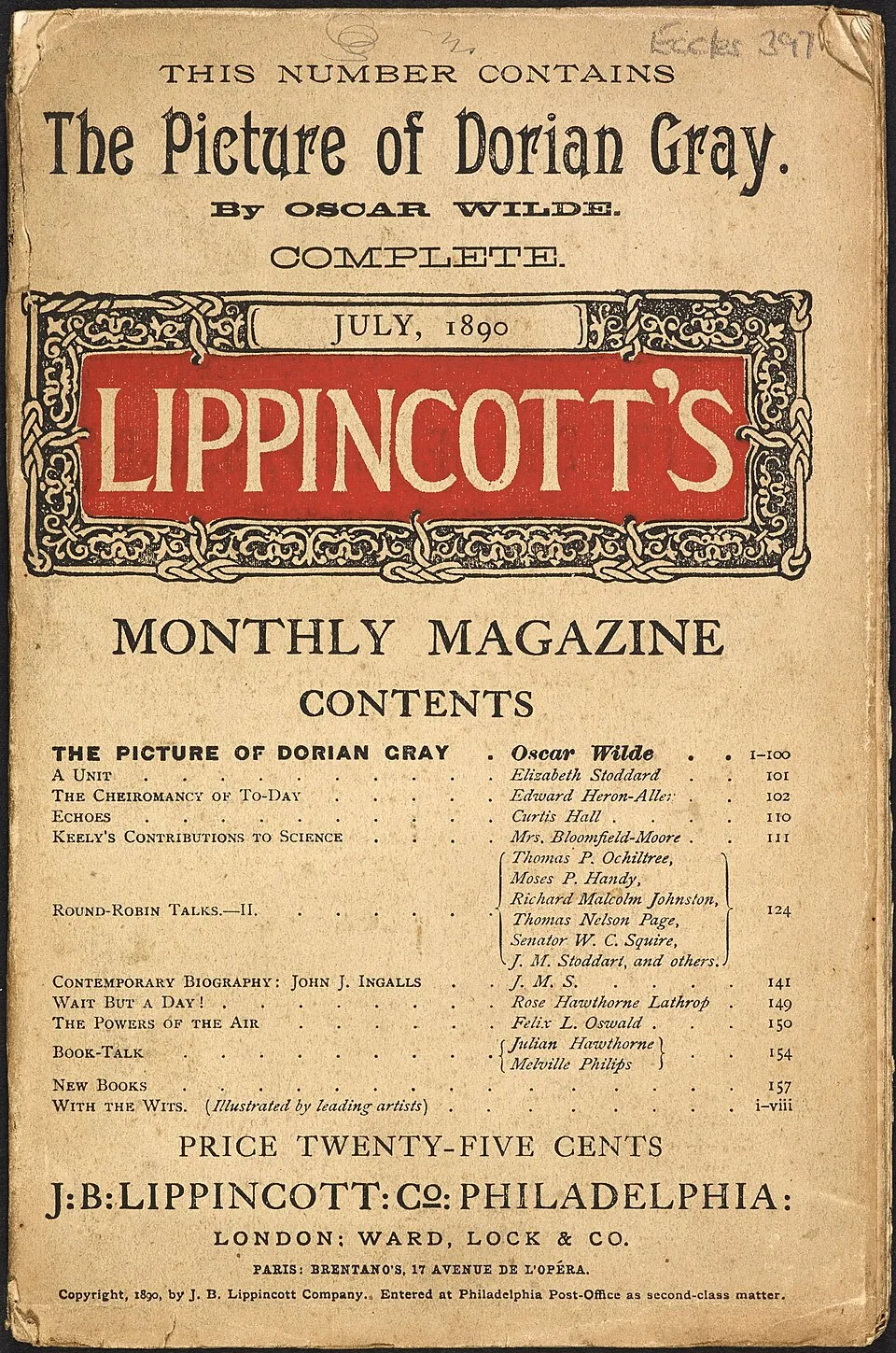
About the work
The Picture of Dorian Gray is a stage version of the only novel (1890/91) by Oscar Wilde, a key work of English Aestheticism. The novel, about a young man whose portrait ages and decays in his place, was sharply criticised on publication for its hedonism, perceived as immoral, and has been adapted many times for theatre and film.
Plot
The beautiful young Dorian Gray has his portrait painted by the artist Basil Hallward. Under the influence of the cynical man-about-town Lord Henry Wotton, who preaches the cult of eternal youth and pleasure, Dorian wishes that the portrait might age in his place. The wish is granted: while Dorian remains young and flawless for decades, the hidden portrait records every one of his sins and cruelties and grows ever more hideous. Dorian drives an actress to suicide, murders the painter and sinks into vice. When he finally tries to destroy the picture to rid himself of his conscience, he stabs himself — and is found as a withered old man, while the portrait regains its original beauty.
Cultural significance
The Picture of Dorian Gray is one of the most influential works of world literature and the most famous emblem of the Faustian pact with eternal youth. Wilde's combination of the cult of beauty, moral decay and the question of art's responsibility has inspired countless adaptations in theatre, film and opera. The novel is regarded as a manifesto of Aestheticism and, on account of its timeless themes — vanity, double standards, the price of hedonism — is still regularly reinterpreted for the stage today.