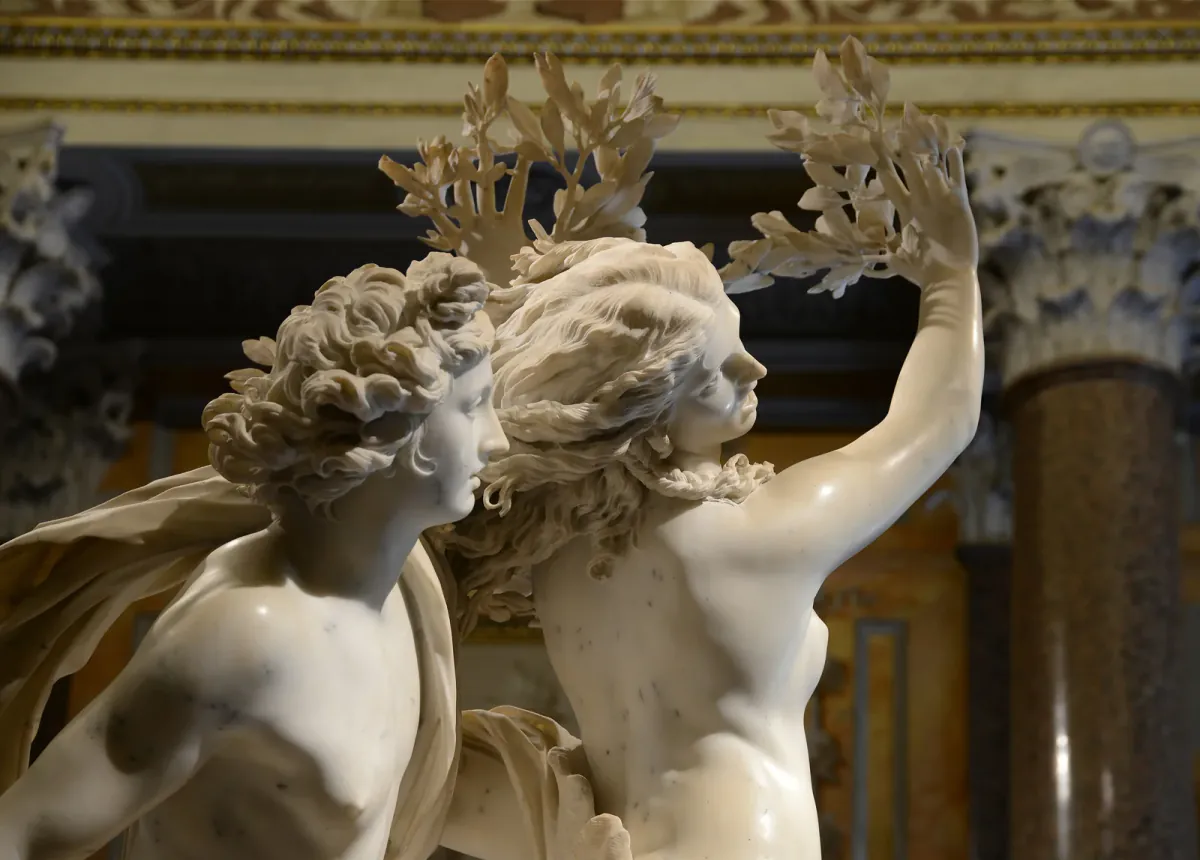
About the work
Daphne is a "bucolic tragedy in one act" by Richard Strauss, to a libretto by Joseph Gregor. It was first performed on 15 October 1938 at the Semperoper in Dresden under Karl Böhm, to whom the work is dedicated. Strauss sets the ancient myth of Daphne in a luminous, chamber-like orchestral sound of great beauty. At its centre is the nymph Daphne, who closes herself off from human love and is fully at home only in nature, in the realm of tree and light. The famous final transformation — Daphne's wordless song as she turns into a laurel tree — is among the most magical scenes in the composer's output.
Plot
Daphne, daughter of the fisherman Peneios and the earth-mother Gaea, lives in intimate communion with nature and rejects the courtship of her childhood friend, the shepherd Leukippos. At the feast of Dionysus the god Apollo appears in the guise of a shepherd and is seized with love for Daphne. Out of jealousy Apollo kills Leukippos, who had approached Daphne in women's clothing. Filled with remorse, Apollo asks Zeus to transform Daphne in accordance with her deepest nature. So Daphne is changed into a laurel tree and passes — now only singing, without words — wholly into the nature to which she always felt she belonged.
Cultural significance
Daphne belongs to Strauss's late work and unites the antique clarity of Greek tragedy with the composer's mature orchestral art. The title role demands a lyric soprano of radiance and stamina; the final transformation is considered one of the most poetic soprano scenes of the twentieth century. Though performed less often than "Salome" or "Der Rosenkavalier", "Daphne" is prized by connoisseurs as one of Strauss's most beautiful and intimate stage works.