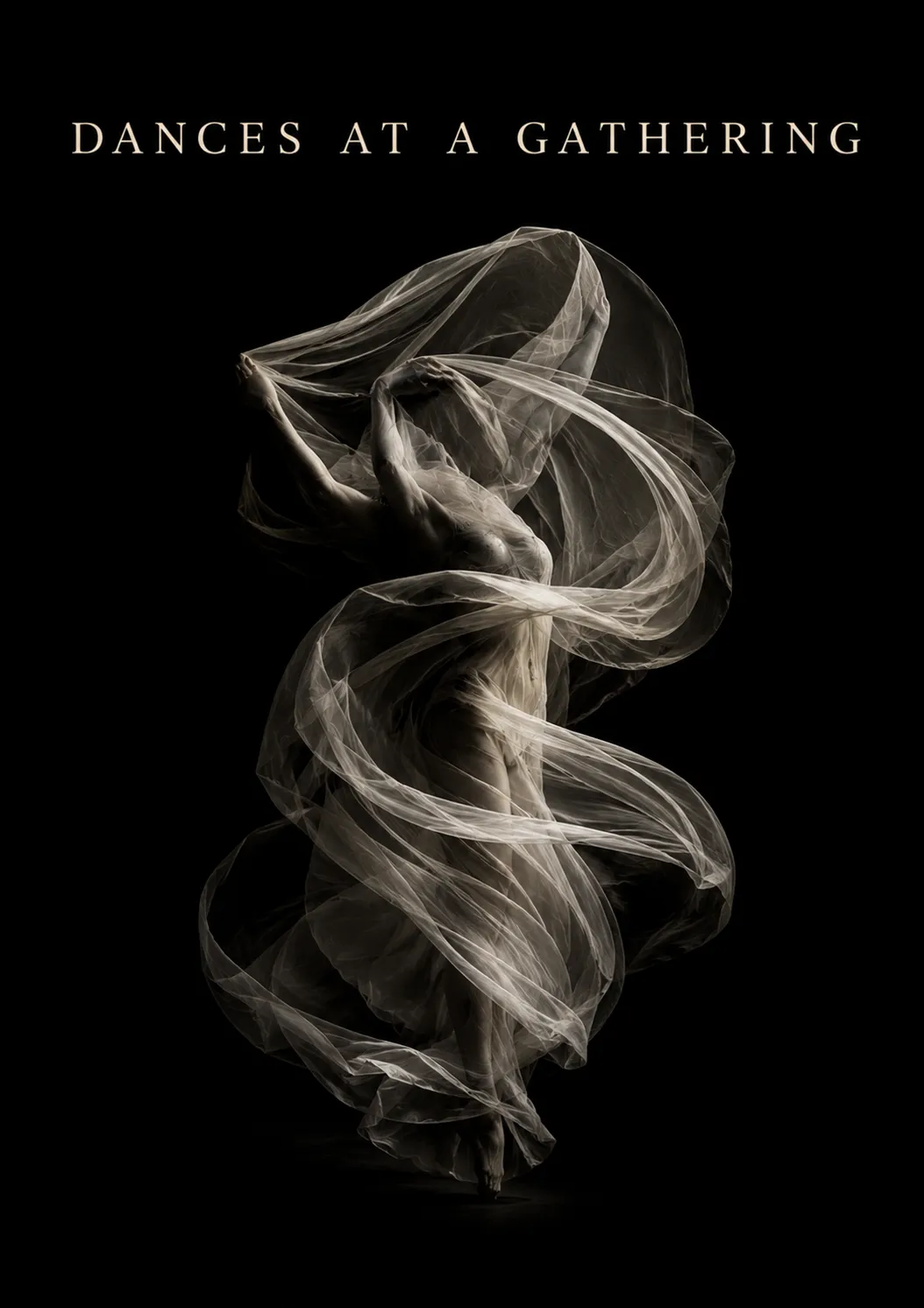
About the work
Dances at a Gathering is an evening-length, plotless ballet by Jerome Robbins set to eighteen solo-piano pieces by Frédéric Chopin (mazurkas, waltzes, études, a nocturne and a scherzo). It was premiered on 22 May 1969 by New York City Ballet at the New York State Theater, marking Robbins' return to the company after thirteen years.
Plot
Ten dancers—five couples, distinguished only by softly coloured costumes—meet in an open, light-filled space. With no continuous story, solos, duets and ensembles unfold as a web of encounter, play, courtship and parting. The Brown Boy opens alone; the celebrated Pink Girl pas de deux forms a lyrical centre; at the close the dancers gaze upward together and touch the ground—a quiet gesture of belonging to a place and a moment.
Cultural significance
Widely regarded as one of the defining American ballets of the twentieth century, Dances at a Gathering epitomises Robbins' musical, profoundly human choreography. "The dancers are themselves dancing with each other to that music in that space," Robbins wrote of it. It remains a cornerstone of the repertoire of major companies worldwide and helped shape the genre of the plotless, chamber-scaled ensemble ballet.