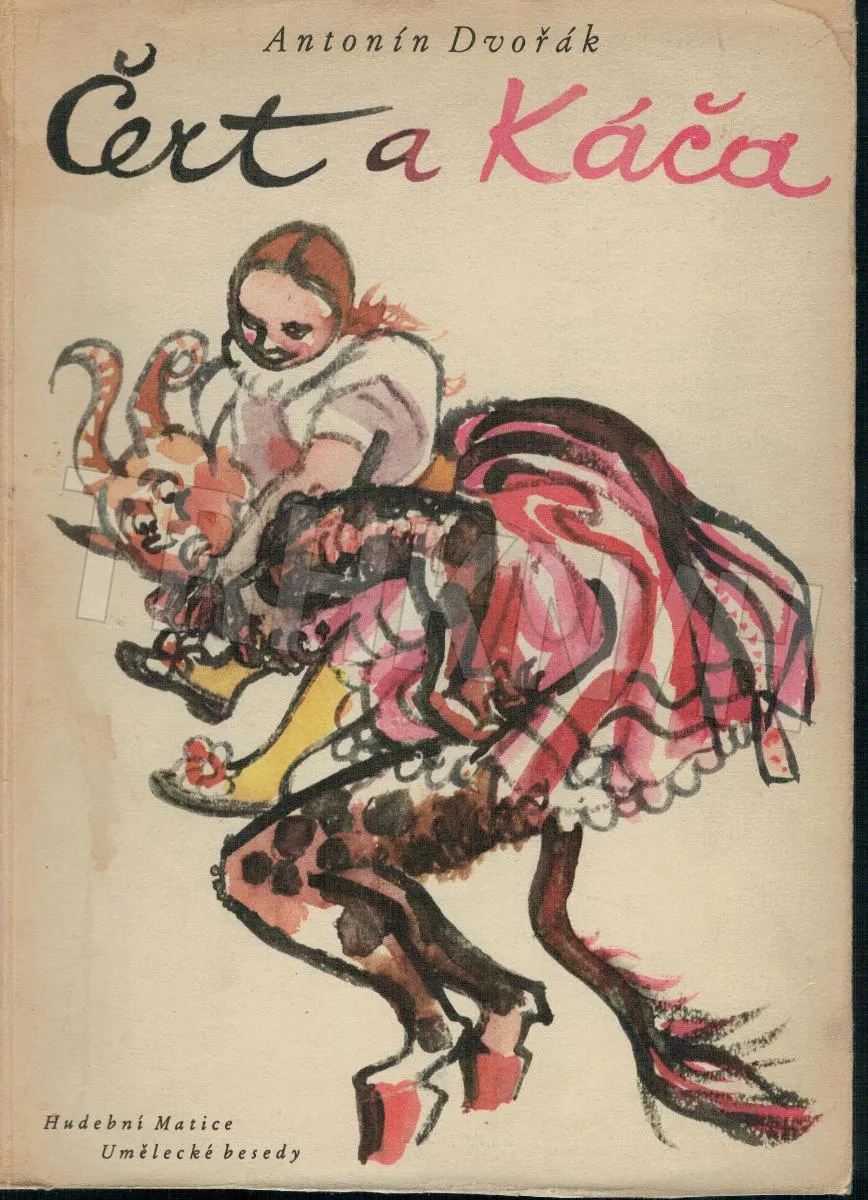
About the work
Antonín Dvořák's comic opera „Čert a Káča" („The Devil and Kate") was premiered at the National Theatre in Prague in 1899. Based on a Bohemian fairy tale, it is Dvořák's most successful comic opera, marked by folk humour, robust comedy and a colourful, dance-inflected score.
Plot
The resolute, talkative village belle Kate finds no dancing partner and rashly declares she would dance even with the devil if need be. At once the devil Marbuel appears and carries her off to hell. There, however, Kate quickly becomes a torment: she clings to Marbuel, talks without pause and drives the devils to despair. The shrewd shepherd Jirka, himself fallen out of favour, fetches Kate back from hell for a reward. When the devil later comes to carry off the cruel princess who oppresses her people, Jirka helps again: the mere threat of the unbearable Kate puts the devil to flight. The princess vows to mend her ways, and Jirka is rewarded.
Cultural significance
„The Devil and Kate" is among Dvořák's most popular stage works and a high point of Czech comic opera. The combination of fairy-tale material, social satire — the chastened princess who oppresses her people — and Dvořák's melodic richness made the work firmly anchored in the Czech repertoire; internationally it is still performed regularly.