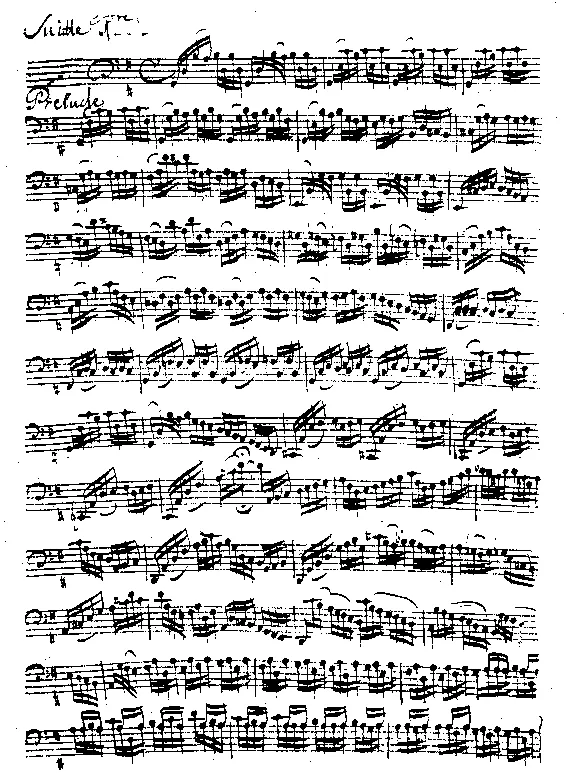
About the work
Johann Sebastian Bach's „Six Suites for solo violoncello" (BWV 1007-1012) were probably composed around 1717-23 in Köthen — no autograph score survives. The works belong to the highest technical and musical challenges for any cellist and are the only solo cello compositions of canonical rank from the High Baroque.
Plot
The six suites follow a similar model: prelude, allemande, courante, sarabande, two galanteries (minuet, bourrée or gavotte) and gigue. Suite No. 1 in G major is the most popular, with the iconic broken-chord opening prelude. No. 2 in D minor is dark and meditative. No. 3 in C major radiates heroic warmth. No. 4 in E-flat major is a special challenge because of its difficult key. No. 5 in C minor requires scordatura (retuning of the top string) and contains the most famous sarabande in the repertoire. No. 6 in D major was written for a five-stringed instrument (violoncello piccolo) and confronts every cellist with extreme high-position challenges.
Cultural significance
The Cello Suites were largely forgotten until the twentieth century — regarded as mere exercises. Only when Pablo Casals at thirteen discovered a tattered edition in 1890 in a Barcelona second-hand shop, practised them secretly for decades, and recorded them in 1936-39, did the perception of the works change fundamentally. Today the suites are among the most-recorded classics; every great cellist records them once or several times (Mstislav Rostropovich, Yo-Yo Ma, Pierre Fournier, Anner Bylsma). They are considered „the cellist's Bible".