About the work
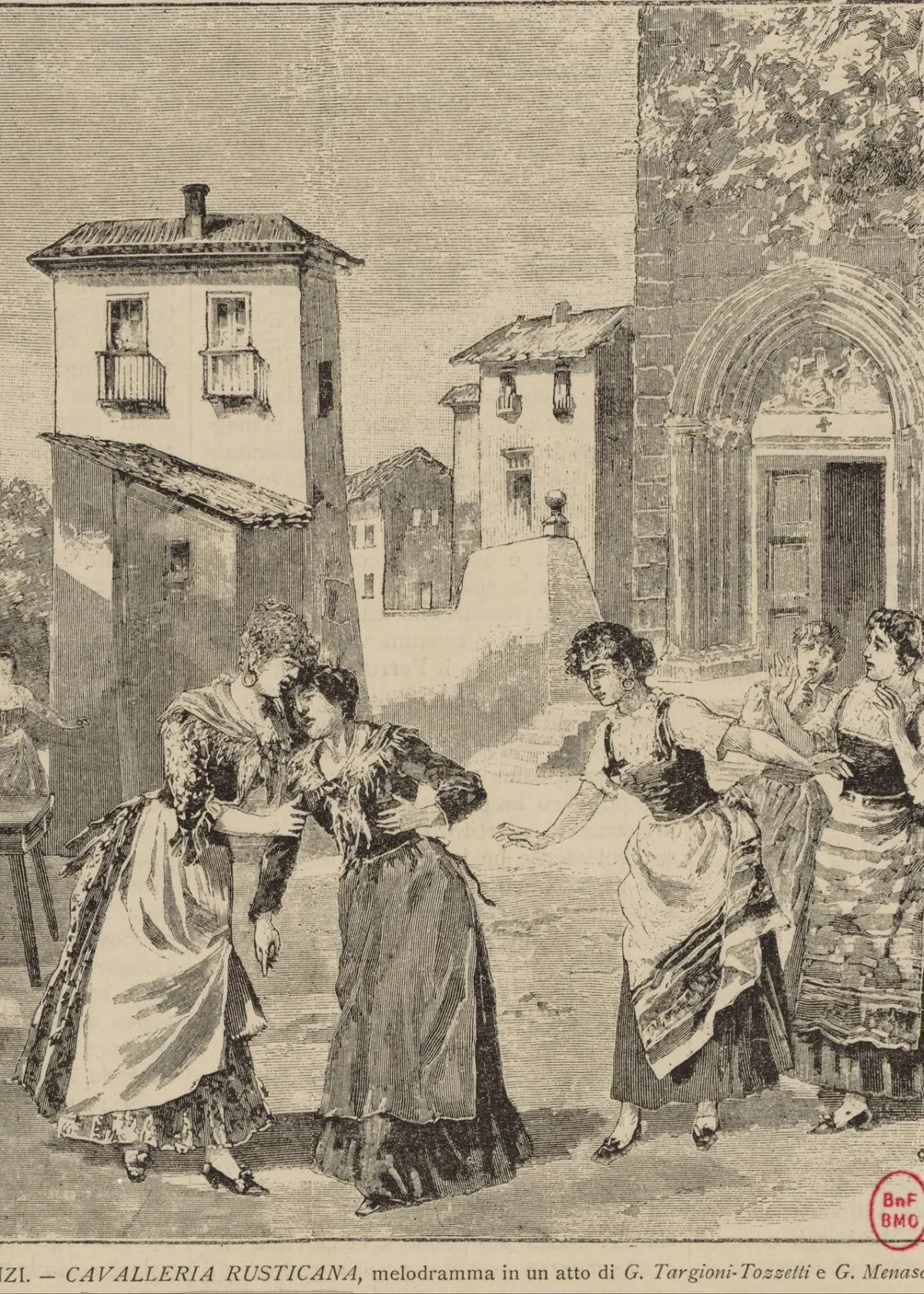
Pietro Mascagni's one-act opera was premiered in 1890 at the Teatro Costanzi in Rome and won Italy's Sonzogno competition for a new short opera. The work launched verismo—the Italian operatic movement depicting contemporary working-class life with unsparing realism—and made the twenty-six-year-old composer an overnight international sensation.
Plot
On Easter morning in a Sicilian village, the soldier Turiddu has returned from military service to find his former lover Lola married to the carter Alfio. Turiddu has since seduced Santuzza, but continues his affair with Lola. Santuzza, pregnant and abandoned, confronts Turiddu in vain and finally reveals the affair to Alfio. The two men agree to a duel by knives behind the village. After church, Turiddu says farewell to his mother and rushes to the fight. Moments later, a woman's scream announces his death.
Cultural significance
Cavalleria rusticana is almost always performed together with Leoncavallo's Pagliacci—the famous Cav & Pag double bill—and defines the verismo aesthetic: ordinary people caught in elemental passions, brutal honesty, regional colour. The orchestral Intermezzo became one of the most beloved instrumental moments in all opera, used prominently in Francis Ford Coppola's The Godfather Part III. The role of Santuzza is a signature mezzo-soprano part, while Turiddu demands a tenor of both lyric warmth and tragic weight.