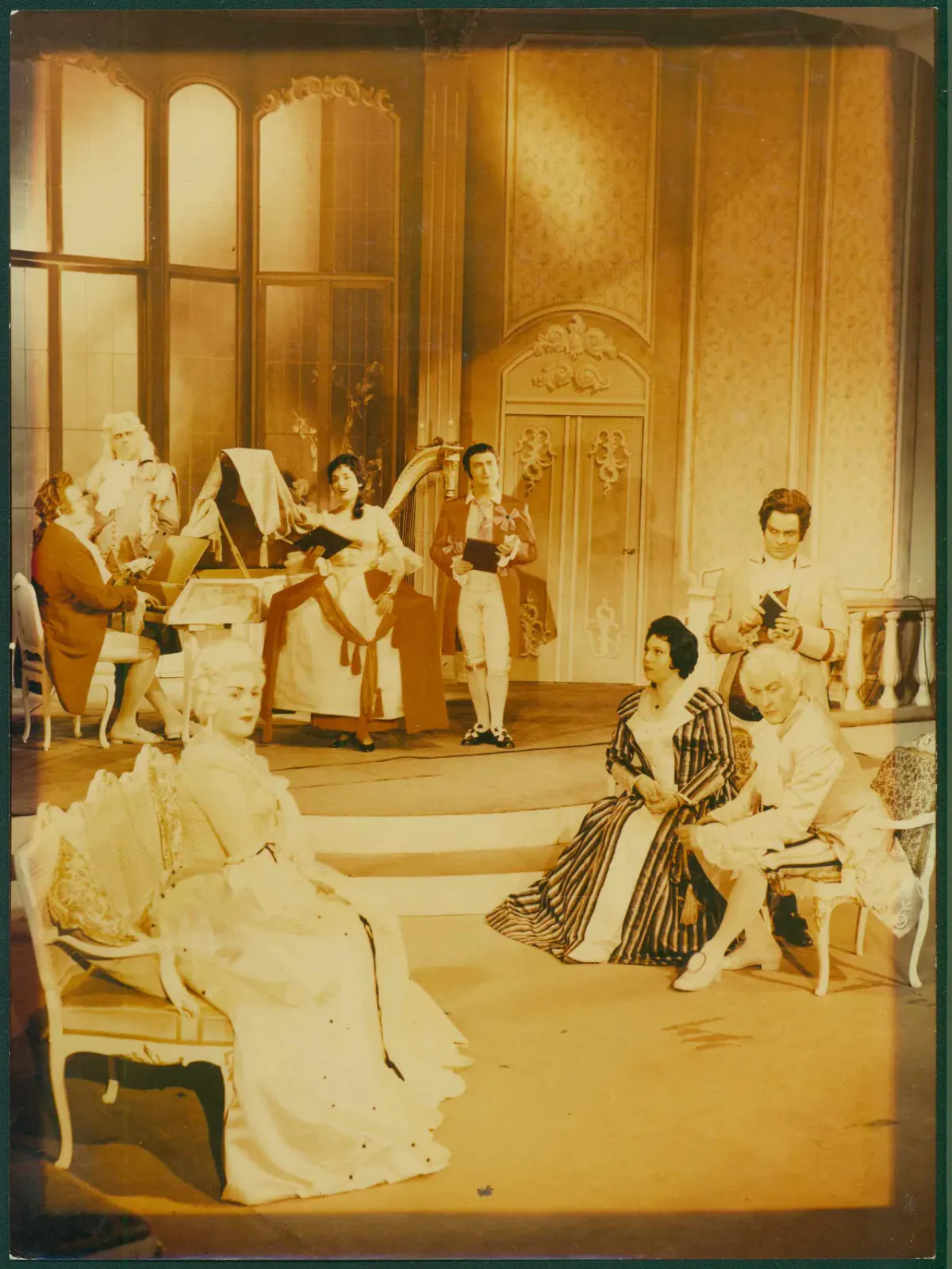
About the work
Richard Strauss's final opera—described as a conversation piece for music in one act—was premiered in 1942 at the Bayerische Staatsoper in Munich. The libretto was written collaboratively by Strauss and Clemens Krauss based on an earlier sketch by Stefan Zweig. The work poses the eternal question of opera: which matters more, the words or the music?
Plot
On an evening in a château near Paris around 1775, the young widowed Countess Madeleine is courted by two suitors: the poet Olivier and the composer Flamand. Each champions his own art as the higher. Madeleine asks both to collaborate on a sonnet and a setting; the resulting work will help her choose. In conversation with her brother, the theatre director La Roche, and the actress Clairon, the questions of aesthetics deepen. As the evening ends, Madeleine rehearses the sonnet alone before a mirror—and finds she cannot decide. The curtain falls with the question unresolved.
Cultural significance
Capriccio is Strauss's philosophical testament about opera itself, composed during the darkest years of the Second World War and drawing its Rococo elegance from a world that was being physically destroyed around the composer. The final scene for the Countess is one of the most extended and beautiful monologues in the soprano repertoire. The work requires exceptional ensemble singing and dramatic intelligence and has become a favourite of festivals catering to opera connoisseurs. The prelude is a string sextet of rare chamber-music refinement.