About the work
„Caio Fabbricio“ was Handel's third pasticcio of the 1733/34 season. It was based on Johann Adolf Hasse's opera of the same title, premiered in Rome in 1732, from which Handel replaced thirteen arias with pieces by Tommaso Albinoni, Francesco Corselli, Leonardo Leo and Leonardo Vinci while composing the recitatives himself. It premiered on 4 December 1733 at the King's Theatre, Haymarket, London.
Plot
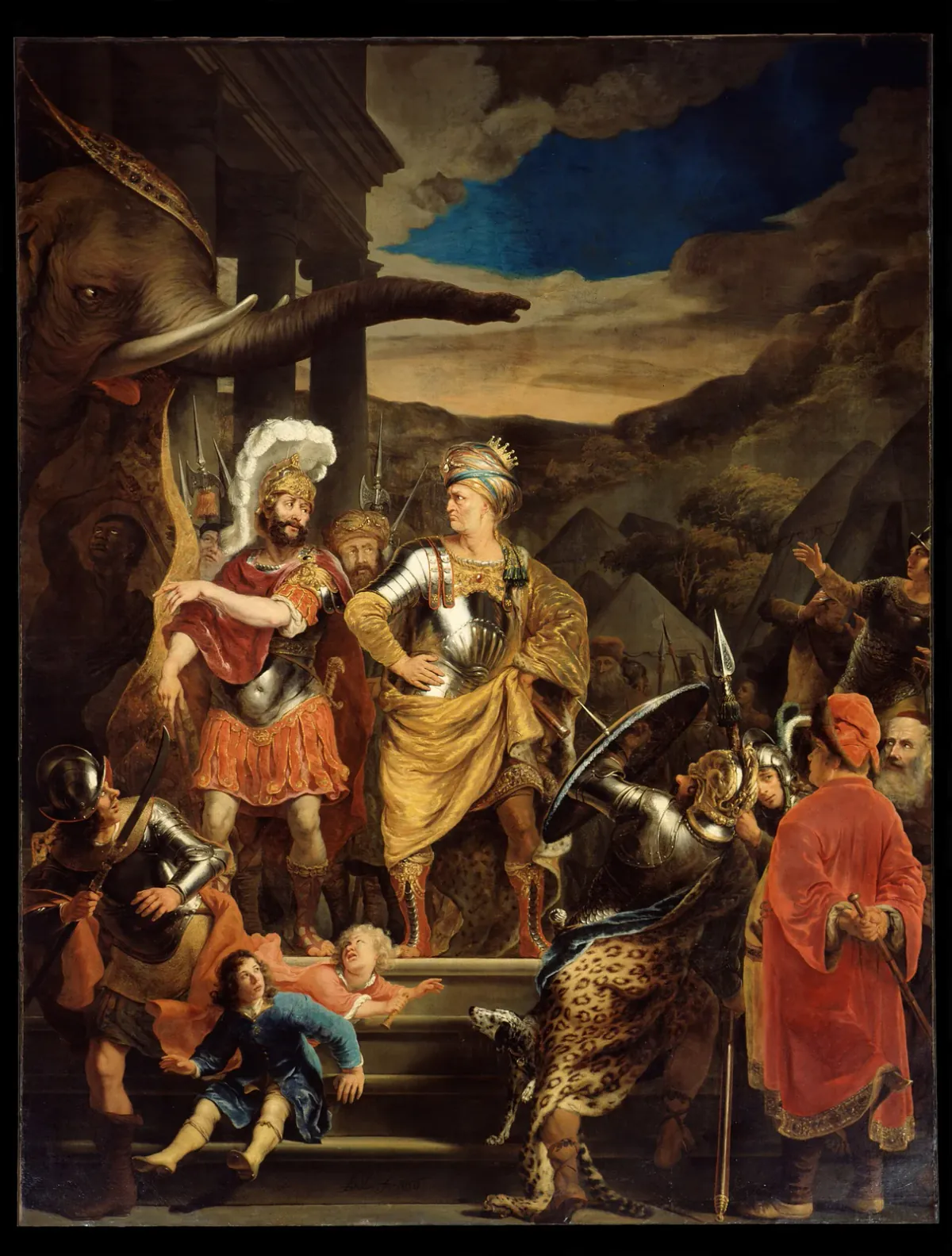
The libretto, after Apostolo Zeno, loosely follows the Roman general Gaius Fabricius Luscinus and King Pyrrhus of Epirus: Fabricius negotiates with Pyrrhus, who has fallen in love with a Roman captive, rejects his bribes, and ultimately secures the release of all Roman prisoners. The plot centres on the contrast between Roman virtue and eastern splendour.
Cultural significance
With only four performances, „Caio Fabbricio“ found little success at the time. It was not until 2022 that the ensemble London Early Opera under Bridget Cunningham released its first recording, using Handel's own conducting score digitised in Hamburg, revealing how Handel recombined other composers' arias for his singers.