About the work
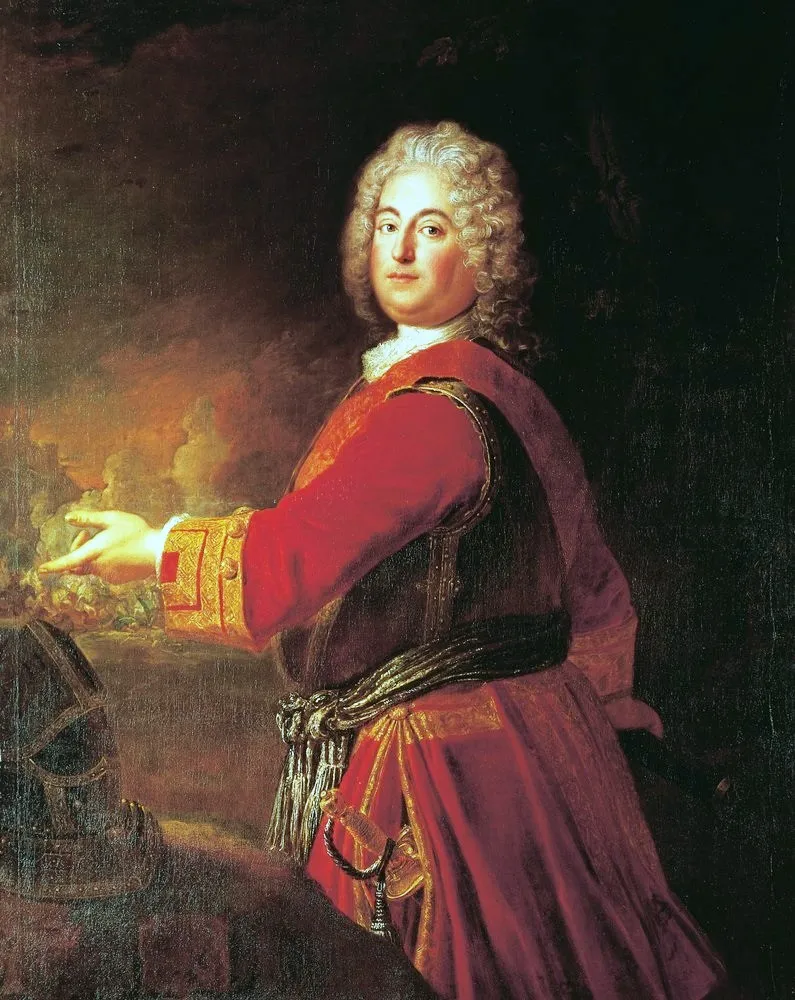
Johann Sebastian Bach's „Brandenburg Concertos" are a collection of six concerti grossi which Bach dedicated in 1721 to Margrave Christian Ludwig of Brandenburg-Schwedt — hence the name. Bach had probably composed the works for his Köthen court. The collection is considered the high point of the Baroque concerto grosso.
Plot
The six concertos are highly varied in scoring and character: No. 1 in F major (horns, oboes, bassoon, violino piccolo, strings) is festive, with an unusual closing menuet. No. 2 in F major — the most famous — pits trumpet, recorder, oboe and violin as soloists, with the iconic trumpet brilliance in the opening movement. No. 3 in G major is a string concerto with three groups of three (three violins, three violas, three cellos plus continuo) — contrapuntally dense. No. 4 in G major sets violin and two recorders against the ensemble. No. 5 in D major — one of the very first harpsichord concertos — gives Bach himself (presumably) the virtuoso harpsichord cadenza in the first movement, a watershed moment in the history of keyboard music. No. 6 in B-flat major dispenses with violins entirely — only violas, viole da gamba, cellos, continuo — a dark, chamber-music-like dense score.
Cultural significance
The Brandenburg Concertos are considered the principal work of Baroque instrumental music and Bach's most personal application of the Italian concerto grosso style. Margrave Christian Ludwig probably never performed the works — the score lay in his library; after his death it was auctioned off. Only nineteenth-century rediscovery placed the works at the centre of the repertoire. Today they belong to the most-performed of Bach's works; famous recordings include those by Karl Richter, Trevor Pinnock, John Eliot Gardiner, Concerto Köln and Reinhard Goebel. The Voyager I space mission (1977) carried Concerto No. 2 as „a message from humanity" out into space.