About the work
Handel's three-act oratorio was premiered at the King's Theatre in London in 1745. Charles Jennens's libretto — written soon after „Messiah" — draws on the Old Testament Book of Daniel and dramatises the fall of the Babylonian king Belshazzar on the night of the famous feast.
Plot
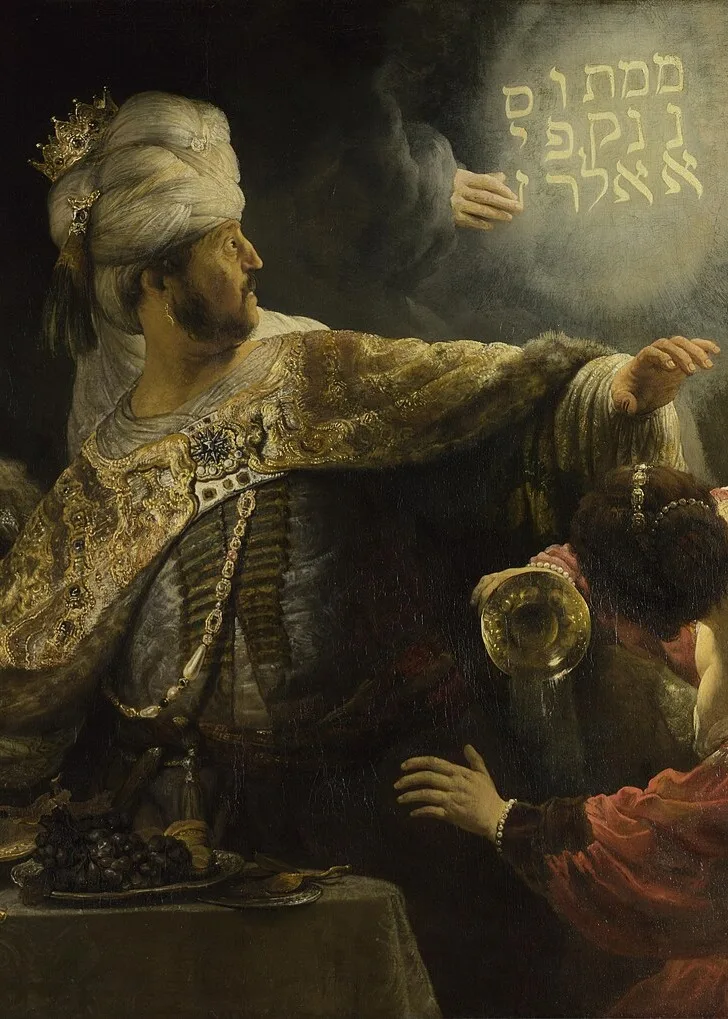
Babylon is besieged by the Persians under Cyrus. The queen mother Nitocris warns her reckless son Belshazzar of the threat, but he stages a magnificent feast and orders that the sacred Temple vessels brought from Jerusalem be desecrated. As the courtiers carouse, the mysterious writing appears on the wall: „Mene, mene, tekel, upharsin". The Jewish prophet Daniel interprets the words as God's judgement — Belshazzar's kingdom has been weighed and found wanting. That same night the traitor Gobrias opens the gates to the Persians. Cyrus kills Belshazzar in battle, frees the Jews held captive in Babylon and issues the edict allowing them to return and rebuild the Temple in Jerusalem.
Cultural significance
Belshazzar is among Handel's most dramatically daring English oratorios and stands as a peer to „Messiah" and „Israel in Egypt" in compositional ambition. The writing-on-the-wall chorus and Daniel's great interpretive aria are both theological and musical climaxes. Twentieth-century rediscovery — particularly through John Eliot Gardiner and René Jacobs — has placed the work at the centre of the Handel-revival repertoire.