About the work
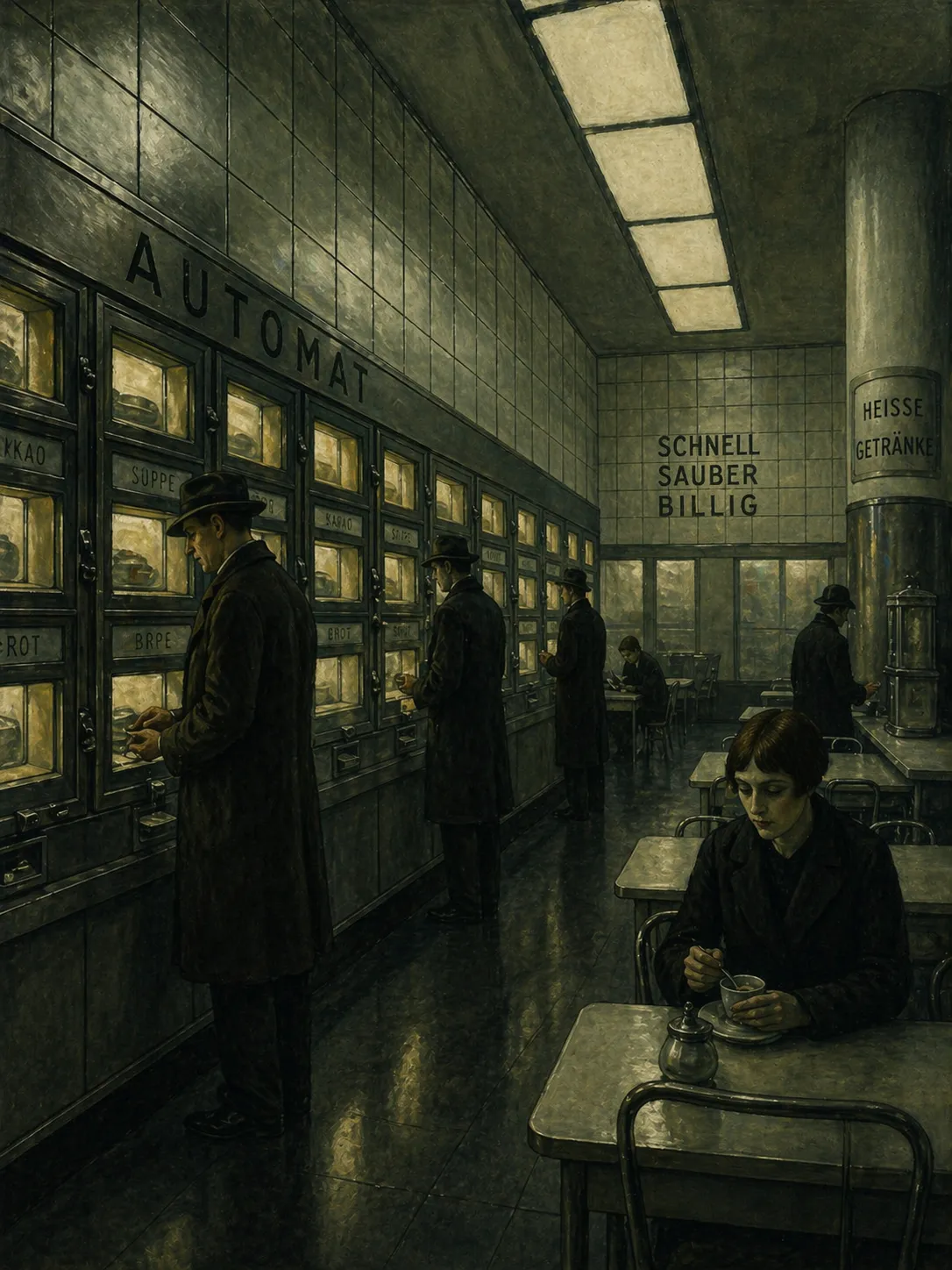
Automatenbüfett (The Automat Buffet) is a play by the Austrian author Anna Gmeyner from 1932, a work of the New Objectivity (Neue Sachlichkeit). Long forgotten, it has been rediscovered in recent years — a much-noticed production by Barbara Frey ran from 2020 at the Akademietheater Vienna. The play deals with technological modernisation and the reactionary small-town bourgeoisie of the late Weimar era.
Plot
In the small town of Seebrücken, the resolute Clementine Adam runs an "automat buffet", where food, drink and music can be had at the push of a button — a place where the town's notables gather and where Clementine keeps an eye on everything. Her dreamy, somewhat eccentric husband Leopold indulges, while fishing, in fantasies of running his own fish farm. When he rescues the young Eva, who means to drown herself in the pond out of lovesickness, at the last moment and brings her to the buffet, the fragile fabric of small-town society is set in motion. Between desire, economic calculation and bourgeois double standards, Gmeyner exposes the narrowness and coldness of a society on the eve of catastrophe.
Cultural significance
Automatenbüfett is regarded as a remarkable testimony of the socially critical theatre of the New Objectivity and as the rediscovery of an unjustly forgotten author. Anna Gmeyner, later driven into exile, wrote in this play a precise social diagnosis of the waning Weimar Republic. Barbara Frey's production at the Vienna Akademietheater, with Maria Happel and Michael Maertens, made the work accessible again to a broad contemporary audience and confirmed its undiminished relevance.