About the work
Leoš Janáček's final opera „From the House of the Dead" („Z mrtvého domu") was premiered in Brno in 1930, posthumously after Janáček's death in 1928. The libretto, written by the composer himself, is based on Fyodor Dostoyevsky's novel „The House of the Dead" (1862), his literary working-through of his time in a Siberian penal camp.
Plot
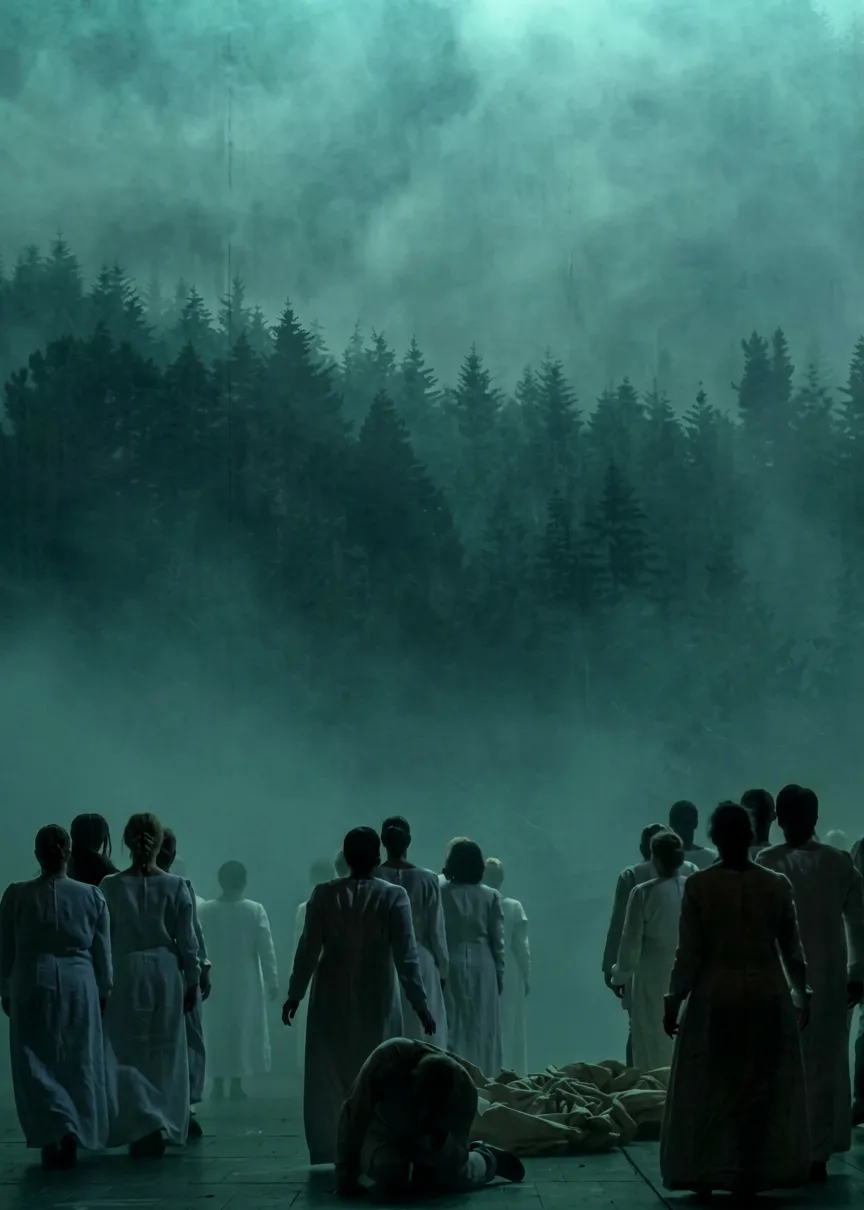
In a Siberian penal camp on the Irtysh, the political prisoner Alexander Petrovich Goryanchikov arrives. A guard beats him, then he is assigned to the community of prisoners. There is no conventional plot — the three acts consist of ritual camp scenes in which individual prisoners tell their backstories: Luka Kuzmič killed a major who was torturing him; Skuratov shot his lover's fiancé in jealousy; Šiškov ends the third act with a long narrative of how he murdered his wife Akulka. Between the stories: a feast day with the prisoners' theatre performance (Don Juan and the Miller), the infirmary in which Luka dies. At the end Goryanchikov is unexpectedly pardoned; a wounded eagle, which the prisoners had nursed, flies away into freedom. As Goryanchikov leaves the camp, camp life continues unchanged.
Cultural significance
From the House of the Dead is Janáček's most radical work and is considered the most uncompromising example of the „concentration camp opera" avant la lettre. The score — marked by short, sharp motifs, chain-rattling, sudden eruptions of sonority — strongly influenced twentieth-century opera. Patrice Chéreau's final production at Vienna/Aix-en-Provence (2007) was an epochal evening; Krzysztof Warlikowski and Frank Castorf have re-read the work for the present. The closing words „In every living being is a divine spark" return as a musical transfiguration.