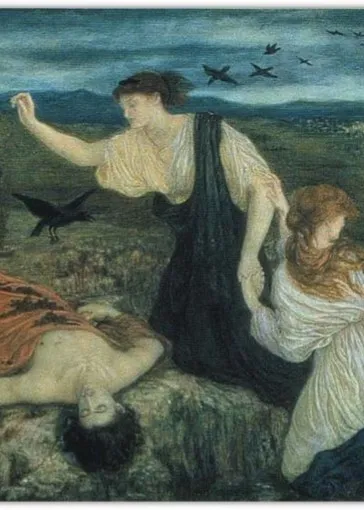
About the work
Jean Anouilh's „Antigone" was premiered in Paris in 1944 — under German occupation. Anouilh wrote the play in 1942 and transposed Sophocles's ancient tragedy into the present of collaboration and resistance. The premiere was a political scandal: Anouilh staged Antigone's resistance and Creon's pragmatic compromise with deliberately ambiguous sympathy — both sides claimed the work for themselves.
Plot
Thebes, „today". Antigone, the young daughter of the dead Oedipus, comes home in the early morning. Her sister Ismene asks whether she will bury her brother Polynices — Creon, king and uncle, has forbidden this on pain of death. Polynices fought in the civil war against his brother Eteocles; both are dead, Eteocles has been buried with honours, Polynices lies unburied before the city. Antigone has already scattered the first earth on Polynices's body. The guards discover her. In the central long encounter with Creon, he tries to save her — she should be silent, then the incident will go unmentioned. Antigone refuses. Anouilh adds a modern psychological subtext: Antigone does not really care about the brother, she seeks the absolute, she despises the happiness of „little people". Creon explains his pragmatism — someone must do the evil so that the world functions. Antigone remains obstinate. She is executed (walled up). Haemon, her fiancé (Creon's son), kills himself. Eurydice, Creon's wife, kills herself. Creon is left alone.
Cultural significance
Anouilh's Antigone is the most important French classical-mythology adaptation of the twentieth century alongside Cocteau's works. The 1944 premiere under occupation was risky — the German censors permitted it, reading it as a defence of pragmatism (collaboration); the Résistance read it as a call to resistance. This ambiguity is part of the work. Anouilh's „Chorus" — as narrator — is a modern reformulation of the ancient chorus. Productions by Anouilh himself, later Marianne Hoppe (Berlin 1946), Erika Burkart, and recently Yael Farber, shape the performance tradition.