About the work
Sophocles' tragedy „Antigone" was first performed around 442 BC and belongs to the Theban trilogy concerning the house of Oedipus. It is one of the most-performed works of ancient theatre and has been regarded since Hegel as the primal scene of the conflict between divine and human law.
Plot
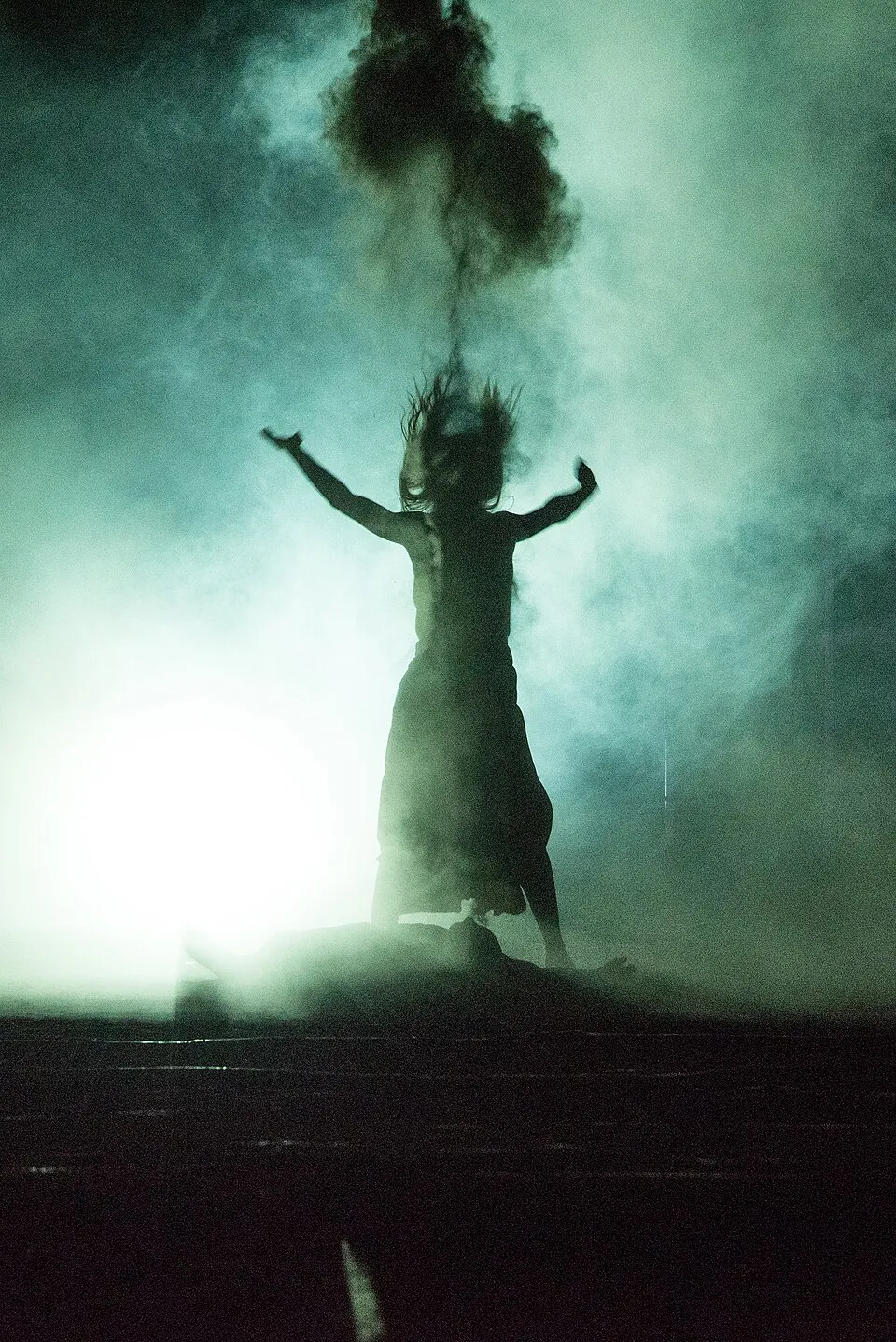
After the war between brothers over Thebes — in which Eteocles and Polynices have killed each other — King Creon decrees that Eteocles is to be honourably buried, but Polynices, as a traitor, must be left unburied on the battlefield, which by Greek belief denies his soul rest. Antigone, sister of the dead men, defies the royal edict and scatters symbolic earth over her brother. Creon has her arrested and condemned to death by being walled up. Antigone's fiancé Haemon, Creon's son, pleads in vain for her life. The blind seer Teiresias warns Creon of divine punishment; Creon relents too late. In the cave Antigone has already hanged herself, Haemon stabs himself beside her; Eurydice, Creon's wife, takes her own life in despair. Creon is left alone with the recognition of his guilt.
Cultural significance
Antigone is one of the most important works of world theatre and a touchstone for political philosophy from Hegel through Kierkegaard to Judith Butler. Jean Anouilh's Antigone adaptation (1944) was premiered during the German occupation of France and read the piece as resistance to tyranny. Brecht's „Antigonemodell" (1948) in turn politicised the material for the post-war era. Antigone has been a fixture on German stages since Hölderlin's translation of 1804.