About the work
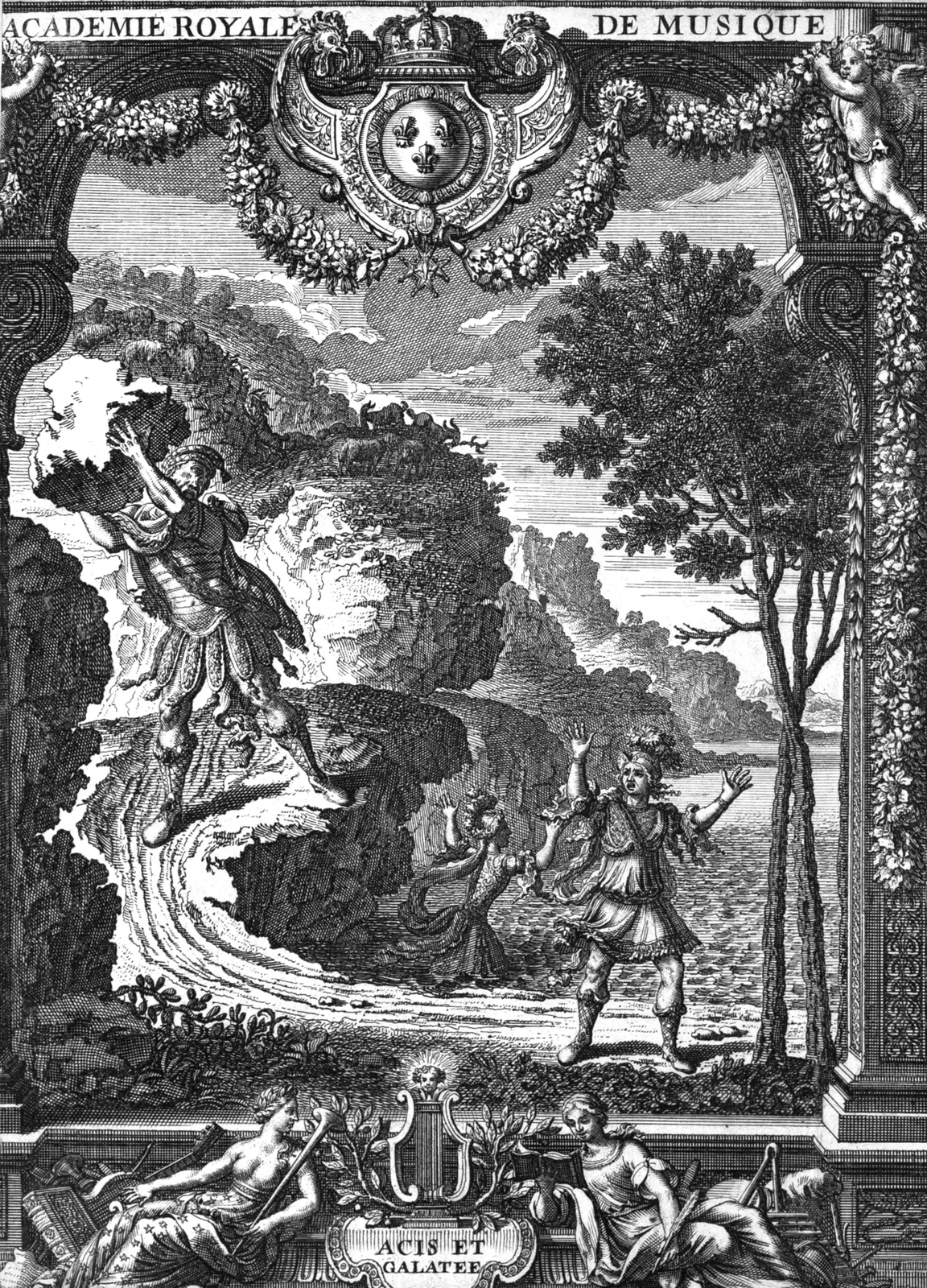
Pastorale héroïque in a prologue and three acts by Jean-Baptiste Lully to a libretto by Jean Galbert de Campistron, based on an episode from Book XIII of Ovid's 'Metamorphoses'. The work was first performed on 6 September 1686 at the Château d'Anet for the Grand Dauphin and remained the last stage work Lully completed entirely himself.
Plot
The shepherd Acis and the nymph Galatée love each other, but the cyclops Polyphème also desires Galatée and interrupts their wedding celebration. Driven by jealousy, Polyphème kills Acis, and Galatée calls on the gods for help. Neptune restores Acis to life by transforming him into a river.
Cultural significance
Because Lully's longtime librettist Quinault had by then turned away from opera, the text was written instead by Campistron; the intimate, unheroic chamber drama of a single loving couple deliberately departs from the courtly, heroic mould of the tragédie lyrique. The work was revived repeatedly through 1752 and was especially prized at court.