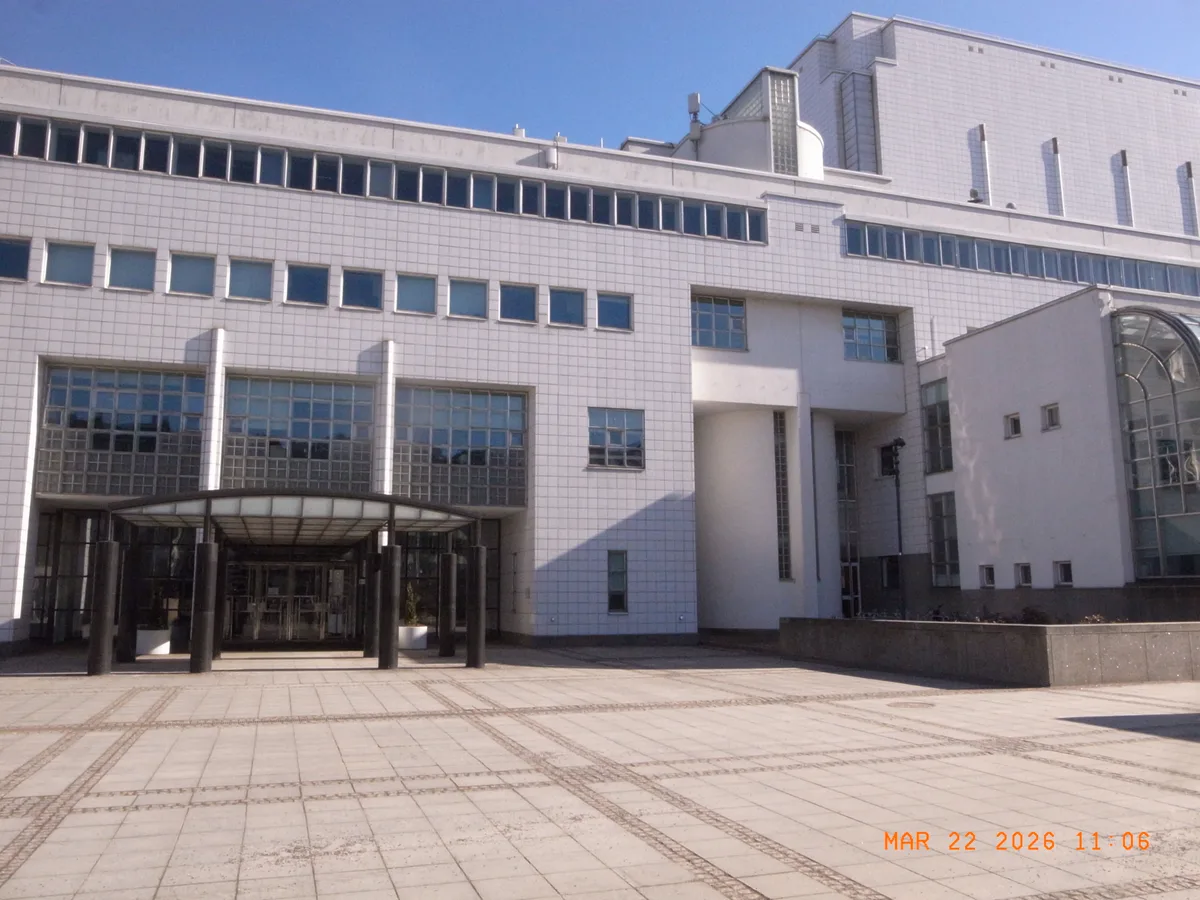
The Finnish National Opera (Suomen Kansallisooppera, Swedish: Finlands Nationalopera) in Helsinki's Töölö district, opened on 30 November 1993 to designs by architects Eero Hyvämäki, Jukka Karhunen, and Risto Parkkinen, is the only permanent opera house in Finland and — together with the resident Finnish National Ballet — one of the country's most important cultural institutions. The new building replaced the previous venue on Bulevardi, the former Alexander Theatre of 1879, which had served as a provisional home for nearly a century. The striking white building beside the Töölönlahti Bay, facing the Mannerheim statue and the Parliament building, combines Finnish modernism with functional stage technology design. The main auditorium seats 1,350 across three levels with excellent sightlines and acoustics. The smaller Almi Hall, seating 300, hosts experimental productions, chamber operas, and workshop performances. Stage technology ranks among the most advanced in Europe: three stages in sequence enable rapid scene changes and parallel rehearsals. The National Opera was founded in 1911 as the "Domestic Opera" (Kotimainen Ooppera) and has decisively shaped Finnish musical life. Composers including Aulis Sallinen (Kullervo, 1992), Einojuhani Rautavaara (Aleksis Kivi, 1997), and Kaija Saariaho (L'amour de loin, 2000 Finnish premiere) have worked here. International conductors from Esa-Pekka Salonen to Susanna Mälkki have led performances. The repertoire balances the classical canon with premieres of Finnish composers — a policy that has made Finland one of the world's most active commissioners of new opera.
Finland is one of the world's most active commissioners of new opera: per capita, more new operas are produced here than in any other European country — many of them premiered at the National Opera.
At a glance
- Type
- Opera house
- Location
- Helsinki, Finland
- Address
- Helsinginkatu 58, 00250